IMIAS
Protected Area
Ensenada de Portier-Lamas
Why dive here
With 139+ marine species recorded in the area - including barracuda, orcas, sea turtles, sperm whales and pufferfish - IMIAS offers some of Isla de la Juventud's richest wreck diving. Water ranges 26-30°C, warmest July, August, September.
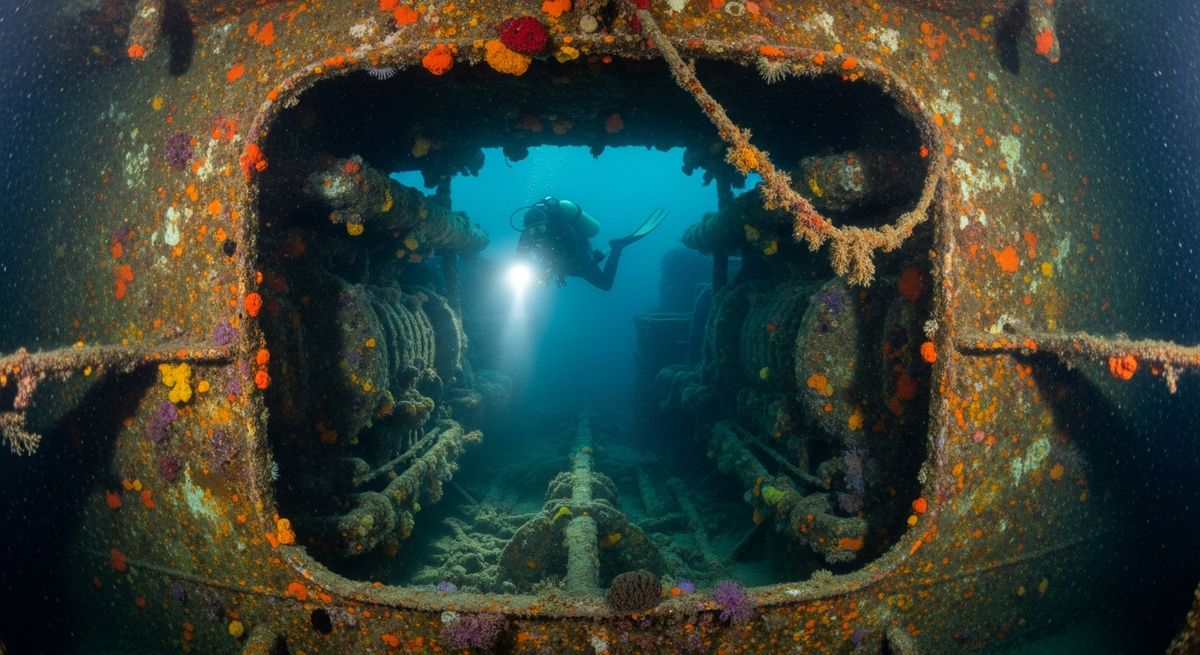
The Imías wreck, resting upright in a shallow bay, offers a proper look at a decent-sized vessel, even if she’s seen better days. Built in Bilbao in '66, this motor vessel caught fire at Nuevitas before finding her final resting place here in 1981. We like that she’s shallow, less than a meter deep in parts, making it a comfortable snorkel or very easy dive, great for those newer to wrecks. You can poke around the superstructure, which took a real beating from that fire, and see how quickly the reef builds on anything left alone. Schools of snapper and grunt often mill about the hull, darting into the shadows, a calm contrast to the wreck’s fiery past.
Typical IMIAS Dive Profile
Illustrative profile based on site depth and type. Actual dive profiles vary - always follow your dive computer and training.
Safety Notes
Wreck site - avoid penetration without wreck diving certification. Watch for sharp metal and entanglement hazards.
Nearest Dive Centres to IMIAS
Dive shops near IMIAS
View all dive centres in Isla de la JuventudReviews for IMIAS
Conditions
Ocean conditions, forecast and tides for IMIAS
IMIAS Ocean Conditions
Monthly averages for IMIAS, sourced from Open-Meteo marine data - nearest station: Open-Meteo marine grid (23.09, -81.45) (52km away)
October Averages
Sea Temperature
29°C
85°F · Range: 27.6–30.6°C
Air Temperature
28°C
82°F
Wind Speed
7.54 m/s
14.7 knots
Atmospheric Pressure
1012.9 hPa
Based on 4 years of monitoring data · Data sources: Open-Meteo marine data
Plan & book
Ways to dive Isla de la Juventud, from day trips to liveaboards.
Day trips & courses
via GetYourGuideGuided dives, courses and snorkel trips with instant booking.
Find dive trips in Isla de la JuventudPlaces to stay
via Booking.comHotels and dive resorts near Isla de la Juventud.
Search stays in Isla de la JuventudDive insurance
Most travel insurance excludes or limits scuba. Check what you need before you go.
Dive insurance explainedPartner links: we may earn a commission if you book, at no extra cost to you. How we make money
Where to Stay near IMIAS
Prices from Booking.com. We may earn a commission at no extra cost to you.