Balena Moby Dick
Protected Area
Guanahacabibes
Why dive here
With 109+ marine species recorded in the area - including blue sharks, oceanic whitetip sharks, sea turtles, sperm whales and manatees - Balena Moby Dick offers some of María la Gorda's richest wreck diving. Water ranges 27-31°C, warmest July, August, September.
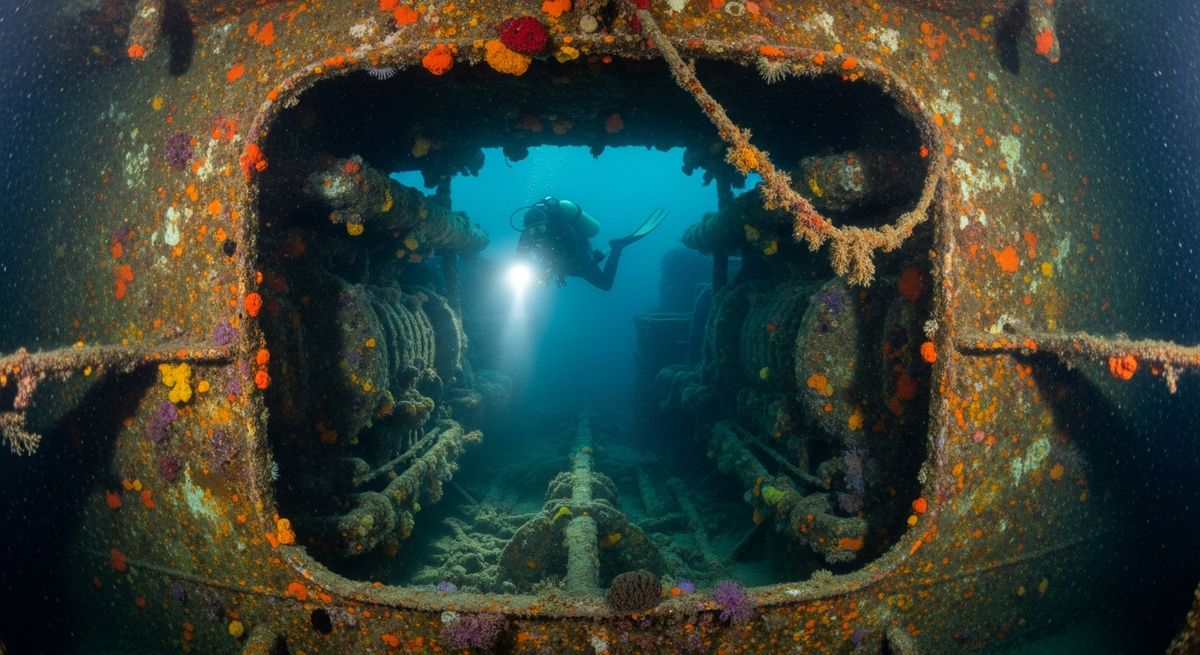
Balena Moby Dick isn't your usual Caribbean dive site, and that's precisely why we love it. Instead of a pristine reef, you're descending onto a sunken whale processing vessel, deliberately scuttled back in the 70s. It’s sitting upright on a sandy bottom at around 20 metres, and its sheer size gives it a slightly eerie, almost ghostly presence. We always feel a real sense of history here, poking around the open holds where the ship's work once happened. Inside, the light filters through gaps in the hull, illuminating schools of snapper and grunts that hang motionless. Look closely, and you’ll spot moray eels tucked into crevices, their heads peeking out, and we’ve often seen big barrel sponges growing off the metal. The structure itself is a fantastic canvas for macro life; nudibranchs and small crabs are everywhere if you take your time. This spot is brilliant for photographers who appreciate the drama of a wreck and the way marine life adapts to a new habitat. It's a relaxed dive, usually with minimal current, making it accessible for most experience levels, and a welcome change from endless coral heads.
Safety Notes
Wreck site - avoid penetration without wreck diving certification. Watch for sharp metal and entanglement hazards.
Balena Moby Dick Wreck History
Vessel Type
unknown
Cause
unknown
The 'Balena Moby Dick' is one of the more enigmatic dive sites in Cuba's famed María la Gorda marine park. The origins of this 'wreck' are debated among local divemasters; some suggest it's the scattered ballast stones of a long-lost Spanish galleon, while others believe it's the remnants of a more modern vessel, given its evocative, fictional name. Whatever its true story, the site adds a touch of mystique to the pristine reefs of the region.
Divers exploring Balena Moby Dick will find less of a structured shipwreck and more of an artificial reef environment created by wreckage. The remnants, whatever they may be, are now completely integrated into the ecosystem, providing shelter for moray eels, lobsters, and schools of colorful reef fish. Set against the backdrop of vibrant coral gardens and dramatic drop-offs that María la Gorda is known for, this dive offers a unique focal point and a great photo opportunity for underwater adventurers.
Nearest Dive Centres to Balena Moby Dick
Dive shops near Balena Moby Dick
View all dive centres in María la GordaReviews for Balena Moby Dick
Conditions
Ocean conditions, forecast and tides for Balena Moby Dick
Balena Moby Dick Ocean Conditions
Monthly averages for Balena Moby Dick, sourced from NOAA NDBC + Copernicus Marine (EU) - nearest station: Yucatan Basin - 120 NM ESE of Cozumel, MX (228km away)
October Averages
Sea Temperature
30°C
86°F · Range: 28.7–32.3°C
Air Temperature
29°C
84°F
Current Speed
5 cm/s
Direction: NW (306.9°)
Chlorophyll-a
0.161 mg/m³
Clear water
Salinity
36.21 PSU
Wave Height
1.1m
6.7s period
Wind Speed
5.5 m/s
10.7 knots
Atmospheric Pressure
1010.7 hPa
Visibility
24.1 nmi
Based on 5 years of monitoring data · Data sources: NOAA NDBC + Copernicus Marine (EU)
Plan & book
Ways to dive María la Gorda, from day trips to liveaboards.
Day trips & courses
via GetYourGuideGuided dives, courses and snorkel trips with instant booking.
Find dive trips in María la GordaPlaces to stay
via Booking.comHotels and dive resorts near María la Gorda.
Search stays in María la GordaDive insurance
Most travel insurance excludes or limits scuba. Check what you need before you go.
Dive insurance explainedPartner links: we may earn a commission if you book, at no extra cost to you. How we make money
Where to Stay near Balena Moby Dick
Prices from Booking.com. We may earn a commission at no extra cost to you.