Creole Reef
Protected Area
Bancos de La Plata y La Navidad
Why dive here
With 173+ marine species recorded in the area - including barracuda, humpback whales, orcas, sea turtles and sperm whales - Creole Reef offers some of Bayahibe & La Romana's richest wreck diving. Water ranges 27-30°C, warmest August, September, October.
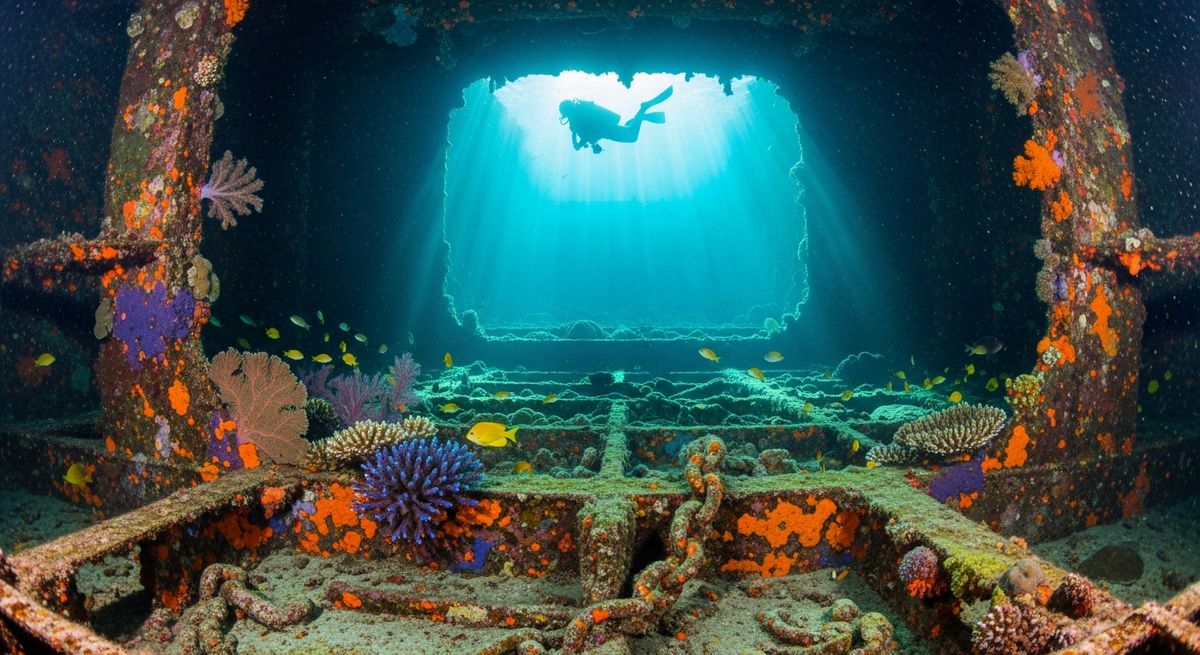
Creole Reef, just off Bayahibe, gives you a nice slice of Caribbean diving. You'll drop down to a maximum of 25 meters, where you’ll find a small wreck resting on the sand. It’s not a huge wreck, but it adds a point of interest, and some of the local fish like to hang out there – we’ve often seen Chalk Bass and Coney darting in and out. The reef itself is a series of coral lines, home to plenty of Angelfish and Dark Green Parrotfish. Visibility averages around 16 meters, which is decent enough for spotting the barracudas and moray eels that patrol the area. It’s a comfortable dive for advanced divers, offering a relaxed exploration without too much challenge.
Typical Creole Reef Dive Profile
Illustrative profile based on site depth and type. Actual dive profiles vary - always follow your dive computer and training.
Safety Notes
Depth of 24m - Advanced Open Water certification recommended.
Wreck site - avoid penetration without wreck diving certification. Watch for sharp metal and entanglement hazards.
Always perform a 3-minute safety stop at 5m before surfacing.
Nearest Dive Centres to Creole Reef
Dive shops near Creole Reef
The Dive Academy
Profundo Blue
Seaklub Samana
Scuba Libre
Reviews for Creole Reef
Conditions
Ocean conditions, forecast and tides for Creole Reef
Creole Reef Ocean Conditions
Monthly averages for Creole Reef, sourced from Open-Meteo marine data - nearest station: Open-Meteo marine grid (18.43, -69.32) (24km away)
October Averages
Sea Temperature
30°C
87°F · Range: 28.9–31°C
Air Temperature
27°C
81°F
Wind Speed
3.91 m/s
7.6 knots
Atmospheric Pressure
1012.7 hPa
Based on 4 years of monitoring data · Data sources: Open-Meteo marine data
Plan & book
Ways to dive Bayahibe & La Romana, from day trips to liveaboards.
Day trips & courses
via GetYourGuideGuided dives, courses and snorkel trips with instant booking.
Find dive trips in Bayahibe & La RomanaPlaces to stay
via Booking.comHotels and dive resorts near Bayahibe & La Romana.
Search stays in Bayahibe & La RomanaDive insurance
Most travel insurance excludes or limits scuba. Check what you need before you go.
Dive insurance explainedPartner links: we may earn a commission if you book, at no extra cost to you. How we make money
Where to Stay near Creole Reef
Prices from Booking.com. We may earn a commission at no extra cost to you.