Paradise - Dominican Republic - Punta Cana

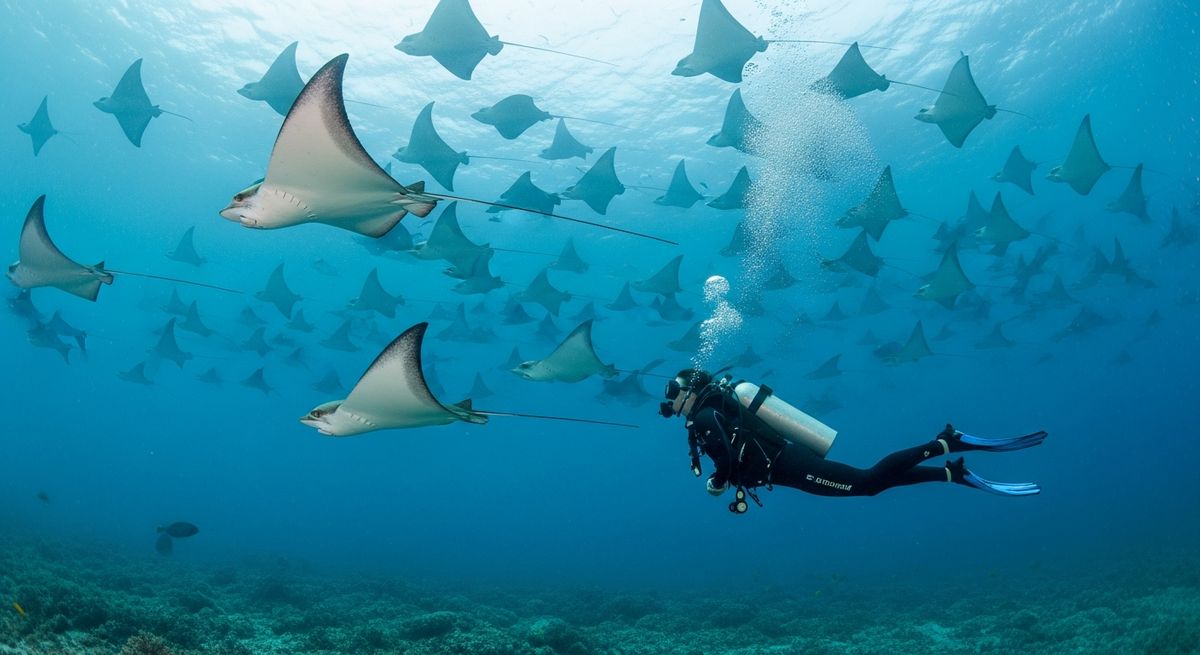
We love a good drift, and Sandy Island delivers a proper relaxed ride. You start north of Sandy Island and just let the current take you west, toward Mabouya. It’s mostly a sloping reef, dropping gently to about 17 metres, with stretches of coral mixed with open sand and patches of manatee grass. Visibility usually hangs around 18 metres here, a comfortable blue. What makes this spot special for us are the sheer numbers of blue creole wrasse and brown chromis. They’re everywhere, creating these shimmering walls of fish. Keep an eye peeled for nurse sharks tucked away under ledges, and we’ve often spotted eagle rays cruising by in the blue, sometimes even a stingray resting on the sand. The currents are generally mild, making it a great dive for anyone looking to just float along and soak it all in. We’d suggest going in the morning; the light on the sloping reef really pops.

Location
Punta Cana, Dominican Republic, Caribbean
Coordinates
18.674700, -68.392300
Type
drift
Maximum Depth
5-20m

Marine Protected Area: Costa Azul

Best Time to Dive in Punta Cana

The warmest water temperatures in Punta Cana occur in January, averaging 26.7°C. The coolest conditions are in December at 26.7°C.

Monthly Water Temperatures

  • January: 26.7°C (air: 24.9°C)
  • February: 26.7°C (air: 24.7°C)
  • March: 26.7°C (air: 24.9°C)
  • April: 26.7°C (air: 25.4°C)
  • May: 26.7°C (air: 26.6°C)
  • June: 26.7°C (air: 27.3°C)
  • July: 26.7°C (air: 27.4°C)
  • August: 26.7°C (air: 27.6°C)
  • September: 26.7°C (air: 27.7°C)
  • October: 26.7°C (air: 27.3°C)
  • November: 26.7°C (air: 26.1°C)
  • December: 26.7°C (air: 25.4°C)

Nearby Dive Sites in Punta Cana

Nearest Dive Centres to Paradise - Dominican Republic

Marine Life in Punta Cana

Home to 253 recorded species including 207 reef fish, 28 hard corals, 5 sharks & rays, 4 other, 3 crabs & lobsters, 2 whales & dolphins.

Notable Species

Recommended Packing List for Paradise - Dominican Republic

Based on average water temperature of 26.7°C.

  • Shorty or Rashguard - warm 27°C water needs minimal exposure protection
  • Mask - essential for every dive
  • Fins
  • BCD - buoyancy compensator
  • Regulator - your most safety-critical piece of gear
  • Dive Computer - tracks depth, time, and NDL
  • Surface Marker Buoy (SMB) - essential for boat pickups
  • Dive Torch - useful for crevices and colour at depth
  • Underwater Camera - capture your diving memories

Frequently Asked Questions

What is the typical depth range for diving at Paradise Reef in the Dominican Republic?
At Paradise Reef, the maximum depth for diving is 14 meters (approximately 46 feet). While the reef structure itself spans depths from 26 feet to 105 feet, typical dives at this site focus on the shallower, vibrant sections. This allows for an enjoyable experience for various diver skill levels.
What kind of marine life and coral can divers expect to see at the Paradise dive site in the Dominican Republic?
Divers exploring Paradise Reef can anticipate a rich variety of marine life. You'll likely encounter morays, nurse sharks, octopuses, eagle rays, stingrays, and squids. The reef is also home to an abundance of colorful fish, thriving amongst diverse hard and soft coral species, making it a vibrant underwater ecosystem to explore. For more information on marine species, visit our wildlife database.
Is the Paradise dive site in the Dominican Republic suitable for beginner scuba divers, or is it more for advanced divers?
The Paradise dive site in the Dominican Republic is classified as intermediate difficulty. However, its varied depths, ranging from 26 feet to 105 feet for the overall reef structure, mean there are sections suitable for different skill levels. While it offers something for everyone, beginners should dive with an experienced guide due to its drift dive nature, ensuring a safe and enjoyable introduction to this beautiful Punta Cana site.
What is the best time of year to dive at Paradise Reef in the Dominican Republic for optimal conditions?
The provided data does not specify the best time of year for optimal diving conditions at Paradise Reef. For general guidance on seasonal conditions in the region, we recommend consulting our When to Dive resource. It's always a good idea to check local weather and sea conditions closer to your travel dates for the most current information.
What scuba diving certifications are required to dive at Paradise - Dominican Republic?
Given that Paradise Reef is rated as an intermediate dive site with a maximum depth of 14 meters (approximately 46 feet), an Open Water Diver certification is generally sufficient. However, due to its drift dive nature, divers should have some experience or consider an Advanced Open Water Diver certification for enhanced skills and comfort. Always consult with your local dive operator regarding specific certification requirements and recommended equipment.
What are the typical water conditions, like currents and visibility, at the Paradise dive site in the Dominican Republic?
At the Paradise dive site in Punta Cana, divers can expect a drift dive experience, indicating the presence of currents. The average visibility at this stunning location is an impressive 17 meters (approximately 56 feet). These conditions contribute to an exciting and clear underwater exploration of the reef.