BERTINA
Protected Area
Guadeloupe
Why dive here
With 331+ marine species recorded in the area - including barracuda, dolphins, dwarf minke whales, humpback whales and manta rays - BERTINA offers some of Cousteau Reserve's richest wreck diving. Water ranges 27-30°C, warmest August, September, October.
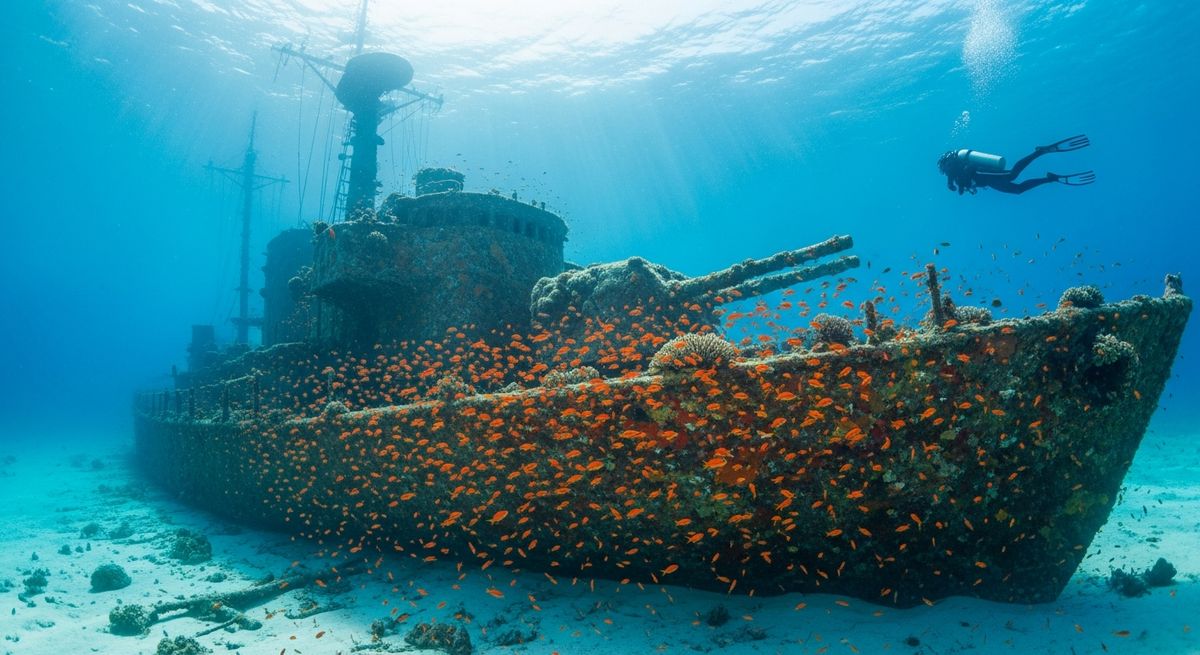
Bertina isn't just a wreck; it's a testament to nature's power and its resilience. This dredger, driven ashore by Hurricane Hugo back in '89, now lies in the shallows, a skeletal outline against the blue. We love how accessible it is, literally starting at 0m, making it perfect for snorkelers and newer divers alike, but there's enough character for experienced folks too. What you'll find here is less about penetration and more about exploration around the edges. Her stern rises closest to the surface, and as you fin along the remaining hull plates, you’ll spot parrotfish grazing on algae, their beaks scraping audibly if you listen closely. Schools of juvenile snapper often shelter within the broken sections, darting in unison as you approach. It's a slow dive, a place to really take your time, looking for the tiny nudibranchs that cling to the rusting metal or watching the damselfish fiercely guard their patches of coral growth. The way the light plays through the gaps in the wreck, especially on a sunny afternoon, paints the sand in shifting patterns of gold and blue. It’s a gentle introduction to wreck diving, less about the deep mystery and more about the ongoing story of a ship reclaimed by the sea.
Safety Notes
Wreck site - avoid penetration without wreck diving certification. Watch for sharp metal and entanglement hazards.
BERTINA Wreck History
Year Sunk
1989
Vessel Type
barge
Cause
storm
The Bertina was a 70-meter dredger that fell victim to one of the most powerful Atlantic storms on record. On September 17, 1989, the catastrophic force of Hurricane Hugo swept through the Caribbean, and the Bertina was unable to escape its wrath. The hurricane's immense winds and storm surge drove the massive vessel ashore, leaving it stranded where it lies to this day.
Located within Guadeloupe's famous Cousteau Reserve, the Bertina is an incredibly accessible and photogenic wreck. With a depth of 0 meters, its superstructure breaks the surface, making it an ideal site for snorkelers, freedivers, and divers of all levels. The wreck acts as an artificial reef, attracting schools of colorful fish and other marine creatures typical of the reserve. Its dramatic backstory and its transformation into a vibrant marine habitat make the Bertina a must-see landmark for anyone exploring the underwater world of Guadeloupe.
Nearest Dive Centres to BERTINA
Dive shops near BERTINA
SEACRETDIVE
ANSE CARAIBE PLONGEE
Piton Plongée
PPK PLONGEE GUADELOUPE
Atlantis Plongee
ECOLE DE PLONGEE BLEU PASSION GUADELOUPE
Reviews for BERTINA
Conditions
Ocean conditions, forecast and tides for BERTINA
BERTINA Ocean Conditions
Monthly averages for BERTINA, sourced from Open-Meteo marine data - nearest station: Open-Meteo marine grid (16.17, -61.78) (8km away)
October Averages
Sea Temperature
30°C
86°F · Range: 29.2–31.2°C
Air Temperature
27°C
81°F
Wind Speed
3.54 m/s
6.9 knots
Atmospheric Pressure
1013.4 hPa
Based on 4 years of monitoring data · Data sources: Open-Meteo marine data
Plan & book
Ways to dive Cousteau Reserve, from day trips to liveaboards.
Day trips & courses
via GetYourGuideGuided dives, courses and snorkel trips with instant booking.
Find dive trips in Cousteau ReservePlaces to stay
via Booking.comHotels and dive resorts near Cousteau Reserve.
Search stays in Cousteau ReserveDive insurance
Most travel insurance excludes or limits scuba. Check what you need before you go.
Dive insurance explainedPartner links: we may earn a commission if you book, at no extra cost to you. How we make money
Where to Stay near BERTINA
Prices from Booking.com. We may earn a commission at no extra cost to you.