Abyss Plongée
Protected Area
Cap Salomon
Why dive here
With 362+ marine species recorded in the area - including barracuda, dolphins, eagle rays, humpback whales and nurse sharks - Abyss Plongée offers some of Diamond Rock's richest wreck diving. Water ranges 27-30°C, warmest August, September, October.
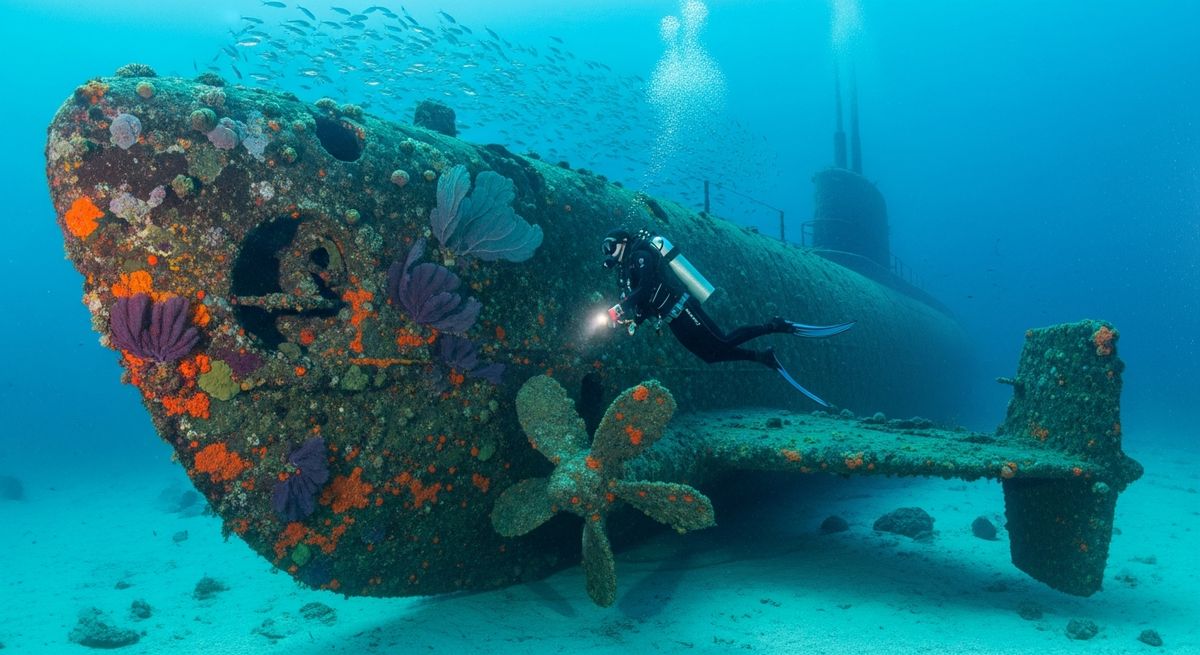
Okay, so you’ve seen Diamond Rock from the surface, right? That iconic volcanic plug jutting from the sea off Martinique. Most divers head for the shallow caves around its base, which are good, but for us, Abyss Plongée is where the real intrigue lies. It’s not actually a wreck in the traditional sense; it’s more of an artificial reef, a collection of debris from the old Diamond Rock fort, scattered deep on the seabed. Dropping down, the first thing you notice is the sheer volume of metal and rock, now completely encrusted. We're talking rusted cannons, cannonballs, chains, chunks of masonry, all resting in about 40 meters. It feels like swimming through a submerged museum, a silent testament to its dramatic history as a British naval fort. The visibility here can be truly excellent, sometimes pushing 30 meters, which lets you appreciate the scale of the debris field. Our favorite spot is a large section of what looks like a collapsed wall, now home to a resident nurse shark or two, often snoozing under an overhang. Look closely, and you’ll spot trumpetfish camouflaged against the rock and burro grunts schooling around the larger metal pieces. It's a deep dive, so plan your gas and bottom time carefully, and ideally, go with a guide who knows the layout. The current can pick up, but usually, it's a gentle drift over history. It’s not for absolute beginners, but if you’re comfortable with depth and love exploring something a bit different, it’s a truly compelling dive.
Safety Notes
Wreck site - avoid penetration without wreck diving certification. Watch for sharp metal and entanglement hazards.
Abyss Plongée Wreck History
Vessel Type
unknown
Off the southern coast of Martinique lies the iconic Diamond Rock, a volcanic plug that juts dramatically from the sea. The dive site known as "Abyss Plongée" is not a specific shipwreck but rather describes the thrilling underwater topography found here. The rock's sheer walls plunge into the depths, creating a spectacular wall dive that attracts divers from around the world. In the 19th century, this formidable rock was famously commissioned by the British Royal Navy as a 'stone frigate', HMS Diamond Rock, and was the site of a historic battle.
Divers exploring the Abyss Plongée will be mesmerized by the vertical drop-offs and the vibrant marine life that calls these walls home. The currents that sweep past the rock bring nutrient-rich waters, supporting a dense ecosystem of corals, sponges, and schools of pelagic fish. Keep an eye out for sea turtles, barracuda, and colorful reef fish as you navigate the impressive underwater landscape. This site is a testament to the fact that not all incredible dives are on wrecks; sometimes, nature itself provides the most breathtaking underwater architecture.
Nearest Dive Centres to Abyss Plongée
Dive shops near Abyss Plongée
Deep Turtle
O FIL DE L’EAU
CANOPEE BLEUE
Espace Plongee Martinique
Plongée Madiana Blue Plaisir
NATIYABEL
Reviews for Abyss Plongée
Conditions
Ocean conditions, forecast and tides for Abyss Plongée
Abyss Plongée Ocean Conditions
Monthly averages for Abyss Plongée, sourced from Open-Meteo marine data - nearest station: Open-Meteo marine grid (14.54, -61.06) (5km away)
October Averages
Sea Temperature
30°C
86°F · Range: 29.1–30.9°C
Air Temperature
28°C
82°F
Wind Speed
5.21 m/s
10.1 knots
Atmospheric Pressure
1012.3 hPa
Based on 4 years of monitoring data · Data sources: Open-Meteo marine data
Plan & book
Ways to dive Diamond Rock, from day trips to liveaboards.
Day trips & courses
via GetYourGuideGuided dives, courses and snorkel trips with instant booking.
Find dive trips in Diamond RockPlaces to stay
via Booking.comHotels and dive resorts near Diamond Rock.
Search stays in Diamond RockDive insurance
Most travel insurance excludes or limits scuba. Check what you need before you go.
Dive insurance explainedPartner links: we may earn a commission if you book, at no extra cost to you. How we make money
Where to Stay near Abyss Plongée
Prices from Booking.com. We may earn a commission at no extra cost to you.