Diving in Diamond Rock
Why dive here
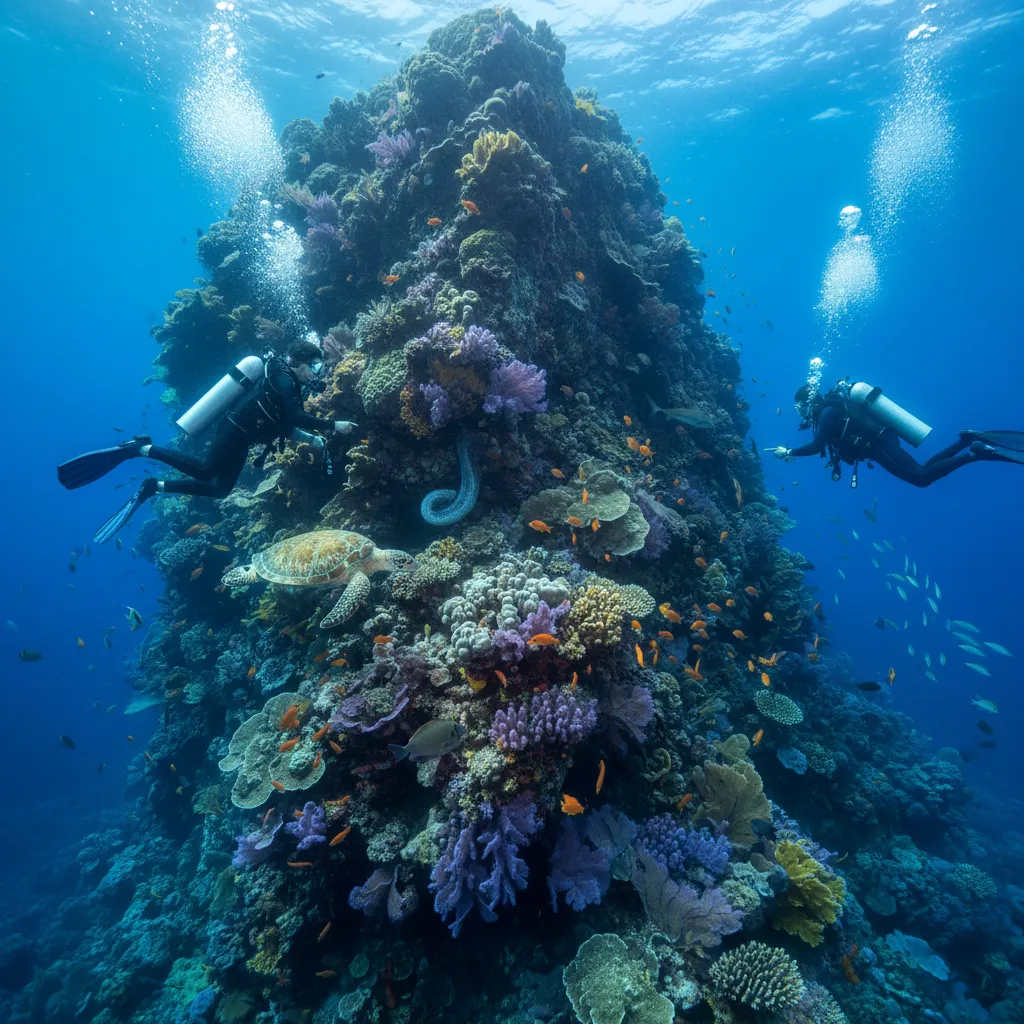
Diamond Rock offers some of Martinique's richest diving, with 362+ marine species recorded in the area - including barracuda, dolphins, eagle rays, humpback whales and nurse sharks. Water ranges 27-30°C, warmest August, September, October.
Diamond Rock, or Rocher du Diamant as the locals call it, is easily one of our favourite dives in Martinique. This dramatic volcanic outcrop juts straight out of the sea, and the diving here is strictly for advanced divers. The currents can be fierce, sweeping you past schools of blueback mullet so thick they dim the light, and shimmering bluewing searobins hugging the reef. We love the drift dives along its walls, especially on the south side, where the water often feels like a fast-moving river. You’ll be flying past crevices hiding longspine squirrelfish and the occasional dusky cusk. Our top tip for Diamond Rock is to go early in the morning before the wind picks up, which can make the boat ride pretty choppy. We’ve found the best visibility from December to May. Keep an eye out for triggerfish patrolling the deeper sections and, if you’re lucky, you might even spot mahi-mahi in the blue, though they’re more common in the open water surrounding the rock. The highlight for us is always the swim-through beneath the rock itself - a dark, exhilarating experience that feels like you're entering a different world. It’s tight, it’s dark, and it’s absolutely worth the adrenaline.
Diamond Rock Dive Site Map
Dive sites and dive centres in Diamond Rock
Diamond Rock Dive Sites
14 dive sites in Diamond Rock
Abyss Plongée
Okay, so you’ve seen Diamond Rock from the surface, right? That iconic volcanic plug jutting from the sea off Martinique. Most divers head for the shallow caves around its base, which are good, but for us, Abyss Plongée is where the real intrigue lies. It’s not actually a wreck in the traditional sense; it’s more of an artificial reef, a collection of debris from the old Diamond Rock fort, scattered deep on the seabed. Dropping down, the first thing you notice is the sheer volume of metal and rock, now completely encrusted. We're talking rusted cannons, cannonballs, chains, chunks of masonry, all resting in about 40 meters. It feels like swimming through a submerged museum, a silent testament to its dramatic history as a British naval fort. The visibility here can be truly excellent, sometimes pushing 30 meters, which lets you appreciate the scale of the debris field. Our favorite spot is a large section of what looks like a collapsed wall, now home to a resident nurse shark or two, often snoozing under an overhang. Look closely, and you’ll spot trumpetfish camouflaged against the rock and burro grunts schooling around the larger metal pieces. It's a deep dive, so plan your gas and bottom time carefully, and ideally, go with a guide who knows the layout. The current can pick up, but usually, it's a gentle drift over history. It’s not for absolute beginners, but if you’re comfortable with depth and love exploring something a bit different, it’s a truly compelling dive.
Alpha Plongée
Diamond Rock, or Rocher du Diamant as the locals call it, is an iconic landmark in Martinique, and Alpha Plongée gives you a cracking perspective of its underwater foundations. We’ve always found this site to be a proper kaleidoscope of blues, from the deep indigo of the drop-off to the lighter azure shallower parts. What we really love about Alpha Plongée is the way the light plays through the cracks and crevices of the rock itself, illuminating schools of blue-striped grunts and the occasional shy hogfish. Keep an eye out for seahorses here; we’ve had some cracking encounters tucked away amongst the gorgonians. The resident mutton snapper are pretty bold, often checking you out with an inquisitive eye. It’s a site that feels a bit wild, a true Caribbean classic, with that surge reminding you you’re diving an exposed rock face. We’d suggest hitting it on a calmer day to really appreciate the details, especially if you want to spend time hunting for those seahorses. The deeper sections often give you glimpses of larger pelagics moving past. It’s a dive that rewards slow exploration, perfect for photographers or anyone who appreciates the subtle beauty of a robust reef ecosystem.
An Dlo
An Dlo, on the lee side of Diamond Rock, is one of those places that genuinely surprises you. Most divers come for the rock itself, with its swim-throughs and tunnels, but we think An Dlo offers a different kind of magic. It’s a rocky slope, not a typical reef, and that’s precisely what makes it intriguing. Instead of hard corals, you’re looking at dramatic rock formations draped in black coral whips that sway hypnotically in the surge. The big draw here, for us, is the pelagic potential. We’ve seen Atlantic bumpers schooling in tight formations, their silvery sides flashing. If you keep an eye on the blue, you might catch a glimpse of horse-eye jacks cruising past, or even a fleeting shadow of a shortfin mako. It’s not a guarantee, of course, but the possibility adds a layer of excitement. We also love spotting the more unusual residents like cowfish poking around the rocks. Visibility can vary, but when it’s good, the light plays beautifully through the water column, illuminating the dark rock faces. It’s a relatively easy dive, generally, but pay attention to the surge, especially closer to the rock – it can be quite playful. We’d suggest this site for divers who appreciate dramatic topography and a chance at seeing some larger, open-water species rather than intricate macro life. It’s a site that rewards patience and a keen eye for the unexpected.
Calypso Plongée
Calypso Plongée, on the leeward side of Diamond Rock, is one of our favourite spots for a relaxed dive with a surprising cast of characters. We usually drop in here when the currents are a bit punchy on the main side, finding a calmer, shallower alternative that still delivers. It’s mostly rocky, with plenty of overhangs and crevices, which means you're constantly finding little surprises tucked away. You’ll spot the usual Caribbean suspects, of course – trumpetfish hovering vertically, some decent-sized horse-eye jacks cruising by – but it’s the smaller, shyer residents that we really love here. Keep an eye out for mottled flounders camouflaged perfectly against the sand patches and tobacco basslets darting into the shade. We’ve had some fantastic encounters with puffers tucked into rocky alcoves, and if you’re lucky, a Caribbean moonfish might glide past. We've even been buzzed by melon-headed whales here, which is always a thrill. It’s a site that rewards slow exploration, peering into every crack, rather than rushing through.
Corail Club Caraïbes
Look, we're not going to lie. Diving the Corail Club Caraïbes feels a bit like you’ve stumbled onto a secret, a rocky haven tucked away from the main Diamond Rock traffic. The real draw here isn’t some massive shipwreck or a riot of technicolor corals, but the sheer density of interesting critters hiding in plain sight. We’ve spent whole dives just combing the nooks and crannies of the rocky substrate, finding Mushroom Scorpionfish so perfectly camouflaged they practically disappear, and the odd Sand Stargazer peering up from the seabed. This site is all about slowing down, really looking. You'll see those shy Lawyer fish darting into crevices, and keep an eye out for the Blacktip sharks that sometimes cruise the deeper sections – a proper thrill. It’s also one of our favourite spots for spotting Black coral if you know where to look. Forget the fast-paced drifts; Corail Club Caraïbes is for the patient observer, the diver who loves a treasure hunt and wants to tick off some unusual finds from their logbook.
Diamond s rock
Diamond Rock offers a distinctive dive on a volcanic pinnacle. We’ve found decent drift dives here, with currents often sweeping around the base. You’ll typically see schooling fish, like jacks and barracuda, congregating in the deeper sections, along with some resident turtles. It's a solid choice for intermediate divers comfortable with current.
Espace Plongée Martinique
Diamond Rock, or Rocher du Diamant, is probably the most iconic dive in Martinique, and Espace Plongée Martinique sets you right at its base. Dropping down, we immediately feel the history of the place, an old fortress now covered in corals. Our favourite part has to be the swim-throughs, especially the famous ‘Cathedral’. Light shafts pierce the gloom, illuminating schools of silversides that flicker like disco balls. Nurse sharks often nap in the crevices, unbothered by our presence, and we’ve seen barracuda hanging motionless in the current, eyes tracking every movement. This is a dive for those who appreciate dramatic topography and a bit of adventure. The currents here can be lively, so it’s best suited for experienced divers, or at least those comfortable with a bit of a drift. We always try to time our dive for mid-morning; the light is perfect then, really showing off the rock's scale.
Le Diamant
Le Diamant isn’t for the faint of heart, but if you’re an experienced diver looking for a thrill, this volcanic pinnacle off Diamond Rock delivers. We’ve had some of our most exhilarating dives here, often feeling the push and pull of the strong currents that funnel around the rock. It’s an advanced dive, for sure, usually a drift, so keep your eyes on your buddy and your depth. What makes it special? The sheer scale of the rock itself dropping down, and the pelagic action it attracts. We've seen some serious schools of horse-eye jacks here, swirling in the blue, and barracuda are a constant presence, just hanging, watching. We’ve also spotted green turtles cruising by, completely unfazed by the flow. Our favourite dives are early morning, before too many boats arrive, when the light catches the rock just right and you feel like you have the place to yourself. Visibility can be epic, sometimes 30m plus, especially on an incoming tide. You want to be comfortable with current, because it can really rip, but that’s precisely why the big stuff hangs around.
Mada Plongée
Okay, Mada Plongée at Diamond Rock. This isn’t a gentle drift over pretty corals, let’s be clear. It’s a dive that gets your heart going, especially if the current is pushing. We love it because it’s raw, a colossal volcanic plug erupting from the sea, and underwater it’s just as dramatic. You’re descending onto sheer rock walls, riddled with caves and overhangs, often with a powerful surge pushing you around a bit. The real show here is the schooling fish. We’ve been enveloped in clouds of silverfish so thick it feels like twilight, and watched huge aggregations of burro grunt just hanging in the blue. Keep an eye out for larger pelagics too – we've spotted the occasional long-beaked dolphin cruising by, and once even a mako shark on the deeper side. Trumpetfish are always trying to blend in, and the hogfish here are particularly bold. It’s a site that rewards experienced divers who are comfortable in strong conditions and appreciate a dramatic, wild environment over a manicured reef. Come prepared for an exhilarating ride, especially if you catch it when the current is running.
MISSISSIPI
The Mississippi wreck, shallow at just 3m, is one of our favourites around Diamond Rock, but don't expect a big, intact ship. This is the remains of a steamboat, a paddle wheeler that ran aground here back in 1899. What you’ll find now are the scattered fragments: bits of twisted metal, old pipes, and the unmistakable paddlewheel itself, all spread across a sandy patch near the shore. It’s like an archaeological dig underwater. We love this site for its historical feel and how it’s been completely taken over by the reef. Look closely among the wreckage and you’ll spot moray eels tucked into crevices, schools of juvenile snapper darting through the metal ribs, and a surprising variety of nudibranchs if you slow down enough. It’s a photographer’s dream on a sunny day when the light dances on the metal and the colours pop. Entry can be a bit tricky depending on the swell, often a shore entry over some smooth rocks, so check conditions before you commit. It’s ideal for new divers or anyone looking for a relaxed, unique snorkel or dive without much depth.
MORN S
Morn S, lying just off Diamond Rock, isn't your typical Caribbean wreck. We love it because it’s a living piece of history, a schooner that went down in 1970, and now it’s a shallow, accessible habitat. At just two metres deep, it’s a perfect spot for divers new to wrecks, or those who just want a relaxed second dive with plenty to see. You'll find Morn S largely intact, though time and the ocean have softened its edges. The hull is still clearly discernible, the deck beams long gone, opening up the entire structure to light and fish. We often spot schools of snapper swirling through the ribs, and there are always angelfish poking around the remaining wooden planks. Look closely and you’ll find moray eels tucked into the darker corners, usually peeking out with just their heads visible. The ambient light here is incredible, illuminating the wreck’s entire length, making for some truly atmospheric photos. It’s not about penetration or deep exploration, but about appreciating how quickly a human construct can be reclaimed by the sea.
Nahoon Wreck
The Nahoon Wreck, resting on the seabed near Diamond Rock, is our top pick in Martinique for a reason. It’s a purposeful wreck, scuttled in 1993, which means it’s upright and largely intact. As you descend, the sheer size of this 55-meter freighter really hits you; it’s an impressive sight, especially when the light shafts through the wheelhouse. We love exploring the hold, often finding schooling jacks circling inside, and the upper deck is covered in vibrant sponges and soft corals. Keep an eye out for moray eels tucked into crevices, and we’ve spotted plenty of lionfish patrolling the railing. The Nahoon isn’t a deep dive, usually around 30 meters to the sand, making it accessible for advanced open water divers looking for a good penetration opportunity without extreme depth or decompression stress. It can get busy, so we’d suggest an early morning dive to have her mostly to yourself. The currents here are generally mild, but a gentle drift isn't uncommon.
Show all 14 dive sites in Diamond Rock
Diamond Rock Dive Centres
7 dive shops and operators in Diamond Rock
Ocean Wildlife in Diamond Rock
362 species recorded in Diamond Rock
Diamond Rock Daylight & Sunrise/Sunset
Sunrise and sunset times for Diamond Rock, calculated from coordinates
Today - Sunday 11 October
Sunrise
05:55
Sunset
17:48
Daylight
11h 53m
Golden Hour
17:20
First light (dawn) at 05:34 · Last light (dusk) at 18:10
Monthly Averages
| Month | Sunrise | Sunset | Daylight |
|---|---|---|---|
| Jan | 06:33 | 17:54 | 11h 21m |
| Feb | 06:29 | 18:09 | 11h 40m |
| Mar | 06:13 | 18:15 | 12h 2m |
| Apr | 05:52 | 18:18 | 12h 27m |
| May | 05:38 | 18:25 | 12h 47m |
| JunLongest | 05:36 | 18:35 | 12h 59m |
| Jul | 05:43 | 18:38 | 12h 55m |
| Aug | 05:51 | 18:28 | 12h 38m |
| Sep | 05:54 | 18:08 | 12h 14m |
| OctNow | 05:56 | 17:46 | 11h 50m |
| Nov | 06:05 | 17:34 | 11h 28m |
| DecShortest | 06:21 | 17:38 | 11h 17m |
Times are approximate local times based on longitude. Actual times may vary slightly depending on the exact timezone observed in Diamond Rock.
Where to Stay near Diamond Rock
Prices from Booking.com. We may earn a commission at no extra cost to you.
Marine Protected Areas near Diamond Rock
17 protected areas near Diamond Rock - please respect local regulations when diving
Martinique
Marine Du Prêcheur - Albert Falco
Cap Salomon
Périmètre De Protection De La Réserve Des Ilets De Sainte-Anne
Le Galion - Pointe Jean-Claude
Rocher Du Diamant
Rocher Du Diamant
Le Cap Ferre
Secteur Du Pain De Sucre
Îlets De Sainte-Anne
Ilet Oscar
Rocher De La Caravelle
Showing 12 largest of 17
Getting to Diamond Rock
Fort-de-France
Vieux Fort
Kingstown
Plan & book
Ways to dive Diamond Rock, from day trips to liveaboards.
Day trips & courses
via GetYourGuideGuided dives, courses and snorkel trips with instant booking.
Find dive trips in Diamond RockPlaces to stay
via Booking.comHotels and dive resorts near Diamond Rock.
Search stays in Diamond RockDive insurance
Most travel insurance excludes or limits scuba. Check what you need before you go.
Dive insurance explainedPartner links: we may earn a commission if you book, at no extra cost to you. How we make money