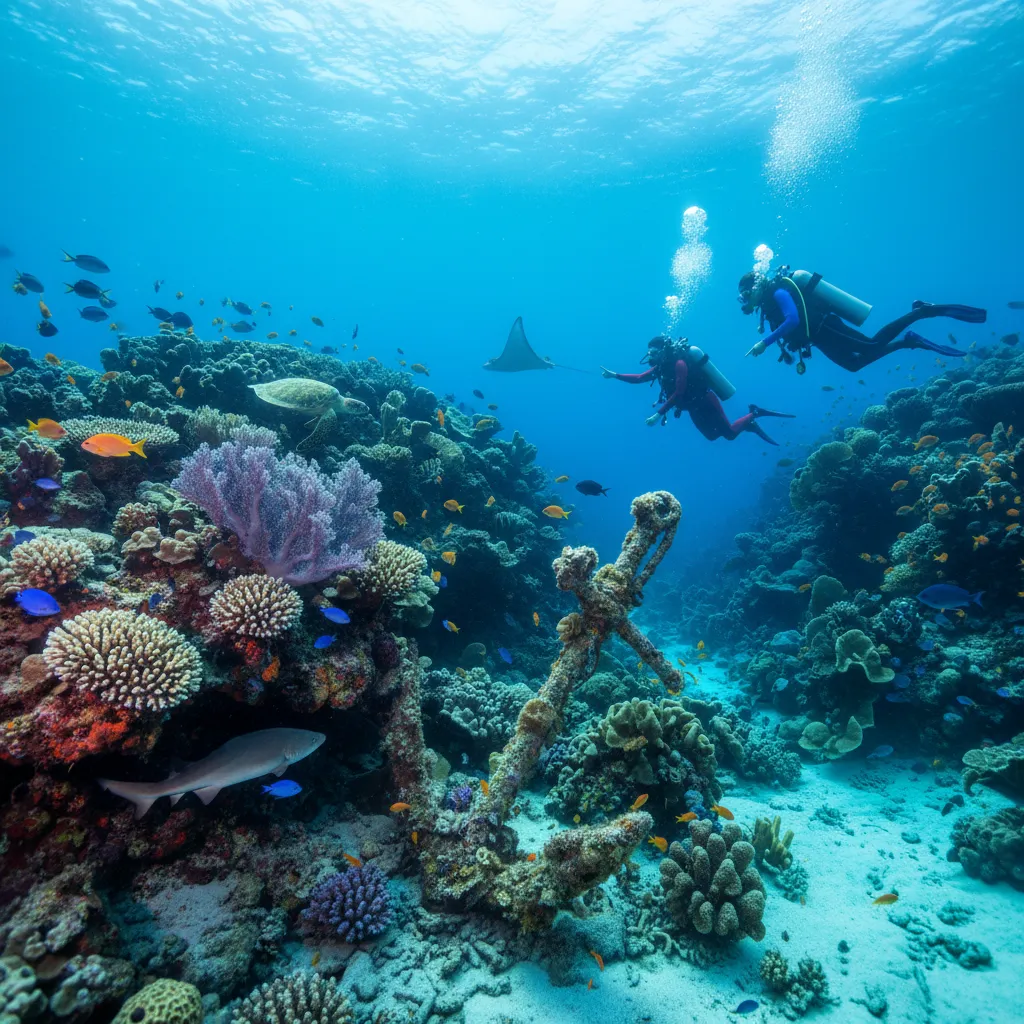
Diving in Anse La Raye
Why dive here
Anse La Raye offers some of St. Lucia's richest diving, with 256+ marine species recorded in the area - including bull sharks, dolphins, eagle rays, humpback whales and oceanic whitetip sharks. Water sits around 28°C.
Anse La Raye sits a little off the typical St. Lucian dive circuit, and that’s precisely what we love about it. You get a sense of quiet discovery here, with fewer boats and a more relaxed pace. The dive sites are a good mix, from gentle reefs perfect for knocking off the rust to deeper walls that ask a bit more of you. Our favourite spot here is the wall at Anse Cochon, a proper vertical drop that feels like diving off the edge of the world. We've often found ourselves eye-to-eye with big barracuda lurking in the blue, or spotting the intricate patterns of a spotted trunkfish moving slowly along the coral. Keep an eye out for the odd conger eel peeking from a crevice. The wrecks, like the Lesleen M, are also a fantastic dive, already well-colonised and a magnet for schools of false herring. Visibility is generally good, often stretching to 20-25 metres, and the currents are typically mild, especially compared to some of the more exposed sites further south. We'd suggest going in the morning; the light on the wall is spectacular as the sun climbs higher. The lack of crowds really lets you savour the small stuff, like the shy opossum pipefish or the vibrant red hogfish darting between the soft corals. It's a genuine slice of Caribbean diving, unhurried and full of life.
Anse La Raye Dive Site Map
Dive sites and dive centres in Anse La Raye
Anse La Raye Dive Sites
6 dive sites in Anse La Raye
Anse La Raye Wall
Anse La Raye Wall is one of those St. Lucia sites that just keeps giving. We love a good wall dive, and this one really delivers, dropping deep past overhangs and crevices. It's an advanced spot for sure; you’ll want to be comfortable with your buoyancy, especially when the current picks up a bit, which it can do without much warning. The real draw here is the black coral, huge fans of it clinging to the darker sections of the wall. We’ve found some impressive barrel sponges, too, big enough to fit a person, if you were so inclined. Keep an eye out into the blue. We've had a few lucky encounters with eagle rays gliding by, their shadows passing quickly overhead. Look closely at the smaller stuff, too. The hamlets are everywhere, and we often spot triggerfish picking at the coral. It’s a dive that rewards patience and a good light, especially for those darker corners where the wall recedes. Go in the morning before the boat traffic gets heavy.
Dive Fair Haven
Dive Fair Haven, right outside Anse La Raye, feels like a secret the locals are letting you in on. We love that it’s usually quieter than the sites further south, giving you space to properly explore. The reef here slopes gently, allowing for long, relaxed bottom times, which is great because there's so much macro to spot. We’ve spent whole dives just combing the sandy patches and small coral heads for the more unusual stuff, like Speckled Worm Eels poking out of the sand or those tiny Padded Clingfish tucked into crannies. Our favourite time to dive here is mid-morning, just after the initial boat traffic has passed, when the light really brings out the colours of the sponges. Keep an eye out for the Needlefish cruising just beneath the surface; their reflections dance on the seabed. You’ll often find schools of Atlantic Thread Herring shimmering in the blue, sometimes with a snapper or two lurking nearby. It’s a site that rewards a slow pace and keen eyes, perfect for photographers or anyone who enjoys finding the smaller, often overlooked creatures.
LESLEEN M
The *Lesleen M* sits upright at a modest 18 metres, making her one of our favourite Caribbean wrecks for newer wreck divers, or those who just want a relaxed second dive. This 45-metre cargo vessel was scuttled back in 1986, and she’s had plenty of time to really settle in, becoming a proper, living reef. We love dropping down onto the main deck, where you’ll usually find big schools of chromis darting around the mast. The wheelhouse is still largely intact, and you can easily swim through the cargo hold, where light shafts create really cool patterns on the sand. Look closely for pipefish camouflaged against the encrusting corals, and we often spot moray eels tucked into crevices along the hull. The *Lesleen M* isn’t about huge pelagics; it’s about the intimacy of exploring a wreck that feels like a natural part of the seabed, absolutely buzzing with reef life. Go early to beat any day boat crowds.
Lesleen M and Vicky B Wrecks
We love an easy wreck dive, and the Lesleen M off Anse Cochon really delivers. Sunk back in '86, this cargo ship is well-colonised now, meaning you get the structure of the wreck mixed with serious growth. Our favourite part is swimming through the cargo holds; keep an eye out for horse-eye jacks circling in the deeper sections, and we often spot big blue parrotfish grazing along the deck. The Vicky B, a fishing boat scuttled in 2018, is a short swim away – it’s a newer wreck, so still quite intact, with barracuda often hanging off the bow. With a maximum depth of 21 metres and generally calm conditions, it’s a comfortable dive for anyone who enjoys exploring sunken history without pushing the limits.
Turtle Reef
Turtle Reef in Anse La Raye is exactly what it sounds like. We’ve probably spent more bottom time here than anywhere else on St. Lucia, and for good reason: it delivers what it promises. It’s a gentle slope, mostly around 10-15m, with a mix of coral patches and those lovely turtlegrass beds that act as a magnet for grazers. You’ll spot hawksbill turtles almost every time we’ve been down, munching away without a care. Our favourite encounters are often with the honeycomb cowfish, just pottering along, completely unbothered. The reef itself feels healthy and calm, with plenty of grunts and slender parrotfish moving through the corals. If you’re a newer diver, or just after a relaxed dive where you can truly slow down and observe, this is our top pick. The ease of the site means you can really take your time, watching those turtles and feeling the gentle sway of the water.
VOLGA
The Volga, a 90-meter steamship, sits broken in just seven meters of water off Anse La Raye. What remains is a scatter of metal plates, ribs, and machinery, more of a debris field than an intact vessel. Still, it’s an interesting wreck for a relaxed dive, especially for those newer to wreck diving or anyone who prefers staying shallow. You’ll find plenty of schooling fish darting among the twisted metal, and the occasional moray eel peeking from a crevice. It’s an easy swim, giving you time to poke around the different sections and appreciate how the reef has reclaimed this old ship.
Anse La Raye Dive Centres
4 dive shops and operators in Anse La Raye
Ocean Wildlife in Anse La Raye
256 species recorded in Anse La Raye
Anse La Raye Daylight & Sunrise/Sunset
Sunrise and sunset times for Anse La Raye, calculated from coordinates
Today - Sunday 11 October
Sunrise
05:55
Sunset
17:49
Daylight
11h 54m
Golden Hour
17:20
First light (dawn) at 05:34 · Last light (dusk) at 18:10
Monthly Averages
| Month | Sunrise | Sunset | Daylight |
|---|---|---|---|
| Jan | 06:32 | 17:55 | 11h 23m |
| Feb | 06:29 | 18:10 | 11h 41m |
| Mar | 06:13 | 18:15 | 12h 2m |
| Apr | 05:52 | 18:18 | 12h 26m |
| May | 05:39 | 18:24 | 12h 46m |
| JunLongest | 05:37 | 18:34 | 12h 57m |
| Jul | 05:44 | 18:37 | 12h 53m |
| Aug | 05:52 | 18:28 | 12h 36m |
| Sep | 05:54 | 18:08 | 12h 14m |
| OctNow | 05:56 | 17:46 | 11h 51m |
| Nov | 06:05 | 17:34 | 11h 30m |
| DecShortest | 06:20 | 17:39 | 11h 19m |
Times are approximate local times based on longitude. Actual times may vary slightly depending on the exact timezone observed in Anse La Raye.
Where to Stay near Anse La Raye
Prices from Booking.com. We may earn a commission at no extra cost to you.
Marine Protected Areas near Anse La Raye
31 protected areas near Anse La Raye - please respect local regulations when diving
Cold Upwelling
Pitons(Qualibou and Canaries)
West Coast (incl. Soufriere, Rachette Reefs, Petit Piton, Gros Piton and Anse Chastenets)
Iyanola and Grande Anses, Esperance and Fond D'ors
East Coast (incl. Fond D'Or, Grand Anse Marine Reserve, Cas En Bas, Marquis, Esperance Harbour and Louvette Marine Reserves)
Pointe Sable
East Coast
East Coast
Mandelé
East Coast and Praslin
West Coast (incl. Anse la Raye/Canaries Local Fisheries Management Area and Marigot Bay)
Zone de gestion des Pitons
Showing 12 largest of 31
Getting to Anse La Raye
Castries
Vieux Fort
Fort-de-France
Plan & book
Ways to dive Anse La Raye, from day trips to liveaboards.
Day trips & courses
via GetYourGuideGuided dives, courses and snorkel trips with instant booking.
Find dive trips in Anse La RayePlaces to stay
via Booking.comHotels and dive resorts near Anse La Raye.
Search stays in Anse La RayeDive insurance
Most travel insurance excludes or limits scuba. Check what you need before you go.
Dive insurance explainedPartner links: we may earn a commission if you book, at no extra cost to you. How we make money