TRANSFER
Protected Area
Sandbore, Lighthouse Reef
Why dive here
With 213+ marine species recorded in the area - including barracuda, dolphins, eagle rays, nurse sharks and sea turtles - TRANSFER offers some of Lighthouse Reef's richest wreck diving. Water ranges 27-30°C, warmest August, September, October.
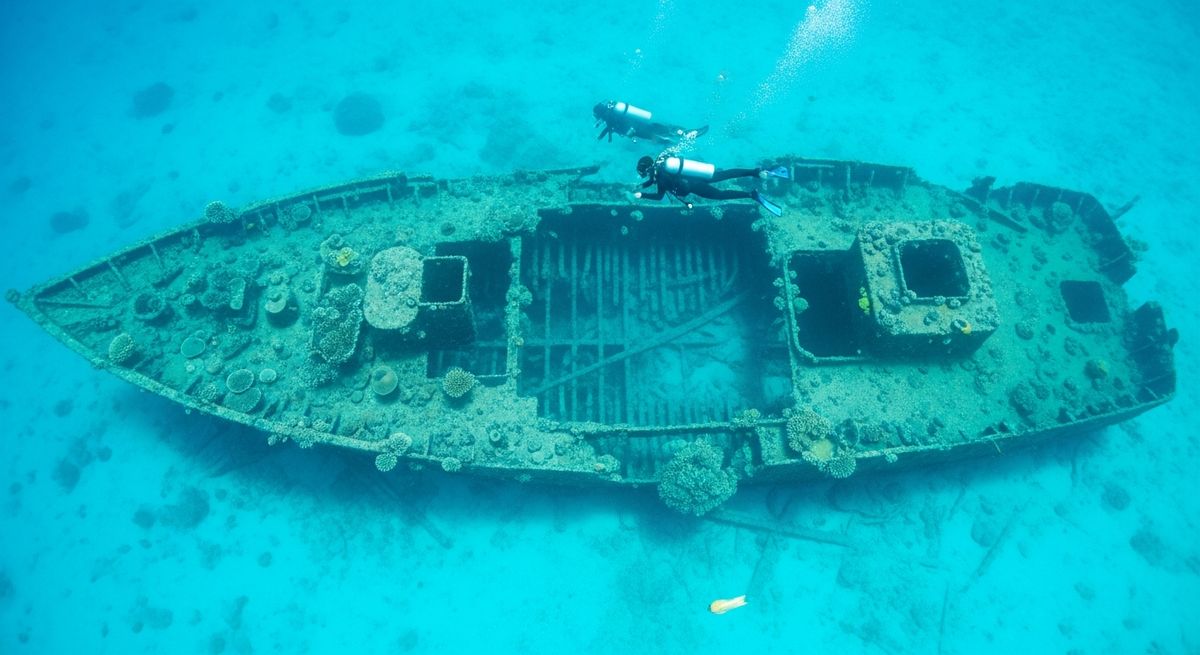
TRANSFER sits in just two metres of water, a carrier vessel sunk back in 2005. This isn't your typical wreck dive for the deep-set, dark kind of exploration; this is a snorkel or a very shallow scuba dive, perfect for photographers or those who just love to linger. We love it because it’s so accessible, giving you all the detail without the depth. We’ve found the best time to go is late morning, after the initial rush, when the sun is high and cuts through the surface to illuminate the wreck. The light plays across the decaying superstructure, highlighting the rust colours against the clear water. You can spend ages just finning slowly over the remains of the deck, peering into what’s left of the cabins. Little schools of snapper often dart in and out of the metalwork, and we’ve seen some surprisingly large groupers lurking under the deeper sections of hull, though ‘deeper’ here means maybe three metres. It’s a gentle exploration, well suited for families or anyone wanting a relaxed, visually rich surface interval.
Typical TRANSFER Dive Profile
Illustrative profile based on site depth and type. Actual dive profiles vary - always follow your dive computer and training.
Safety Notes
Wreck site - avoid penetration without wreck diving certification. Watch for sharp metal and entanglement hazards.
Nearest Dive Centres to TRANSFER
Dive shops near TRANSFER
View all dive centres in Lighthouse ReefReviews for TRANSFER
Conditions
Ocean conditions, forecast and tides for TRANSFER
TRANSFER Ocean Conditions
Monthly averages for TRANSFER, sourced from Open-Meteo marine data + Copernicus Marine (EU) - nearest station: Open-Meteo marine grid (17.22, -87.61) (6km away)
October Averages
Sea Temperature
30°C
86°F · Range: 29.1–31.7°C
Current Speed
11.66 cm/s
Direction: NW (301°)
Chlorophyll-a
0.074 mg/m³
Very clear (oligotrophic)
Salinity
35.96 PSU
Based on 4 years of monitoring data · Data sources: Open-Meteo marine data + Copernicus Marine (EU)
Plan & book
Ways to dive Lighthouse Reef, from day trips to liveaboards.
Day trips & courses
via GetYourGuideGuided dives, courses and snorkel trips with instant booking.
Find dive trips in Lighthouse ReefPlaces to stay
via Booking.comHotels and dive resorts near Lighthouse Reef.
Search stays in Lighthouse ReefDive insurance
Most travel insurance excludes or limits scuba. Check what you need before you go.
Dive insurance explainedPartner links: we may earn a commission if you book, at no extra cost to you. How we make money
Where to Stay near TRANSFER
Prices from Booking.com. We may earn a commission at no extra cost to you.