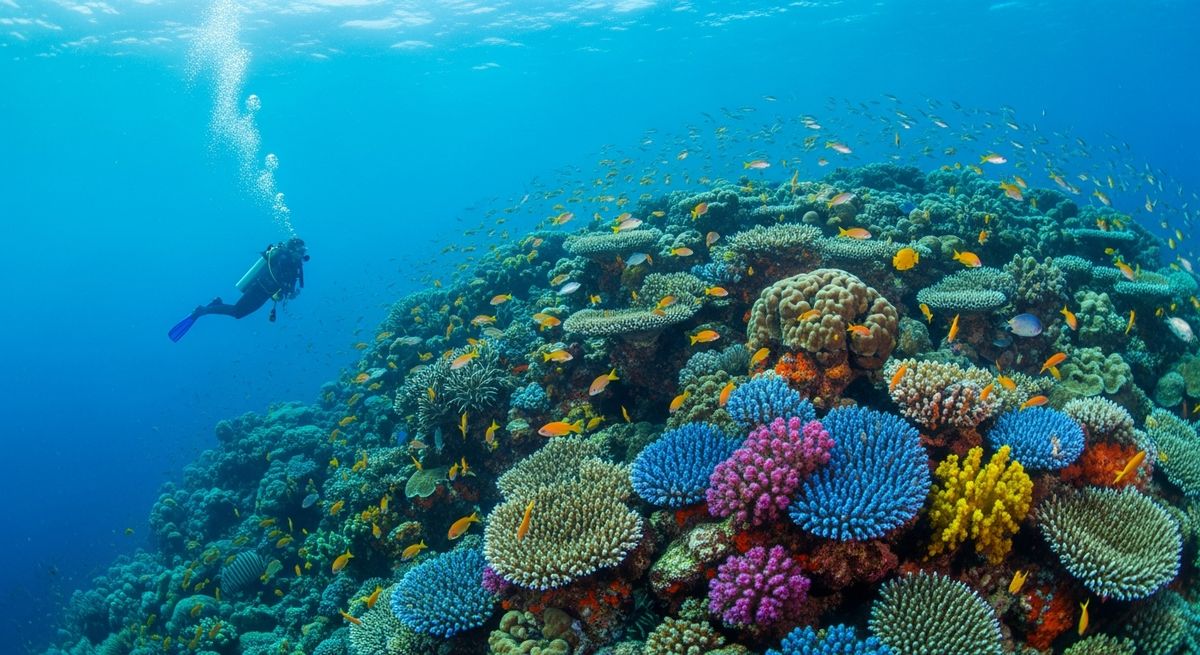
Black Coral Wall
Protected Area
Sistema de Humedales de la Isla de Utila
Why dive here
With 168+ marine species recorded in the area - including barracuda, orcas, sea turtles, whale sharks and pufferfish - Black Coral Wall offers some of Roatán's richest reef diving. Water ranges 27-30°C, warmest August, September, October.
We’ve always had a soft spot for Black Coral Wall, and it's not just for the wispy, black coral bushes that give it its name. This isn't a dramatic vertical drop, but a gently sloping wall that peels away into the blue, punctuated by chunky rock formations. That topography creates plenty of nooks and crannies to explore. Our favourite way to dive this site is to start shallower, maybe 10-12m, and just drift along, letting the current (usually mild here) carry us. Keep an eye out for horse-eye jacks patrolling the deeper edge of the wall, and the constant schooling grunts and schoolmasters that fill the water column. The black coral, often overlooked, is quite beautiful when you slow down and actually look at it – delicate fans and trees that wave in the slight surge. You’ll spot plenty of yellowhead wrasse darting between the corals and maybe a shy pygmy filefish camouflaged against a sponge. It’s a relaxed dive, perfect for photographers or anyone who likes to take their time soaking it all in, rather than chasing big pelagics.
Nearest Dive Centres to Black Coral Wall
Dive shops near Black Coral Wall
Coral View Utila Dive Center
Captain Morgans Dive Center
Alton's Dive Center
Freedive Utila
Underwater Vision Dive Center
Utila Dive Center
Reviews for Black Coral Wall
Conditions
Ocean conditions, forecast and tides for Black Coral Wall
Black Coral Wall Ocean Conditions
Monthly averages for Black Coral Wall, sourced from Open-Meteo marine data + Copernicus Marine (EU) - nearest station: Open-Meteo marine grid (16.27, -86.6) (5km away)
October Averages
Sea Temperature
30°C
86°F · Range: 29–31.6°C
Current Speed
1.41 cm/s
Direction: NW (315°)
Chlorophyll-a
0.052 mg/m³
Very clear (oligotrophic)
Salinity
35.96 PSU
Based on 4 years of monitoring data · Data sources: Open-Meteo marine data + Copernicus Marine (EU)
Plan & book
Ways to dive Roatán, from day trips to liveaboards.
Day trips & courses
via GetYourGuideGuided dives, courses and snorkel trips with instant booking.
Find dive trips in RoatánPlaces to stay
via Booking.comHotels and dive resorts near Roatán.
Search stays in RoatánDive insurance
Most travel insurance excludes or limits scuba. Check what you need before you go.
Dive insurance explainedPartner links: we may earn a commission if you book, at no extra cost to you. How we make money
Where to Stay near Black Coral Wall
Prices from Booking.com. We may earn a commission at no extra cost to you.