Bucca Quay
Protected Area
Islas de la Bahía
Why dive here
With 168+ marine species recorded in the area - including barracuda, orcas, sea turtles, whale sharks and pufferfish - Bucca Quay offers some of Roatán's richest wall diving. Water ranges 27-30°C, warmest August, September, October.
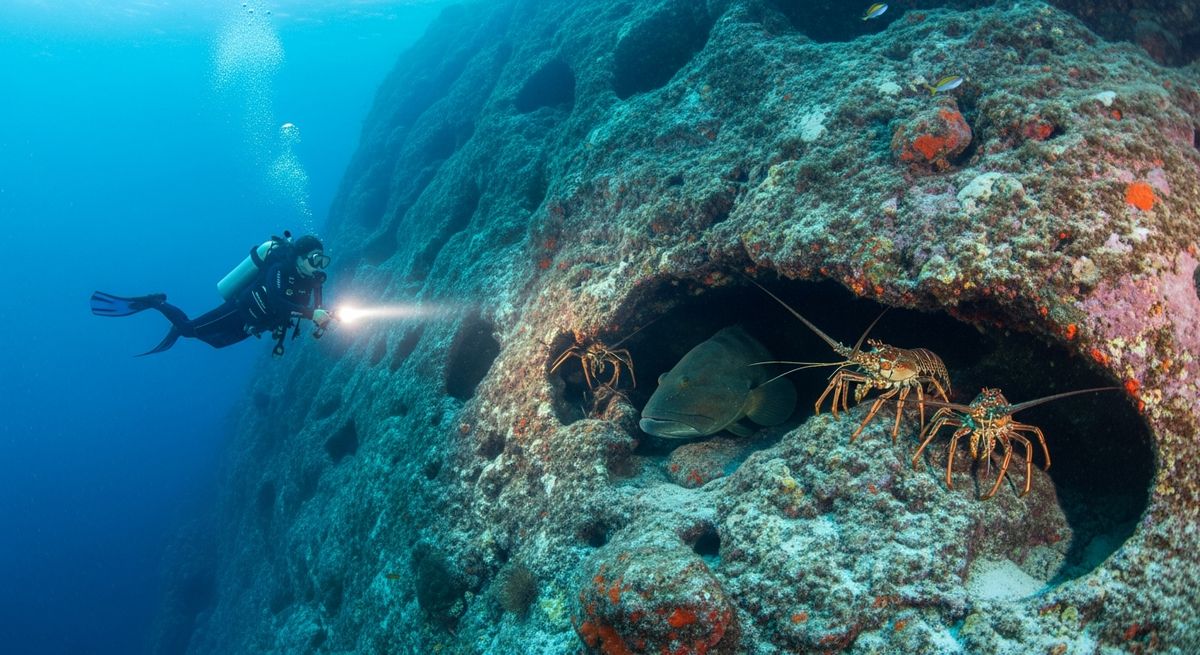
Okay, Bucca Quay. Don't let anyone tell you it's "West End Wall," the proper name is Bucca Quay, and it’s a Roatán classic for a reason. We love this site for its easy drift along the wall, which means you can really just hang back and let the current do the work. The wall starts around 20 metres and then slopes deeper, creating these fantastic sandy chutes and mini-canyons you can peek into. Keep an eye out for the smaller stuff here; the sand flats just off the wall are home to colonies of yellowhead jawfish popping in and out of their burrows, and we've spotted some chunky fat sleepers resting on the bottom. Our favourite part is often just looking out into the blue. With that deep water right there, you do get the chance for a pelagic sighting – keep an eye out for a passing hammerhead if you're lucky. The sheer volume of angelfish and various basslets hugging the wall itself is impressive, creating a vibrant tapestry against the deep blue. This is a perfect dive for those who enjoy a relaxed drift, plenty of fish life, and the occasional thrill of a potential big animal encounter.
Typical Bucca Quay Dive Profile
Illustrative profile based on site depth and type. Actual dive profiles vary - always follow your dive computer and training.
Safety Notes
Always perform a 3-minute safety stop at 5m before surfacing.
Nearest Dive Centres to Bucca Quay
Dive shops near Bucca Quay
Infinity Divers Aqua Center
West Bay Divers
Clearwater Adventures
Blue Moon Scuba
Roatan Freediving
Kotos Adventures
Reviews for Bucca Quay
Conditions
Ocean conditions, forecast and tides for Bucca Quay
Bucca Quay Ocean Conditions
Monthly averages for Bucca Quay, sourced from Open-Meteo marine data + Copernicus Marine (EU) - nearest station: Open-Meteo marine grid (16.27, -86.6) (5km away)
October Averages
Sea Temperature
30°C
86°F · Range: 29–31.6°C
Current Speed
1.41 cm/s
Direction: NW (315°)
Chlorophyll-a
0.052 mg/m³
Very clear (oligotrophic)
Salinity
35.96 PSU
Based on 4 years of monitoring data · Data sources: Open-Meteo marine data + Copernicus Marine (EU)
Plan & book
Ways to dive Roatán, from day trips to liveaboards.
Day trips & courses
via GetYourGuideGuided dives, courses and snorkel trips with instant booking.
Find dive trips in RoatánPlaces to stay
via Booking.comHotels and dive resorts near Roatán.
Search stays in RoatánDive insurance
Most travel insurance excludes or limits scuba. Check what you need before you go.
Dive insurance explainedPartner links: we may earn a commission if you book, at no extra cost to you. How we make money
Where to Stay near Bucca Quay
Prices from Booking.com. We may earn a commission at no extra cost to you.