Fish Den
Protected Area
Islas de la Bahía
Why dive here
With 168+ marine species recorded in the area - including barracuda, orcas, sea turtles, whale sharks and pufferfish - Fish Den offers some of Roatán's richest reef diving. Water ranges 27-30°C, warmest August, September, October.
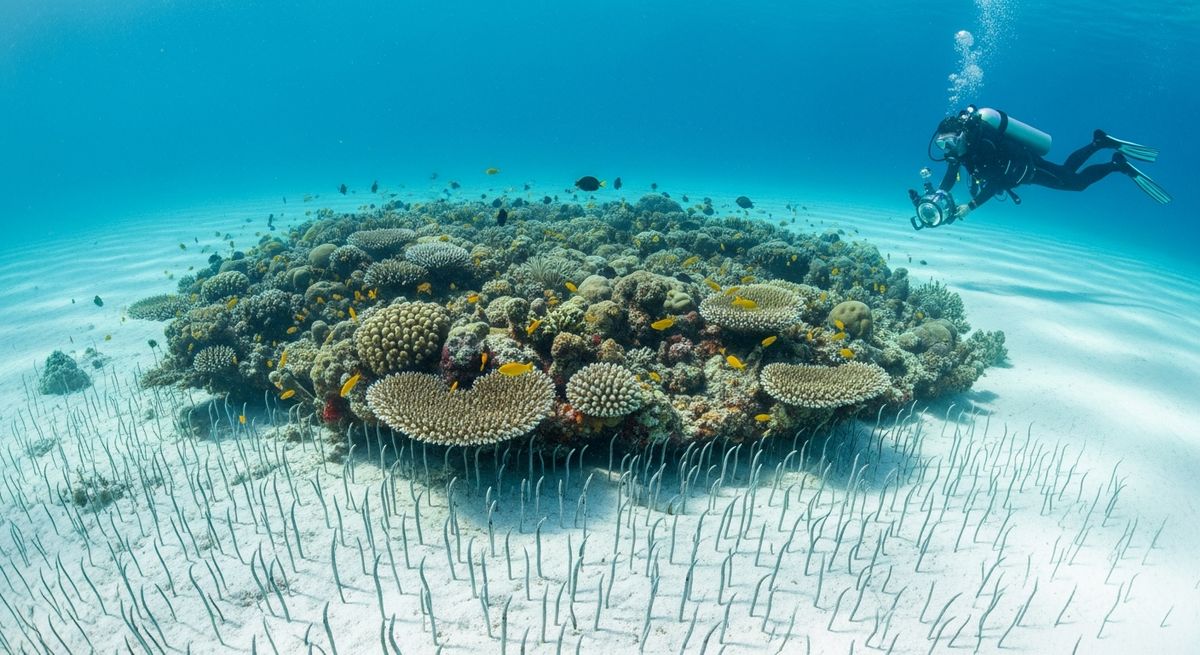
Fish Den is one of those sites we always recommend, especially if you’ve got a good eye for the smaller stuff. The mooring sits right on a coral pillar, almost like a natural monument, at about 7 meters. From there, it’s a gentle drop into a square-shaped cut in the main reef wall, winding down to around 18 meters before rejoining the wall proper. It’s a great spot for an easy, meandering dive, perfect for photographers or anyone who likes to take their time. We love poking around the sponges and sea fans, really getting into the nooks and crannies. You’re almost guaranteed to spot a mottled conger moray peeking out from a crevice, or if you’re lucky, a yellowhead jawfish hovering near its burrow. Keep an eye out for the blennies, especially the banded and dusky varieties, they’re masters of camouflage here. The schooling fish add a nice dynamic, too, often swirling around the pillar. We've found the best light is usually mid-morning, really bringing out the corals' colours.
Nearest Dive Centres to Fish Den
Dive shops near Fish Den
Octopus Dive School
Centro de Buceo Jackson
Moana Divers
Native Sons
Sun DIvers
Roatan Scuba Store
Reviews for Fish Den
Conditions
Ocean conditions, forecast and tides for Fish Den
Fish Den Ocean Conditions
Monthly averages for Fish Den, sourced from Open-Meteo marine data + Copernicus Marine (EU) - nearest station: Open-Meteo marine grid (16.27, -86.6) (5km away)
October Averages
Sea Temperature
30°C
86°F · Range: 29–31.6°C
Current Speed
1.41 cm/s
Direction: NW (315°)
Chlorophyll-a
0.052 mg/m³
Very clear (oligotrophic)
Salinity
35.96 PSU
Based on 4 years of monitoring data · Data sources: Open-Meteo marine data + Copernicus Marine (EU)
Plan & book
Ways to dive Roatán, from day trips to liveaboards.
Day trips & courses
via GetYourGuideGuided dives, courses and snorkel trips with instant booking.
Find dive trips in RoatánPlaces to stay
via Booking.comHotels and dive resorts near Roatán.
Search stays in RoatánDive insurance
Most travel insurance excludes or limits scuba. Check what you need before you go.
Dive insurance explainedPartner links: we may earn a commission if you book, at no extra cost to you. How we make money
Where to Stay near Fish Den
Prices from Booking.com. We may earn a commission at no extra cost to you.