Great Wall
Protected Area
Sistema de Humedales de la Isla de Utila
Why dive here
With 168+ marine species recorded in the area - including barracuda, orcas, sea turtles, whale sharks and pufferfish - Great Wall offers some of Roatán's richest reef diving. Water ranges 27-30°C, warmest August, September, October.
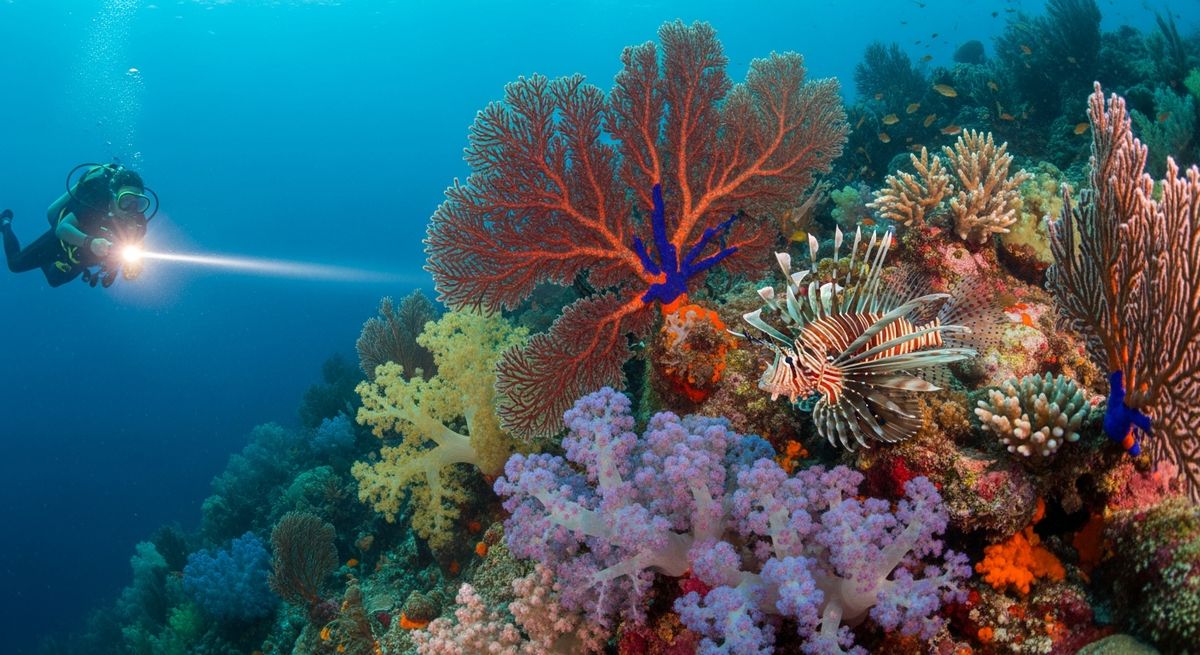
The Great Wall, over in Roatán’s Turtle Harbour, feels exactly as advertised. We love drifting along this sheer drop, where the reef gives way to a deep blue abyss. Roll off the boat, fin over, and just let yourself sink a little, watching the wall extend into the gloom below. We've pushed it down to 25 metres here, but the wall itself seems to go on forever, a proper geological feature rather than just a slope. It's a fantastic spot for spotting larger pelagics cruising by; we’ve had horse-eye jacks sweep past, and barracuda often hang out, just watching us. Look closer into the crevices, and you’ll find lionfish, although we always hope to see more of the native scorpionfish. The coral cap at the top of the wall is surprisingly healthy, teeming with smaller reef fish like yellowhead wrasse and bluestriped grunts. Visibility averages 23 metres, which gives you a great sense of that monumental drop-off. Our pick for an afternoon dive when the sun hits the wall just right, highlighting all the contours. It’s a site that really lets you appreciate the sheer scale of the ocean.
Nearest Dive Centres to Great Wall
Dive shops near Great Wall
Coral View Utila Dive Center
Captain Morgans Dive Center
Cross Creek Dive Center
Utila Water Sports
Underwater Vision Dive Center
Utila Dive Center
Reviews for Great Wall
Conditions
Ocean conditions, forecast and tides for Great Wall
Great Wall Ocean Conditions
Monthly averages for Great Wall, sourced from Open-Meteo marine data + Copernicus Marine (EU) - nearest station: Open-Meteo marine grid (16.27, -86.6) (5km away)
October Averages
Sea Temperature
30°C
86°F · Range: 29–31.6°C
Current Speed
1.41 cm/s
Direction: NW (315°)
Chlorophyll-a
0.052 mg/m³
Very clear (oligotrophic)
Salinity
35.96 PSU
Based on 4 years of monitoring data · Data sources: Open-Meteo marine data + Copernicus Marine (EU)
Plan & book
Ways to dive Roatán, from day trips to liveaboards.
Day trips & courses
via GetYourGuideGuided dives, courses and snorkel trips with instant booking.
Find dive trips in RoatánPlaces to stay
via Booking.comHotels and dive resorts near Roatán.
Search stays in RoatánDive insurance
Most travel insurance excludes or limits scuba. Check what you need before you go.
Dive insurance explainedPartner links: we may earn a commission if you book, at no extra cost to you. How we make money
Where to Stay near Great Wall
Prices from Booking.com. We may earn a commission at no extra cost to you.