Honeycomb Caves
Protected Area
Sistema de Humedales de la Isla de Utila
Why dive here
With 168+ marine species recorded in the area - including barracuda, orcas, sea turtles, whale sharks and pufferfish - Honeycomb Caves offers some of Roatán's richest reef diving. Water ranges 27-30°C, warmest August, September, October.
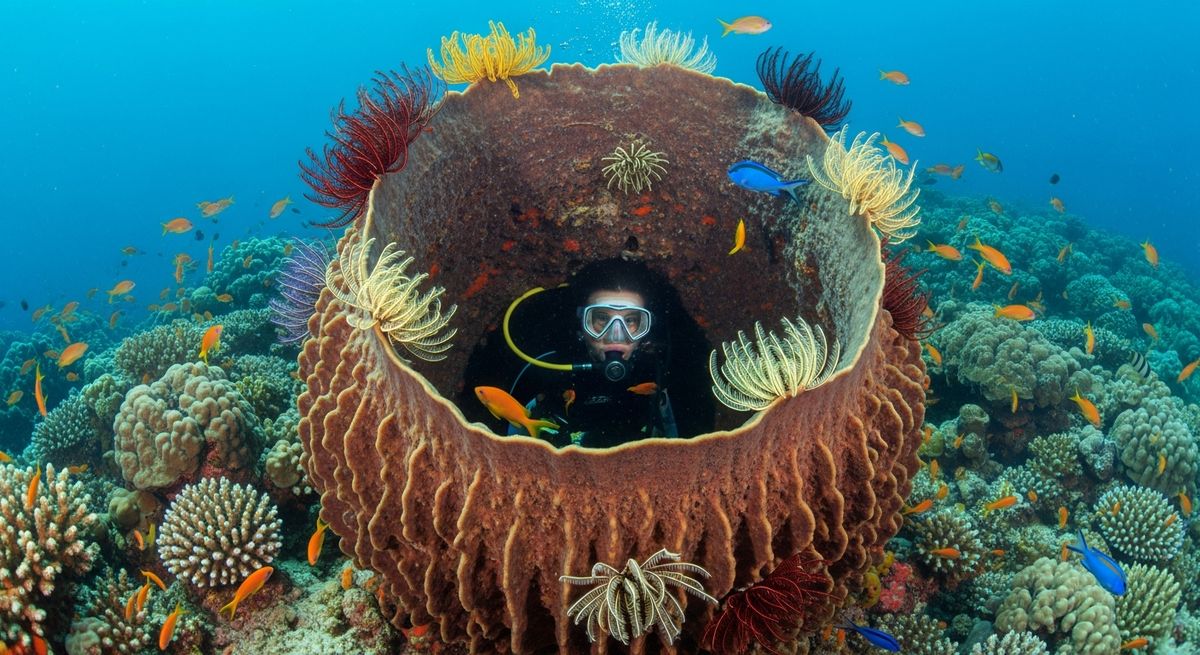
Honeycomb Caves, on Roatán’s south side, is one of those dives that starts with a bit of a grunt. The entry can be rocky, and you’ll likely feel some surge pushing you around until you clear the shallows. But push through that, because what lies beneath is genuinely special. We love the feeling of slipping into those cuts and caverns; it’s not really a deep dive, maxing out at 14m, but the way the light filters through the openings is something else. Inside, the caves are home to some surprisingly delicate life. Look closely for the smaller stuff – we’ve spotted Robertson's Blennies peeking out of crevices and even the occasional Mouse Cone working its way along the rock. The walls are encrusted with sponges and corals, a nice contrast to the more open reef. Our favourite part has to be finning slowly through the various chambers, watching for Longspine Squirrelfish tucked into the shadows. Visibility averages a comfortable 20m, which helps when you’re navigating the turns. This dive really suits those who appreciate a good macro hunt and don't mind a slightly challenging entry for the reward of exploring unique topography.
Nearest Dive Centres to Honeycomb Caves
Dive shops near Honeycomb Caves
Utila Water Sports
Cross Creek Dive Center
Underwater Vision Dive Center
Utila Dive Center
Freedive Utila
Alton's Dive Center
Reviews for Honeycomb Caves
Conditions
Ocean conditions, forecast and tides for Honeycomb Caves
Honeycomb Caves Ocean Conditions
Monthly averages for Honeycomb Caves, sourced from Open-Meteo marine data + Copernicus Marine (EU) - nearest station: Open-Meteo marine grid (16.27, -86.6) (5km away)
October Averages
Sea Temperature
30°C
86°F · Range: 29–31.6°C
Current Speed
1.41 cm/s
Direction: NW (315°)
Chlorophyll-a
0.052 mg/m³
Very clear (oligotrophic)
Salinity
35.96 PSU
Based on 4 years of monitoring data · Data sources: Open-Meteo marine data + Copernicus Marine (EU)
Plan & book
Ways to dive Roatán, from day trips to liveaboards.
Day trips & courses
via GetYourGuideGuided dives, courses and snorkel trips with instant booking.
Find dive trips in RoatánPlaces to stay
via Booking.comHotels and dive resorts near Roatán.
Search stays in RoatánDive insurance
Most travel insurance excludes or limits scuba. Check what you need before you go.
Dive insurance explainedPartner links: we may earn a commission if you book, at no extra cost to you. How we make money
Where to Stay near Honeycomb Caves
Prices from Booking.com. We may earn a commission at no extra cost to you.