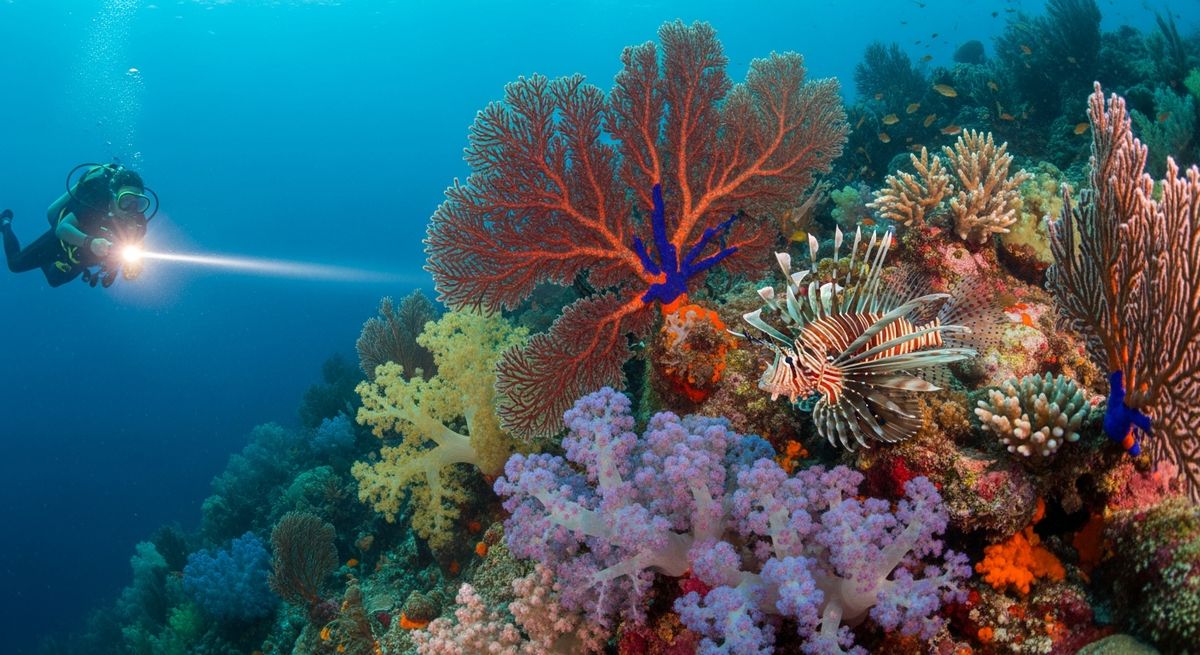
Madelines
Protected Area
Sistema de Humedales de la Isla de Utila
Why dive here
With 168+ marine species recorded in the area - including barracuda, orcas, sea turtles, whale sharks and pufferfish - Madelines offers some of Roatán's richest reef diving. Water ranges 27-30°C, warmest August, September, October.
Madelines is one of our favourite spots in Roatán when we’re after a relaxed, shallower dive. It’s ideal for longer bottom times, letting you properly slow down and look for the smaller, more elusive critters. We’ve spent plenty of dives here, gently finning over the white sand patches, keeping our eyes peeled for a Southern Stargazer peeking out. They’re masters of camouflage, so a sharp eye helps. The reef itself is a gentle slope, topping out at around 16 metres, which means the light penetration is lovely. You get these beautiful dappled patterns on the sand. We often find Peacock Flounders here, almost invisible until they shift, and we’ve seen Caribbean reef squid pulsing over the coral heads a few times too. It's not a site for big pelagic action, but if you love searching for blennies, gobies, and the occasional Mushroom Scorpionfish, Madelines delivers. It’s also a perfect spot for newer divers to build confidence without strong currents or deep profiles. Our advice? Go slow, really poke around the sandy edges and the smaller coral formations. That’s where the magic happens.
Nearest Dive Centres to Madelines
Dive shops near Madelines
Coral View Utila Dive Center
Captain Morgans Dive Center
Alton's Dive Center
Underwater Vision Dive Center
Freedive Utila
Utila Dive Center
Reviews for Madelines
Conditions
Ocean conditions, forecast and tides for Madelines
Madelines Ocean Conditions
Monthly averages for Madelines, sourced from Open-Meteo marine data + Copernicus Marine (EU) - nearest station: Open-Meteo marine grid (16.27, -86.6) (5km away)
October Averages
Sea Temperature
30°C
86°F · Range: 29–31.6°C
Current Speed
1.41 cm/s
Direction: NW (315°)
Chlorophyll-a
0.052 mg/m³
Very clear (oligotrophic)
Salinity
35.96 PSU
Based on 4 years of monitoring data · Data sources: Open-Meteo marine data + Copernicus Marine (EU)
Plan & book
Ways to dive Roatán, from day trips to liveaboards.
Day trips & courses
via GetYourGuideGuided dives, courses and snorkel trips with instant booking.
Find dive trips in RoatánPlaces to stay
via Booking.comHotels and dive resorts near Roatán.
Search stays in RoatánDive insurance
Most travel insurance excludes or limits scuba. Check what you need before you go.
Dive insurance explainedPartner links: we may earn a commission if you book, at no extra cost to you. How we make money
Where to Stay near Madelines
Prices from Booking.com. We may earn a commission at no extra cost to you.