White Hole
Protected Area
Islas de la Bahía
Why dive here
With 168+ marine species recorded in the area - including barracuda, orcas, sea turtles, whale sharks and pufferfish - White Hole offers some of Roatán's richest reef diving. Water ranges 27-30°C, warmest August, September, October.
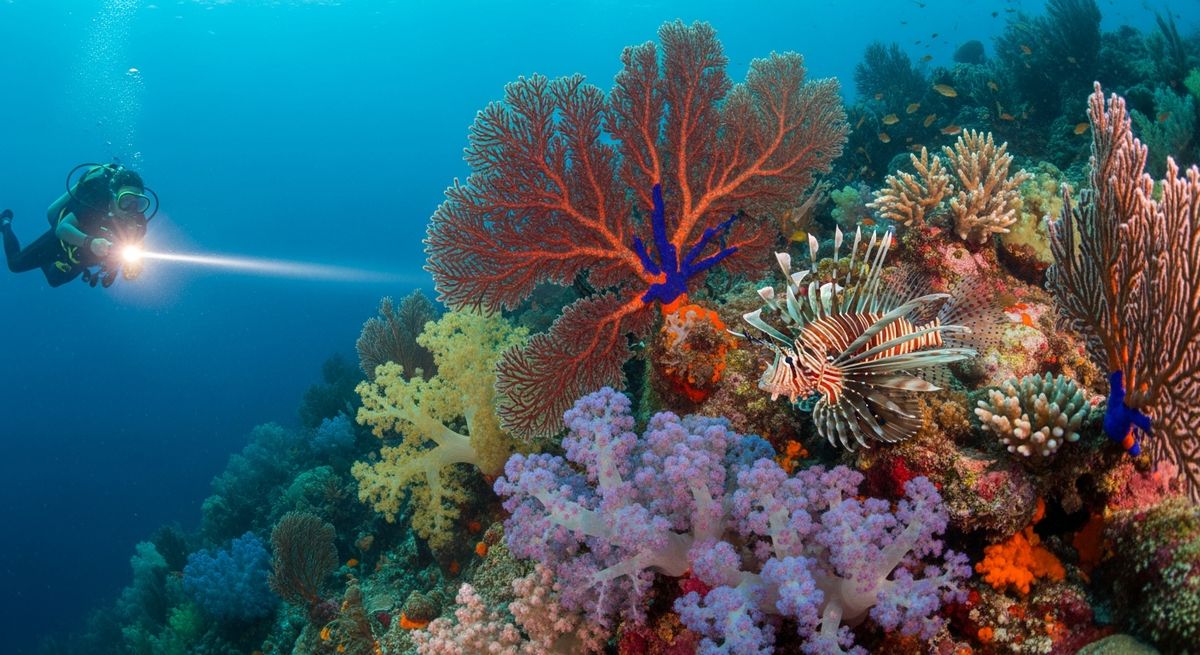
White Hole is one of our favourites in Roatán, a seriously underrated spot tucked away from the usual crowds. You’ll find it west of Sandy Bay, not far from Dragon Maze, though the buoy sometimes goes rogue. We’ve always found it best as a night dive, the navigation is so straightforward with that clear sandy patch at 12 metres, and it just transforms after sunset. During the day, it's a lovely, gentle drift along a wall that drops beyond 30 metres, with the sand flat creating a natural boundary. We love hunting for the Banded Jawfish here, they’re usually popping their heads out of burrows in the sand, and we’ve often spotted Mottled Conger Morays snaking across the bottom. But at night, that’s when White Hole really shines. The Blackcap Basslets come out, those tiny purple flashes against the coral, and the Chalk Bass are everywhere. We’ve seen juvenile Yellow Jacks schooling, their silver scales catching the light from our torches, and often a big Southern Stingray glides over the sand, heading into the deeper blue. It’s an easy dive, good for anyone comfortable navigating by torchlight, and it consistently delivers unexpected encounters. Just remember to bring your own light and keep an eye out for those delicate Island Frillfins perched on the gorgonians.
Typical White Hole Dive Profile
Illustrative profile based on site depth and type. Actual dive profiles vary - always follow your dive computer and training.
Nearest Dive Centres to White Hole
Dive shops near White Hole
Best Dive Roatan
Sandy Bay Divers
Blue Island Divers
Octopus Dive School
Las Rocas Divers
Centro de Buceo Jackson
Reviews for White Hole
Conditions
Ocean conditions, forecast and tides for White Hole
White Hole Ocean Conditions
Monthly averages for White Hole, sourced from Open-Meteo marine data + Copernicus Marine (EU) - nearest station: Open-Meteo marine grid (16.27, -86.6) (5km away)
October Averages
Sea Temperature
30°C
86°F · Range: 29–31.6°C
Current Speed
1.41 cm/s
Direction: NW (315°)
Chlorophyll-a
0.052 mg/m³
Very clear (oligotrophic)
Salinity
35.96 PSU
Based on 4 years of monitoring data · Data sources: Open-Meteo marine data + Copernicus Marine (EU)
Plan & book
Ways to dive Roatán, from day trips to liveaboards.
Day trips & courses
via GetYourGuideGuided dives, courses and snorkel trips with instant booking.
Find dive trips in RoatánPlaces to stay
via Booking.comHotels and dive resorts near Roatán.
Search stays in RoatánDive insurance
Most travel insurance excludes or limits scuba. Check what you need before you go.
Dive insurance explainedPartner links: we may earn a commission if you book, at no extra cost to you. How we make money
Where to Stay near White Hole
Prices from Booking.com. We may earn a commission at no extra cost to you.