Willy’s Hole
Protected Area
Sistema de Humedales de la Isla de Utila
Why dive here
With 168+ marine species recorded in the area - including barracuda, orcas, sea turtles, whale sharks and pufferfish - Willy’s Hole offers some of Roatán's richest reef diving. Water ranges 27-30°C, warmest August, September, October.
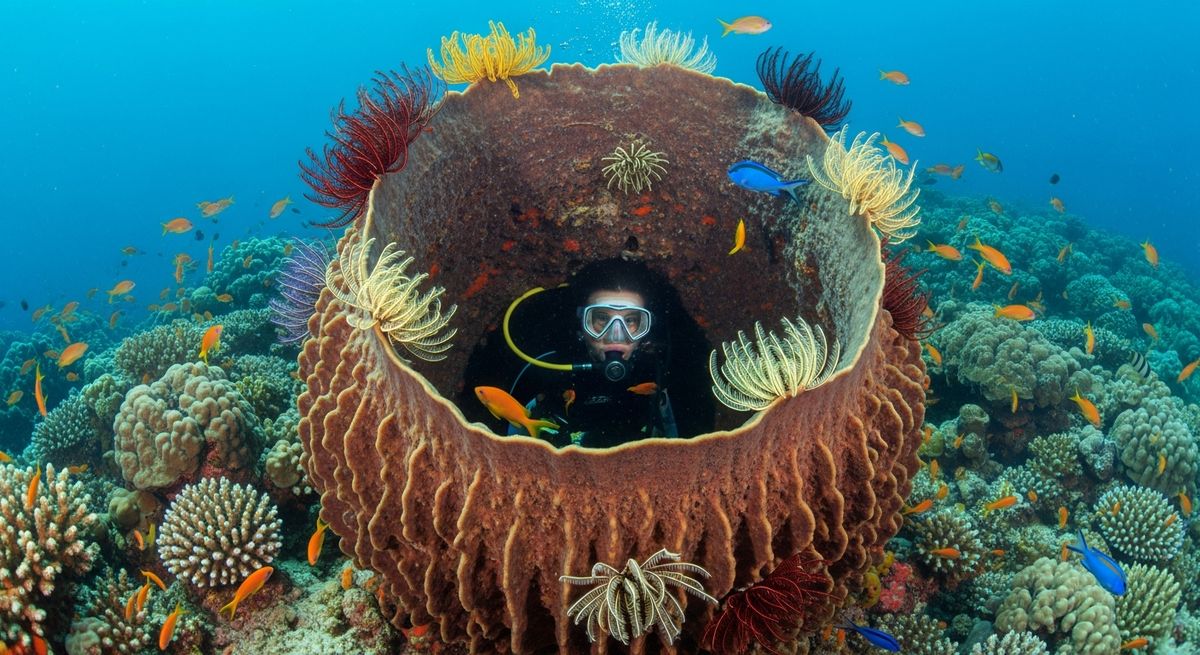
Willy’s Hole, tucked away near Turtle Harbor, delivers a proper dose of that classic Roatán wall diving we keep coming back for. We love the swim-through at 24 metres, it’s less a deep cavern and more a dramatic archway carved into the reef. The light filters through from both ends, creating a really cool effect, especially if you catch it when the sun’s a bit lower. On the reef top, around 10-15 metres, you’ll find the usual busy scene – schools of bluestriped grunts often hang out, and we’ve spotted redlip blennies darting between the corals. It’s a great spot for those who appreciate a bit of overhead environment without needing cave certification. Keep an eye out for greenband gobies on the sponges, they’re tiny but everywhere if you look closely. Visibility averages around 13 metres, which is decent enough to appreciate the scale of the wall. We’d suggest going in the morning before any afternoon chop picks up. While you might see a lionfish or two, the main draw here is the structure itself and the smaller reef inhabitants. It’s a comfortable dive for advanced open water divers looking for something a little different from a straight wall.
Typical Willy’s Hole Dive Profile
Illustrative profile based on site depth and type. Actual dive profiles vary - always follow your dive computer and training.
Safety Notes
Always perform a 3-minute safety stop at 5m before surfacing.
Nearest Dive Centres to Willy’s Hole
Dive shops near Willy’s Hole
Coral View Utila Dive Center
Captain Morgans Dive Center
Cross Creek Dive Center
Utila Water Sports
Underwater Vision Dive Center
Utila Dive Center
Reviews for Willy’s Hole
Conditions
Ocean conditions, forecast and tides for Willy’s Hole
Willy’s Hole Ocean Conditions
Monthly averages for Willy’s Hole, sourced from Open-Meteo marine data + Copernicus Marine (EU) - nearest station: Open-Meteo marine grid (16.27, -86.6) (5km away)
October Averages
Sea Temperature
30°C
86°F · Range: 29–31.6°C
Current Speed
1.41 cm/s
Direction: NW (315°)
Chlorophyll-a
0.052 mg/m³
Very clear (oligotrophic)
Salinity
35.96 PSU
Based on 4 years of monitoring data · Data sources: Open-Meteo marine data + Copernicus Marine (EU)
Plan & book
Ways to dive Roatán, from day trips to liveaboards.
Day trips & courses
via GetYourGuideGuided dives, courses and snorkel trips with instant booking.
Find dive trips in RoatánPlaces to stay
via Booking.comHotels and dive resorts near Roatán.
Search stays in RoatánDive insurance
Most travel insurance excludes or limits scuba. Check what you need before you go.
Dive insurance explainedPartner links: we may earn a commission if you book, at no extra cost to you. How we make money
Where to Stay near Willy’s Hole
Prices from Booking.com. We may earn a commission at no extra cost to you.