Te Tuatiare
Protected Area
Motu Tapu
Why dive here
With 140+ marine species recorded in the area - including dolphins, eagle rays, humpback whales, manta rays and mobula rays (devil rays) - Te Tuatiare offers some of Bora Bora's richest diving. Water ranges 27-29°C, warmest February, March, April.
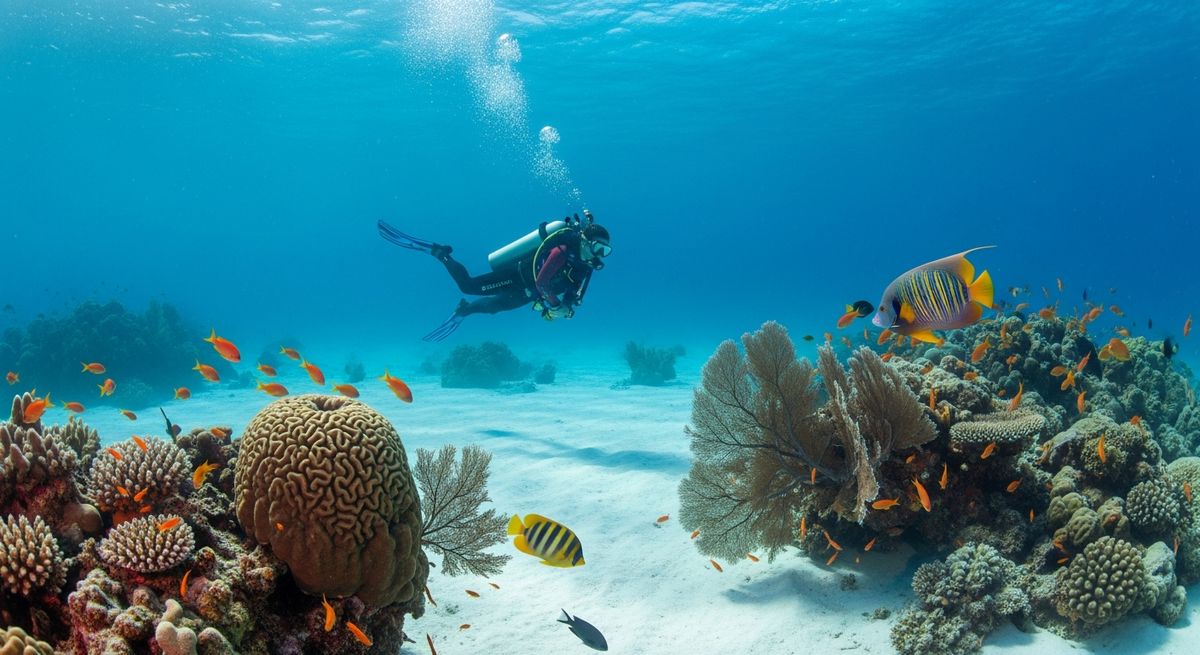
Te Tuatiare always feels like a treat, tucked away on Bora Bora's outer reef. Our favourite way to dive it is early morning, beating any boat traffic. The currents here can pick up, so we always brief for that, but it’s often a gentle drift along the coral wall. What we love about Te Tuatiare is the sheer variety of smaller stuff. You'll glide past fields of coral, keeping an eye out for Opossum Pipefish tucked into crevices and those bright Pink Squirrelfish darting between the bommies. We often spot Undulated Morays peeking from their holes, and the sheer number of Angelfish and Butterflyfish is impressive, just flitting everywhere. The deeper sections sometimes bring Oceanic Manta Rays into view, silently cruising by. It’s a fantastic site for photographers keen on macro subjects, but equally rewarding for anyone who appreciates a vibrant, healthy reef with plenty to explore without needing to fight a big current. We’d suggest this one for intermediate divers comfortable with drift diving, though on calmer days, even newer divers will enjoy the easy pace.
Nearest Dive Centres to Te Tuatiare
Dive shops near Te Tuatiare
Hemisphere Sub
Diveasy
Dive ´n smile
Eleuthera Bora Diving Center
BORA OCEAN ADVENTURES
Snorkeling raie manta
Reviews for Te Tuatiare
Conditions
Ocean conditions, forecast and tides for Te Tuatiare
Te Tuatiare Ocean Conditions
Monthly averages for Te Tuatiare, sourced from Open-Meteo marine data + Copernicus Marine (EU) - nearest station: Open-Meteo marine grid (-16.62, -151.58) (2km away)
October Averages
Sea Temperature
27°C
81°F · Range: 26.5–29.3°C
Current Speed
6.4 cm/s
Direction: SW (231.3°)
Chlorophyll-a
0.053 mg/m³
Very clear (oligotrophic)
Salinity
36.27 PSU
Based on 4 years of monitoring data · Data sources: Open-Meteo marine data + Copernicus Marine (EU)
Plan & book
Ways to dive Bora Bora, from day trips to liveaboards.
Day trips & courses
via GetYourGuideGuided dives, courses and snorkel trips with instant booking.
Find dive trips in Bora BoraPlaces to stay
via Booking.comHotels and dive resorts near Bora Bora.
Search stays in Bora BoraDive insurance
Most travel insurance excludes or limits scuba. Check what you need before you go.
Dive insurance explainedPartner links: we may earn a commission if you book, at no extra cost to you. How we make money
Where to Stay near Te Tuatiare
Prices from Booking.com. We may earn a commission at no extra cost to you.