Teavanui Pass
Protected Area
Motu Tapu
Why dive here
With 140+ marine species recorded in the area - including dolphins, eagle rays, humpback whales, manta rays and mobula rays (devil rays) - Teavanui Pass offers some of Bora Bora's richest pinnacle diving. Water ranges 27-29°C, warmest February, March, April.
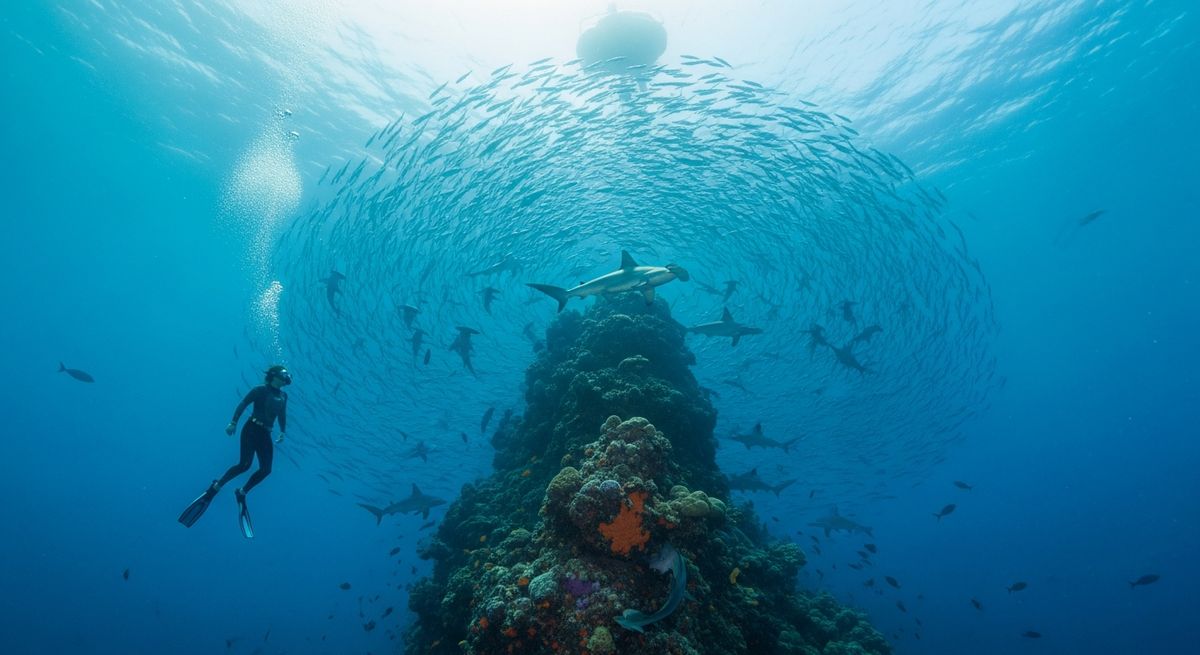
Teavanui Pass, for us, is one of Bora Bora’s real standouts. We love drift diving, and this channel delivers that classic pass experience. You’ll drop in, often on the ocean side, and just let the current sweep you into the lagoon. It’s a exhilarating ride, especially when the current picks up; definitely one for those comfortable with a bit of a push. The real treat here is the sheer number of blacktip reef sharks you’ll see. They're everywhere, patrolling the channel, sometimes dozens at a time, just gliding past, unbothered. Beyond the sharks, keep an eye out for the big schools of jacks and barracuda that hang out in the blue. The corals, particularly the staghorn, are healthy and dense in parts, and you’ll spot plenty of butterflyfish and parrotfish munching away. Maximum depth is 21 metres, so it’s a good, solid dive without needing to go too deep. We’d suggest timing your dive to an incoming current – that’s when the action really picks up, bringing in all the bigger stuff from the open ocean. It’s a vibrant, dynamic dive, full of the kind of energy you hope for in a pass.
Nearest Dive Centres to Teavanui Pass
Dive shops near Teavanui Pass
TopDive
BORA OCEAN ADVENTURES
Eleuthera Bora Diving Center
Dive ´n smile
Snorkeling raie manta
Diveasy
Reviews for Teavanui Pass
Conditions
Ocean conditions, forecast and tides for Teavanui Pass
Teavanui Pass Ocean Conditions
Monthly averages for Teavanui Pass, sourced from Open-Meteo marine data + Copernicus Marine (EU) - nearest station: Open-Meteo marine grid (-16.62, -151.58) (2km away)
October Averages
Sea Temperature
27°C
81°F · Range: 26.5–29.3°C
Current Speed
6.4 cm/s
Direction: SW (231.3°)
Chlorophyll-a
0.053 mg/m³
Very clear (oligotrophic)
Salinity
36.27 PSU
Based on 4 years of monitoring data · Data sources: Open-Meteo marine data + Copernicus Marine (EU)
Plan & book
Ways to dive Bora Bora, from day trips to liveaboards.
Day trips & courses
via GetYourGuideGuided dives, courses and snorkel trips with instant booking.
Find dive trips in Bora BoraPlaces to stay
via Booking.comHotels and dive resorts near Bora Bora.
Search stays in Bora BoraDive insurance
Most travel insurance excludes or limits scuba. Check what you need before you go.
Dive insurance explainedPartner links: we may earn a commission if you book, at no extra cost to you. How we make money
Where to Stay near Teavanui Pass
Prices from Booking.com. We may earn a commission at no extra cost to you.