Tupitipiti
Protected Area
Motu Tapu
Why dive here
With 140+ marine species recorded in the area - including dolphins, eagle rays, humpback whales, manta rays and mobula rays (devil rays) - Tupitipiti offers some of Bora Bora's richest reef diving. Water ranges 27-29°C, warmest February, March, April.
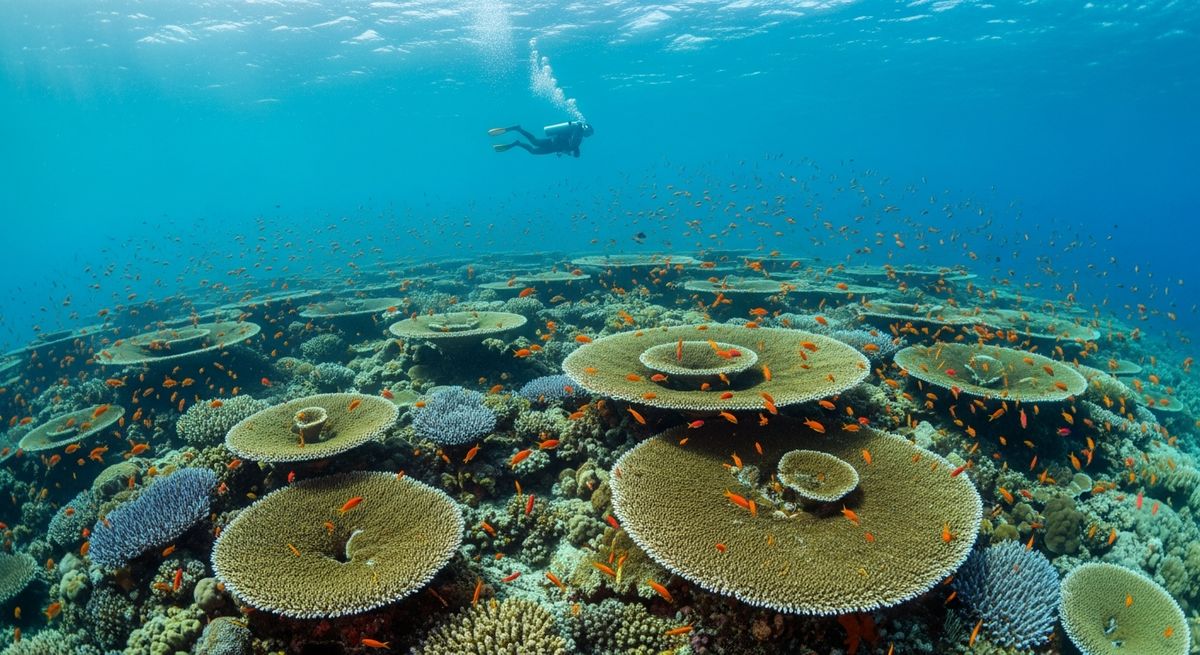
Tupitipiti is our pick for Bora Bora. We know, everyone talks about the manta cleaning stations, but if you want something with a bit more drama, this is it. We’re talking about a proper wall dive, starting shallow and dropping to around 18 metres, carved with a network of little caves and overhangs. It's not a deep dive, but the topography keeps things interesting. As you descend, the reef face explodes with colour – great big plates of staghorn coral, and smaller pockets where you can spot brilliant red hawkfish eyeing you from their perch. Keep an eye out for the latticed butterflyfish darting through the coral, and a scattering of pinktail triggerfish just going about their day. We've seen plenty of nurse sharks here, resting in the shadows, and occasionally reef sharks cruising by in the deeper blue. The visibility is usually excellent, so you get a great sense of scale as you drift along the wall. It’s a site that rewards slow exploration, peering into every crack and crevice, especially for those who appreciate reef structure as much as the big stuff.
Typical Tupitipiti Dive Profile
Illustrative profile based on site depth and type. Actual dive profiles vary - always follow your dive computer and training.
Safety Notes
Always perform a 3-minute safety stop at 5m before surfacing.
Nearest Dive Centres to Tupitipiti
Dive shops near Tupitipiti
Diveasy
Dive ´n smile
Eleuthera Bora Diving Center
Snorkeling raie manta
BORA OCEAN ADVENTURES
TopDive
Reviews for Tupitipiti
Conditions
Ocean conditions, forecast and tides for Tupitipiti
Tupitipiti Ocean Conditions
Monthly averages for Tupitipiti, sourced from Open-Meteo marine data + Copernicus Marine (EU) - nearest station: Open-Meteo marine grid (-16.62, -151.58) (2km away)
October Averages
Sea Temperature
27°C
81°F · Range: 26.5–29.3°C
Current Speed
6.4 cm/s
Direction: SW (231.3°)
Chlorophyll-a
0.053 mg/m³
Very clear (oligotrophic)
Salinity
36.27 PSU
Based on 4 years of monitoring data · Data sources: Open-Meteo marine data + Copernicus Marine (EU)
Plan & book
Ways to dive Bora Bora, from day trips to liveaboards.
Day trips & courses
via GetYourGuideGuided dives, courses and snorkel trips with instant booking.
Find dive trips in Bora BoraPlaces to stay
via Booking.comHotels and dive resorts near Bora Bora.
Search stays in Bora BoraDive insurance
Most travel insurance excludes or limits scuba. Check what you need before you go.
Dive insurance explainedPartner links: we may earn a commission if you book, at no extra cost to you. How we make money
Where to Stay near Tupitipiti
Prices from Booking.com. We may earn a commission at no extra cost to you.