Diving in Moorea & Tahiti
Why dive here
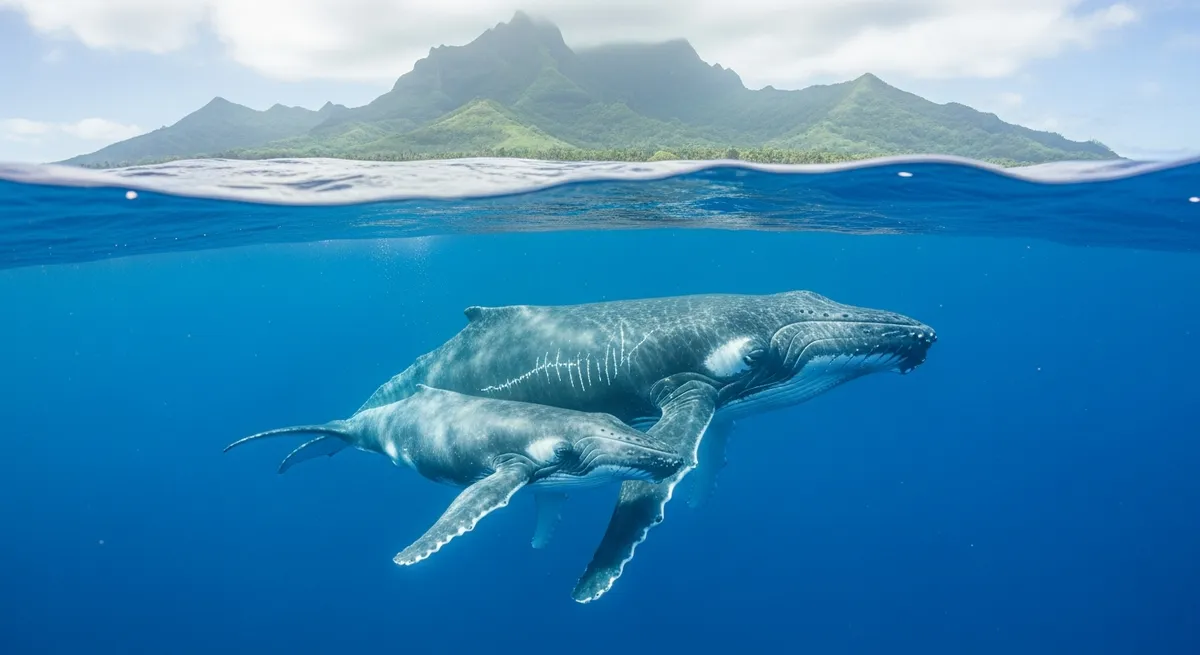
Moorea & Tahiti offers some of French Polynesia's richest diving, with 135+ marine species recorded in the area - including humpback whales, sperm whales, spinner dolphins and pufferfish. Water ranges 27-29°C, warmest February, March, April.
Moorea and Tahiti offer two distinct flavours of French Polynesian diving, and we love them both for different reasons. Moorea, for us, is all about the big stuff, particularly during humpback season from July to November. Hearing their songs vibrate through your chest on a safety stop is a truly humbling experience. Even outside of whale season, the lemon shark dives here are a consistent thrill. You’re often surrounded by dozens of them, sleek grey bodies gliding with an unnerving grace. Tahiti, on the other hand, is where we head for something a bit different. The wrecks, especially the Catalina flying boat and the *Yukon*, are fantastic for penetration dives if you’re qualified, or just exploring the growth on their exteriors. We’ve spotted robust hexagon groupers lurking in the shadows and schools of blue-lined surgeonfish swirling around the masts. Current can be a factor on some drift dives, but it’s often what brings in the action. Visibility typically hovers around 20-30 metres, giving you plenty of scope to take it all in. Our favourite pick for a relaxed afternoon dive has to be a drift along the outer reef, letting the current do the work as you spot parrotfish crunching on coral.
Moorea & Tahiti Dive Site Map
Dive sites and dive centres in Moorea & Tahiti
Moorea & Tahiti Dive Sites
74 dive sites in Moorea & Tahiti
Aquarium
Aquarium is one of those sites we always recommend to newer divers in Moorea. It’s got a lovely, gentle drift, usually, and it’s pretty shallow, which means you can really take your time. We love drifting over the sandy patches, spotting Isabel’s Hermit Crabs scuttling about, or watching Dusky Wrasses dart between the coral heads. Visibility here is often fantastic, with the sun just cutting through the water, making the Corrugated and Staghorn corals shimmer. You'll see plenty of the usual reef suspects too – Manini everywhere, groups of Blue-lined Surgeonfish, and sometimes a gang of Big-eye Trevally circling. It’s a great spot to practice buoyancy and just soak it all in. We'd suggest going in the morning; the light is often best then, and it's generally quieter before the afternoon boats arrive. It’s a genuinely relaxing dive, perfect for getting comfortable in the water or just enjoying a calm swim.
Aquarium de Cook
Aquarium de Cook is right up our alley for a warm-up dive or to just enjoy some shallow water without too much fuss. It's a quick boat ride from the dive shops and, as the name suggests, feels a bit like peering into a massive, natural fish tank. We’re talking about a sandy bottom dotted with big coral heads, perfect little islands for fish to hang out in. You’ll spend most of your time at about 10 meters, so there's no pressure on deco, just pure observation. The visibility hovers around 14 meters, which is good enough to spot the resident schools of blue triggerfish that cruise past, often in such numbers they seem to shimmer. Look closer into the coral, and you’ll find plenty of clownfish peeking out from their anemones. We’ve also seen juvenile hawkbill turtles here, just lazily gliding over the sand, and the occasional stingray buried with only its eyes showing. It’s a gentle spot, no current to speak of, so it’s ideal for new divers getting comfortable or for photographers who want to spend some time composing shots without fighting the flow. It’s not about big pelagics here; it's about the intricate details and the sheer density of everyday reef life.
Aquarium de Cook
Aquarium de Cook is right up our alley for a warm-up dive or to just enjoy some shallow water without too much fuss. It's a quick boat ride from the dive shops and, as the name suggests, feels a bit like peering into a massive, natural fish tank. We’re talking about a sandy bottom dotted with big coral heads, perfect little islands for fish to hang out in. You’ll spend most of your time at about 10 meters, so there's no pressure on deco, just pure observation. The visibility hovers around 14 meters, which is good enough to spot the resident schools of blue triggerfish that cruise past, often in such numbers they seem to shimmer. Look closer into the coral, and you’ll find plenty of clownfish peeking out from their anemones. We’ve also seen juvenile hawkbill turtles here, just lazily gliding over the sand, and the occasional stingray buried with only its eyes showing. It’s a gentle spot, no current to speak of, so it’s ideal for new divers getting comfortable or for photographers who want to spend some time composing shots without fighting the flow. It’s not about big pelagics here; it's about the intricate details and the sheer density of everyday reef life.
BYRON NO. 16
The Byron No. 16 wreck off Moorea is a proper dive, one we always enjoy for its sheer size. This 97-meter fishing vessel went down in '88, and it’s been settling into the sand ever since. The stern section is the most intact, rising impressively from the seabed, and it’s a blast to explore the open holds. We’ve found barracuda often hang around the deeper parts, schooling lazily, and the exterior hull is covered in sponges and anemones. Our favourite part is the penetration into the massive engine room, if you're comfortable with overhead environments. Light filters in from various openings, illuminating the machinery within. It's a surreal experience, feeling the cooler water inside and imagining the ship in its working days. Watch for the resident moray eels that have made the darker crevices their home. This site is best for experienced wreck divers who appreciate a substantial structure with plenty of character. If you're new to wrecks, it’s still worth a look from the outside; the scale alone is impressive.
Canyons - Moorea (Tahiti)
The Canyons off Ōpūnohu Bay in Moorea is one of those sites that just feels…right. It’s got that classic South Pacific vibe, but with a twist. We love the way the reef here is carved into these dramatic channels, creating natural swim-throughs and overhangs. It’s not a deep dive, maxing out around 20 metres, so you get plenty of bottom time to really explore. We’ve drifted through schools of Bleeker's Surgeonfish here, a shimmering curtain of silver, and watched Parrotfish graze on the coral, their crunching audible. Keep an eye out for the Black Sea Cucumbers inching across the sand. They look like prehistoric sausages, but they’re fascinating. Visibility often hits 23 metres, giving you a clear view of the resident turtles gliding past. Our favourite part? Finding a quiet nook to just observe. Blacktip sharks often cruise the edges, and you’ll spot clownfish peeking from their anemone homes. This site is perfect for photographers, or anyone who enjoys a relaxed, scenic dive without too much current. It’s a gentle introduction to Moorea's underwater world, but still holds plenty of interest for experienced divers.
Coral wall
The Coral Wall in Moorea offers a straightforward dive, great for those looking for an easy drift. You'll glide along a gentle slope, mostly hard corals and some smaller reef fish. It's a reliable option if you're after a relaxed dive without strong currents, perfect for newer divers or a chill afternoon. Expect common reef inhabitants, nothing overly dramatic, but consistently pleasant.
Dérivante aux tortues
Dérivante aux tortues is exactly what it sounds like – a turtle drift, and one of our favourite easy-going glides in Moorea. We love dropping in here, letting the current do the work. You’ll often spot a few green sea turtles resting on the coral heads or lazily paddling by, completely unfazed. Keep an eye out for the big pelagics too. We’ve seen jack mackerels flash past and even caught a glimpse of a sleek Indo-Pacific sailfish once, a real jolt of adrenaline against the deep blue. The reef isn't the most dramatic, it’s a gentle slope, but the fish life is consistently good. Look for big schools of cardinalfish sheltering in crevices, their eyes reflecting our torch beams. Down deeper, around 20-24 metres, you might spot a grumpy-looking pufferfish or a curious twinspot hawkfish perched on a coral branch. Visibility averages around 16 metres, which is perfectly decent for watching the underwater world drift past. It’s a comfortable dive, rarely challenging, making it great for newer drift divers or anyone who just wants to relax and watch for turtles.
Edenpark
Edenpark, just off Moorea, offers a drift dive often starting around 15 metres. We usually see white-tip reef sharks patrolling the outer reef, sometimes black-tips too. The currents can pick up here, making it better suited for divers comfortable with a bit of a push. It's a solid choice for those looking for pelagics without going too deep.
Eden Park
Eden Park, off Moorea, is one of those sites we always recommend for a relaxed dive that still delivers on the big stuff. It’s got a lovely coral garden feel, not too deep, topping out around 29 metres, making it perfect for newer divers or those who just want to chill and soak it all in. We’ve had some fantastic encounters here, often with lemon sharks cruising by in the blue or blacktips winding through the bommies. The shallow reef is just bursting with activity. You'll spot schools of Manini zipping around, and if you take your time, there are some real gems hiding in the coral, like the Flasher scorpionfish or even an Opossum Pipefish tucked away. We love the patches of Staghorn and Cauliflower coral, providing shelter for the smaller residents. Look closely for Coral Blennies peering out, or the bright colours of a Bullethead Parrotfish munching away. Keep an eye out for turtles, too, often found lazily grazing on the sponges. Visibility usually holds around 22 metres, giving you plenty of light to appreciate the reef's colours. It’s a site that feels consistently rewarding without demanding too much, our pick for an easy afternoon dive.
Epave Catalina
The Epave Catalina dive, just off Moorea, is one of our favourite wreck dives in French Polynesia. It’s not a huge wreck, but there's a real intimacy to it that we find captivating. Dropping down, the Catalina flying boat appears almost ghostly, settled upright in about 25 metres, its wings largely intact. The cockpit is often home to schools of glasseye snapper, their big eyes reflecting our torch beams, and we've seen honeycomb groupers tucked into crevices. Explore the fuselage and you’ll find plenty of smaller things – the way the light filters through the portholes, illuminating a lone Celebes longfin eel, is a moment we always appreciate. This isn’t a drift dive; it’s a site for leisurely exploration, perfect for photographers wanting to capture both the wreck’s history and the life that now calls it home. We’d suggest going in the morning; the water can be calmer, and the light better for photographs.
Faille d'Arue
There’s something about a good swim-through that just feels right, and Faille d’Arue delivers. It’s a crack in the reef, a deep cut that you can navigate, feeling the cool water swirl around you as you pass through. We love that slight squeeze, the way the light filters in from either end, making the water inside glow a fantastic blue. It’s not just a hole in the wall, either. Keep an eye out for the smaller inhabitants here. We’ve seen Lettered Mitres tucked into crevices and Porous Cowries clinging to the rock. Humphead Unicornfish and Blue-lined Surgeonfish often cruise by the entrances, catching the slight current. It’s a perfect spot if you appreciate the architecture of the reef as much as the fish life. The dive is fairly straightforward, making it a good choice for newer divers looking for that thrill of passing through a natural tunnel. Go early in the morning for the best light.
Faille St Etienne
Faille St Etienne on Moorea is one of those dives we always recommend for a solid, reliable experience. It’s not flashy, but it consistently delivers. We love drifting along the reef wall, eyes peeled for the resident humphead unicornfish patrolling the shallower sections – their long noses are unmistakable. The wall itself is a tapestry of stony and Pavona corals, punctuated by the striking blues and golds of fusiliers that school so densely they sometimes obscure the light. This site really shines for its smaller inhabitants, too. We’ve spent many minutes watching atoll butterflyfish flitting between coral heads, and the playful dance of yellowtail dascyllus and bicolor chromis near their anemone homes. If you’re a macro fan, keep an eye out for the delicate Savigny's brittle stars tucked into crevices. The current here is usually gentle, making for a relaxed drift, perfect for photographers or anyone who just wants to soak it all in without fighting the water. It’s a fantastic site for getting comfortable with drift diving, and a top pick for an easy afternoon dive.
Show all 74 dive sites in Moorea & Tahiti
- Fausse Passe de Paea
- Grottes du Tahara
- Hydravion et Goelett
- KEARSAINT
- La Baie de Paea
- La Dérivante du Phare
- La Faille Pomare
- Lagoon Hole
- La Grotte de Arue
- La Grotte du Pari
- La Marado
- La passe de TIaia
- La source
- La Vallée blanche, Tahiti
- La Vavi
- La virgule
- La zelée
- La Zélée, Tahiti
- Le fer à cheval
- Le piton aux gorgones
- Les 3 Pitons
- Les Éboulis
- Les Gorgones
- Les jumeaux
- Les Roses
- Les Roses de Matavai, Tahiti
- Le tombant Gorgognes
- Le Tombant Saint Étienne
- Le Trou du Lagon
- L’ile bleue/Blue Island
- Mamaru
- Moorea Blue Diving
- Mur de corail/Coral Wall
- Opunohu Bay
- Papa Whisky
- Papetoai Aquarium
- Plateau aux tortues
- Plateau de Vaiare
- Radio Whisky
- Rotui
- Rotui
- St Etienne Drop-Off
- Stingray World
- Tables de Taravao
- Tahi Nui
- Taotoi
- Temae
- Temae
- Temaruata
- Tetopa Grotto
- The Aquarium
- The cargo ship The Catalina
- The Faults of Arue
- The Marado
- The Roses
- The Spring
- The Tiki
- Tiki
- Tombant de Papeari
- Tombant St Etienne
- Vallée aux Murènes
- Vallée des requins
Moorea & Tahiti Dive Centres
15 dive shops and operators in Moorea & Tahiti
Activiseas
Dive and Sea
Ecole de plongée de Tahiti
Eleuthera Plongée
Fluid Plongée
Iaora Diving
Mobydick Tahiti
Moorea Blue Diving
Show all 15 dive centres in Moorea & Tahiti
Ocean Wildlife in Moorea & Tahiti
135 species recorded in Moorea & Tahiti
Moorea & Tahiti Daylight & Sunrise/Sunset
Sunrise and sunset times for Moorea & Tahiti, calculated from coordinates
Today - Sunday 11 October
Sunrise
05:34
Sunset
17:58
Daylight
12h 24m
Golden Hour
17:29
First light (dawn) at 05:12 · Last light (dusk) at 18:20
Monthly Averages
| Month | Sunrise | Sunset | Daylight |
|---|---|---|---|
| Jan | 05:36 | 18:40 | 13h 4m |
| Feb | 05:53 | 18:34 | 12h 41m |
| Mar | 06:02 | 18:15 | 12h 13m |
| Apr | 06:08 | 17:51 | 11h 43m |
| May | 06:17 | 17:35 | 11h 18m |
| JunShortest | 06:27 | 17:32 | 11h 5m |
| Jul | 06:30 | 17:40 | 11h 10m |
| Aug | 06:19 | 17:49 | 11h 30m |
| Sep | 05:56 | 17:54 | 11h 59m |
| OctNow | 05:31 | 17:59 | 12h 28m |
| Nov | 05:16 | 18:12 | 12h 55m |
| DecLongest | 05:19 | 18:29 | 13h 10m |
Times are approximate local times based on longitude. Actual times may vary slightly depending on the exact timezone observed in Moorea & Tahiti.
Where to Stay near Moorea & Tahiti
Prices from Booking.com. We may earn a commission at no extra cost to you.
Marine Protected Areas near Moorea & Tahiti
5 protected areas near Moorea & Tahiti - please respect local regulations when diving
Pari
Fenua Aihere
Grottes de Maraa
Pointe Vénus
Source (pointe Narii Domingo)
Getting to Moorea & Tahiti
Papeete
Moorea-Maiao
Fare
Plan & book
Ways to dive Moorea & Tahiti, from day trips to liveaboards.
Day trips & courses
via GetYourGuideGuided dives, courses and snorkel trips with instant booking.
Find dive trips in Moorea & TahitiPlaces to stay
via Booking.comHotels and dive resorts near Moorea & Tahiti.
Search stays in Moorea & TahitiDive insurance
Most travel insurance excludes or limits scuba. Check what you need before you go.
Dive insurance explainedPartner links: we may earn a commission if you book, at no extra cost to you. How we make money