BYRON NO. 16
Why dive here
With 135+ marine species recorded in the area - including humpback whales, sperm whales, spinner dolphins and pufferfish - BYRON NO. 16 offers some of Moorea & Tahiti's richest wreck diving. Water ranges 27-29°C, warmest February, March, April.
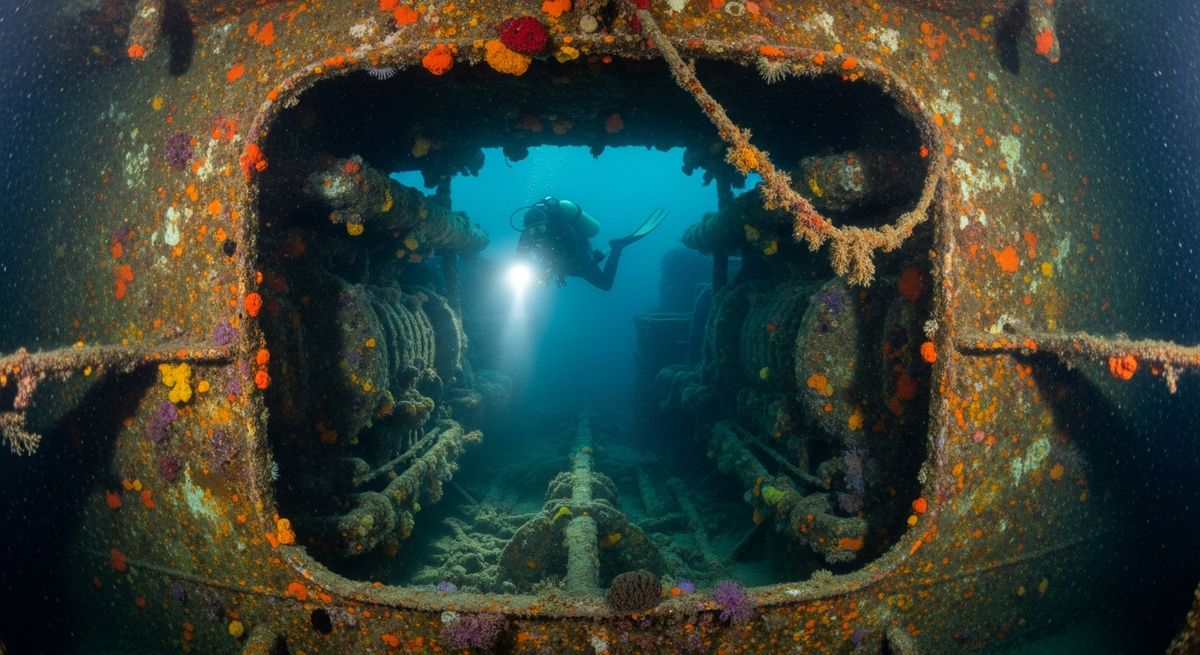
The Byron No. 16 wreck off Moorea is a proper dive, one we always enjoy for its sheer size. This 97-meter fishing vessel went down in '88, and it’s been settling into the sand ever since. The stern section is the most intact, rising impressively from the seabed, and it’s a blast to explore the open holds. We’ve found barracuda often hang around the deeper parts, schooling lazily, and the exterior hull is covered in sponges and anemones. Our favourite part is the penetration into the massive engine room, if you're comfortable with overhead environments. Light filters in from various openings, illuminating the machinery within. It's a surreal experience, feeling the cooler water inside and imagining the ship in its working days. Watch for the resident moray eels that have made the darker crevices their home. This site is best for experienced wreck divers who appreciate a substantial structure with plenty of character. If you're new to wrecks, it’s still worth a look from the outside; the scale alone is impressive.
Safety Notes
Wreck site - avoid penetration without wreck diving certification. Watch for sharp metal and entanglement hazards.
BYRON NO. 16 Wreck History
Year Sunk
1988
Vessel Type
fishing vessel
Cause
grounding
In September 1988, the 97-meter fishing vessel BYRON NO. 16 was undertaking a long journey from Papeete, Tahiti, to Puerto Rico when it fell victim to the reefs of French Polynesia. The vessel ran hard aground, ending its voyage and its career in the shallows. Due to its position, the wreck was never fully submerged, leaving a permanent and dramatic scar on the idyllic landscape.
Lying at a depth of 0 meters, the BYRON NO. 16 is not a scuba dive in the traditional sense. Instead, it is a spectacular landmark, with portions of its hull and superstructure permanently exposed to the air. This makes it a phenomenal site for snorkelers and photographers, who can explore the interface between the rusting, man-made structure and the vibrant coral reef that is slowly claiming it. The visible, decaying ship set against the backdrop of Tahiti's turquoise waters and lush mountains creates a hauntingly beautiful and unforgettable scene.
Reviews for BYRON NO. 16
Conditions
Ocean conditions, forecast and tides for BYRON NO. 16
BYRON NO. 16 Ocean Conditions
Monthly averages for BYRON NO. 16, sourced from Open-Meteo marine data + Copernicus Marine (EU) - nearest station: Open-Meteo marine grid (-17.58, -149.62) (1km away)
October Averages
Sea Temperature
27°C
81°F · Range: 26.2–28.2°C
Current Speed
15 cm/s
Direction: SW (233.1°)
Chlorophyll-a
0.048 mg/m³
Very clear (oligotrophic)
Salinity
36.14 PSU
Based on 4 years of monitoring data · Data sources: Open-Meteo marine data + Copernicus Marine (EU)
Plan & book
Ways to dive Moorea & Tahiti, from day trips to liveaboards.
Day trips & courses
via GetYourGuideGuided dives, courses and snorkel trips with instant booking.
Find dive trips in Moorea & TahitiPlaces to stay
via Booking.comHotels and dive resorts near Moorea & Tahiti.
Search stays in Moorea & TahitiDive insurance
Most travel insurance excludes or limits scuba. Check what you need before you go.
Dive insurance explainedPartner links: we may earn a commission if you book, at no extra cost to you. How we make money
Where to Stay near BYRON NO. 16
Prices from Booking.com. We may earn a commission at no extra cost to you.