Diving in Rangiroa
Why dive here
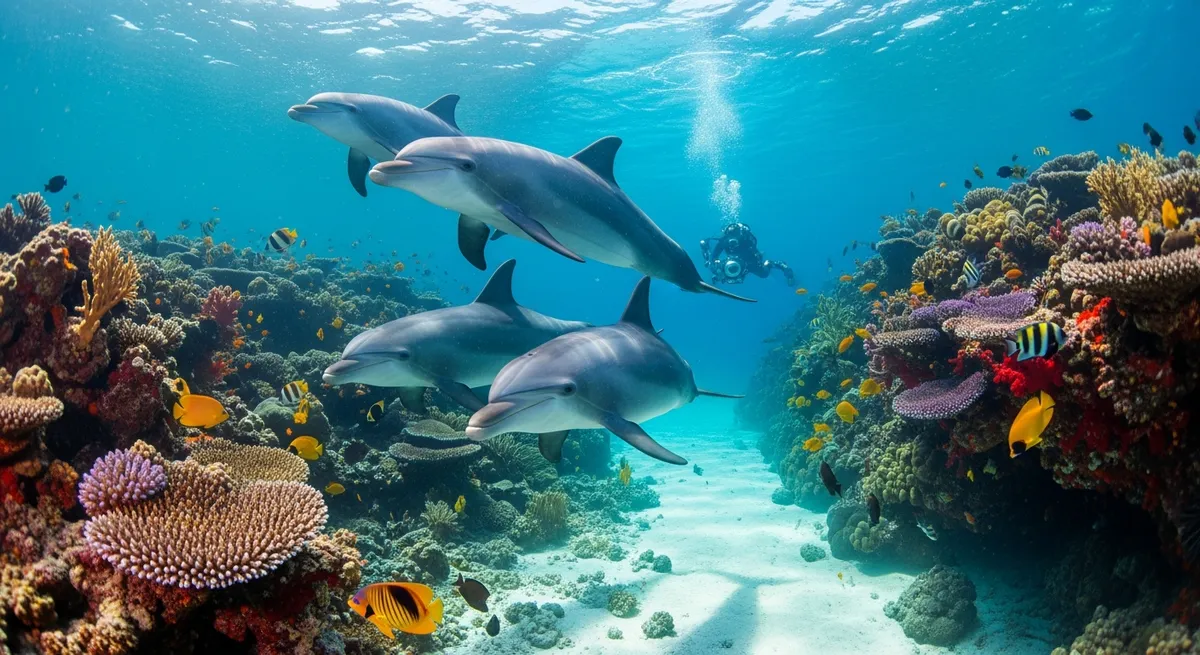
Rangiroa offers some of French Polynesia's richest diving, with 146+ marine species recorded in the area - including blacktip reef sharks, dolphins, giant moray eels, octopuses and sperm whales. Water ranges 27-29°C, warmest February, March, April.
Rangiroa isn't just diving; it’s an underwater rodeo. We love the passes here, especially Tiputa, where the incoming tide creates a conveyor belt of marine life. Imagine hanging weightless, watching a dozen grey reef sharks cruise by, then a pod of bottlenose dolphins zipping past, often close enough you can hear their clicks and whistles. Our favourite time to dive the passes is during an incoming tide, ideally a few days after the full moon for stronger currents and more action. You’ll drift past walls covered in yellowmargin triggerfish and two-tone wrasse, then through schools of fusiliers so thick they momentarily block the light. Keep an eye out for humphead wrasse foraging on the reef. It’s not just big stuff; the reef edges hold spotted tobies and lettered mitres if you slow down. The currents can be serious, so good buoyancy and comfort in moving water are essential. It's exhilarating, sometimes challenging, and always memorable.
Rangiroa Dive Site Map
Dive sites and dive centres in Rangiroa
Rangiroa Dive Sites
27 dive sites in Rangiroa
6 passengers
Six Passengers is a drift dive that delivers, plain and simple. We love the feeling of being swept along with the reef on one side, watching the reef sharks patrol below. It’s got a consistent buzz, never a dull moment. The current, which can pick up, usually guides you past schools of golden trevally and black surgeonfish, often with halfmoon triggerfish darting in between. Keep an eye out for humphead wrasse cruising by, they're always a treat. What we really enjoy here is the way the light filters through the water when you're moving at a decent clip, playing off the colours of the pinktail triggerfish and blue-green chromis. It's a sensory dive, less about hunting for macro and more about soaking in the energy of the reef. We'd suggest aiming for a mid-outgoing tide; that’s when the current brings in the bigger action without being overwhelming. This site is fantastic for anyone comfortable with a bit of movement, perfect for divers who appreciate the thrill of a good drift and plenty of shark encounters.
Alibaba
Alibaba, tucked inside Rangiroa's Tiputa Pass, is one of our absolute favourites for a reason. You'll drop into the blue, holding a line, watching the grey reef sharks cruise the channel entrance. It's a deep blue scene before you even hit the reef. Then, the real fun begins as you peel off and let the incoming current pull you into the "Ali Baba Canyon." This isn't your average drift. We love how the canyon walls provide shelter from the main rush, letting you slow down and really absorb the details. Look for the big schools of fusiliers, the snapper, and the occasional grouper sheltering in the crevices. Keep an eye out for humphead wrasse, they’re often around, and the moray eels are always out and about. We’ve even seen a tiger shark on a lucky day, though that's a rare treat. The maximum depth of 28 metres means it's accessible for most, but the current can be strong, so you need to be comfortable with drift diving. Alibaba is a thrilling dive, perfect for those who enjoy dynamic drift dives and want to experience Rangiroa's shark action up close without being swept away.
Alibaba
Alibaba, tucked inside Rangiroa's Tiputa Pass, is one of our absolute favourites for a reason. You'll drop into the blue, holding a line, watching the grey reef sharks cruise the channel entrance. It's a deep blue scene before you even hit the reef. Then, the real fun begins as you peel off and let the incoming current pull you into the "Ali Baba Canyon." This isn't your average drift. We love how the canyon walls provide shelter from the main rush, letting you slow down and really absorb the details. Look for the big schools of fusiliers, the snapper, and the occasional grouper sheltering in the crevices. Keep an eye out for humphead wrasse, they’re often around, and the moray eels are always out and about. We’ve even seen a tiger shark on a lucky day, though that's a rare treat. The maximum depth of 28 metres means it's accessible for most, but the current can be strong, so you need to be comfortable with drift diving. Alibaba is a thrilling dive, perfect for those who enjoy dynamic drift dives and want to experience Rangiroa's shark action up close without being swept away.
Avatoru Pass
Diving Avatoru Pass, you're looking at a drift through Rangiroa's main channel. The currents here can be serious, so we always check the tides – slack high tide is your friend if you prefer a gentler ride. Expect to see reef sharks, often patrolling the entrance, and plenty of pelagics cruising through. This dive is best for experienced divers comfortable with dynamic conditions and a fast-moving environment.
Blue Lagoon
Rangiroa's Blue Lagoon is a tranquil, shallow area, perfect for a relaxed second dive or a surface interval. We often see blacktip reef sharks patrolling the sandy bottom, sometimes even lemon sharks. It’s an ideal spot for newer divers or those looking for a gentle drift, away from the bigger currents of the passes. Bring your wide-angle lens for those shark encounters.
Eolienne
Eolienne is an absolute stunner, a real show-stopper for us in Rangiroa. We love it because it's such a complete experience, starting on this impossibly vibrant coral plateau that sits between ten and fourteen metres. The reef here is incredibly healthy, full of branching corals, and the light just floods the whole area. It feels like swimming through a living painting. From that plateau, it drops off sharply, and that's when the real fun begins. Eolienne is often the starting point for a drift through Tiputa Pass, which means you're almost guaranteed some big animal action. We've seen grey sharks and coral sharks patrolling the edge of the blue, and those bottlenose dolphins are regulars, sometimes coming in close to check you out. You'll also encounter dense schools of colourful reef fish – think fusiliers and triggerfish – making the whole drift feel like a parade. It’s ideal for pretty much any diver, from someone just getting comfortable with currents to seasoned pros looking for that classic Rangiroa thrill.
Mamaa
Mamaa offers a gentle drift along the outer reef in Rangiroa. Expect to see reef sharks patrolling the drop-off and schools of trevally darting past. It's a relaxed dive, making it a good option for those looking for less intense currents than the passes, but still wanting to experience Rangiroa's shark action. We’d suggest it for divers comfortable with drift diving.
Manta Point
Manta Point in Rangiroa is exactly what it sounds like, and we love it for its simple, honest brilliance. You're dropping onto a sandy bottom, shallow enough that the light feels bright and inviting, even at 11 metres. What happens next depends on the mantas, but when they’re in, they’re really in. We’ve had sessions here where several large oceanic mantas, some with wingspans pushing five metres, circle lazily over the coral heads, coming in for a clean. It’s less about racing currents and dramatic drop-offs here, more about quiet observation. Our favourite encounters have been during calm mornings, just after breakfast, when the light penetrates well and the mantas seem unhurried. You’ll settle onto the sand, perhaps next to a patch of staghorn coral, and just wait. Keep an eye out for blue-dashed rockskippers darting between the crevices and schools of bannerfish flitting past. This spot is perfect for photographers, or anyone who just wants to spend time watching these gentle giants without the rush of a drift dive. It suits divers who appreciate a relaxed pace and a genuine chance to connect with big animals in a mellow environment.
Motu Nuhi-Nuhi (l’aquarium)
Motu Nuhi-Nuhi, affectionately known as ‘the Aquarium,’ sits snugly in the Rangiroa lagoon, a short boat ride from Tiputa Pass. We love it for its easy-going vibe and sheltered conditions, making it perfect for a relaxed dive, especially if you’re getting back into things or just want a chill afternoon. The reef here is shallow, topping out around 14 metres, and it’s always protected from any strong currents. Drop in and you’re immediately enveloped in a vibrant coral garden. We’ve drifted over sandy patches dotted with coral bommies – often called ‘potatoes’ here – absolutely teeming with smaller lagoon fish. Look out for the flash of Pinktail triggerfish, the bustling Six-line wrasse, and the occasional Golden trevally cruising by. The visibility averages a comfortable 17 metres, giving you plenty of light to spot creatures like the tiny Nocturn Goby peeking from its hidey-hole or a sleepy Bottleneck Sea Cucumber resting on the sand. It’s a gentle dive, letting you linger and really soak in the details. This site is exactly what you need for a no-stress immersion, ideal for beginners, photographers taking their time, or anyone wanting a serene dive away from the stronger currents of the passes.
Nuhi Nuhi
Nuhi Nuhi offers a drift dive through Rangiroa's pass, often lively with reef sharks and schooling barracuda. We’ve found the currents here can be robust, so it’s best suited for experienced divers comfortable with moving water. Look out for the resident Napoleon wrasse and groups of grey reef sharks patrolling the drop-off. Visibility is generally excellent, making it a great site for wide-angle photography.
Passe de Tikehau - Tuheiava
Passe de Tikehau, or Tuheiava, is Rangiroa’s quieter cousin, and for good reason. We love how Tikehau offers a gentler introduction to pass diving, particularly when the current comes in. It’s a shallow drift, mostly under 10 meters, so you get incredible light bouncing off the sandy bottom, illuminating the schooling fusiliers and triggerfish. You’ll spot giant squirrelfish lurking under ledges and often catch glimpse of the iconic unicornfish gliding by. We’ve seen it busy, but usually, it's a calm, easy drift, perfect for those building confidence in currents or anyone who just wants a relaxed, colourful dive. Keep an eye out for the yellowmouth barracuda schools, they’re dense here. We rate this dive highly for its consistent good visibility and the sheer number of small reef fish, even if the big pelagics are a less frequent show than in some of Rangiroa's other passes.
Passe de Tiputa
Passe de Tiputa is really something. We’ve done it dozens of times and it still feels like the first, that rush of being swept into the lagoon, flying over a landscape of brain coral and anemones. We love a drift dive, and this is drift diving amplified. You’ll drop in just outside the pass on an incoming tide, then let the current carry you into the lagoon. The depth here often hovers around 20 metres, so there's plenty of bottom time to take in the show. What makes it special? The sheer volume of sharks. Grey reef sharks mostly, patrolling the entrance in dizzying numbers, sometimes hundreds, just hanging in the current, looking utterly unbothered by us. We’ve also had lucky encounters with mantas here, gliding through the blue. Keep an eye out for bottlenose dolphins, too; they often put on a playful display. The visibility averages 28 metres, a proper blue, though the currents can be quite strong. Our tip: go early in the morning for fewer boats and that beautiful soft light. This dive suits experienced divers comfortable with current, looking for a truly exhilarating ride. It’s an immersion in the raw power of the ocean, a proper shot of adrenaline.
Rangiroa Dive Centres
4 dive shops and operators in Rangiroa
Ocean Wildlife in Rangiroa
146 species recorded in Rangiroa
Rangiroa Daylight & Sunrise/Sunset
Sunrise and sunset times for Rangiroa, calculated from coordinates
Today - Sunday 11 October
Sunrise
05:26
Sunset
17:47
Daylight
12h 22m
Golden Hour
17:19
First light (dawn) at 05:04 · Last light (dusk) at 18:09
Monthly Averages
| Month | Sunrise | Sunset | Daylight |
|---|---|---|---|
| Jan | 05:31 | 18:27 | 12h 56m |
| Feb | 05:46 | 18:22 | 12h 35m |
| Mar | 05:53 | 18:05 | 12h 12m |
| Apr | 05:57 | 17:43 | 11h 46m |
| May | 06:04 | 17:29 | 11h 26m |
| JunShortest | 06:13 | 17:27 | 11h 14m |
| Jul | 06:16 | 17:35 | 11h 18m |
| Aug | 06:07 | 17:42 | 11h 36m |
| Sep | 05:46 | 17:45 | 12h 0m |
| OctNow | 05:23 | 17:48 | 12h 25m |
| Nov | 05:10 | 17:58 | 12h 48m |
| DecLongest | 05:14 | 18:15 | 13h 1m |
Times are approximate local times based on longitude. Actual times may vary slightly depending on the exact timezone observed in Rangiroa.
Where to Stay near Rangiroa
Prices from Booking.com. We may earn a commission at no extra cost to you.
Marine Protected Areas near Rangiroa
6 protected areas near Rangiroa - please respect local regulations when diving
Atoll de Toau est
Atoll de Aratika
Atoll de Toau ouest
Atoll de Niau
Atoll de Aratika
Atoll de Toau nord
Getting to Rangiroa
Rangiroa Airport
Papeete
Arutua Airport
Plan & book
Ways to dive Rangiroa, from day trips to liveaboards.
Day trips & courses
via GetYourGuideGuided dives, courses and snorkel trips with instant booking.
Find dive trips in RangiroaPlaces to stay
via Booking.comHotels and dive resorts near Rangiroa.
Search stays in RangiroaDive insurance
Most travel insurance excludes or limits scuba. Check what you need before you go.
Dive insurance explainedPartner links: we may earn a commission if you book, at no extra cost to you. How we make money