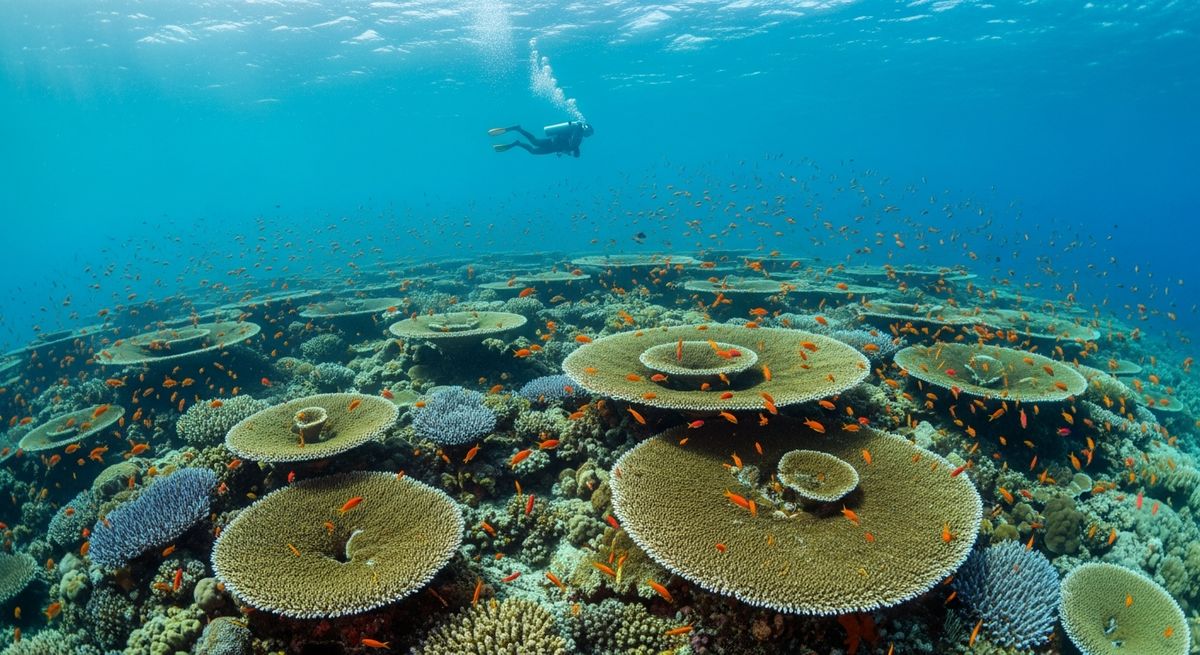
Manta Point - Rangiroa

Patate VACH, tucked into the sheltered corner of Prony Bay, is one of those places we always recommend for a relaxed, shallow dive. It’s perfect for easing into a trip, maybe shaking off some rust, or just enjoying a long, easy swim. The maximum depth is only 7 metres, which means plenty of bottom time and great light penetration, even on a cloudy day. We love how reliably calm it is here; "always protected from the wind" is no exaggeration. It's an ideal spot for new divers finding their fins, or if you're dialling in some skills. The coral formations aren't sprawling giants, but the smaller bommies hold a surprising amount of activity. You’ll often spot a Pinda Moray peeking out, or a Hairy Scorpionfish perfectly camouflaged against the rock. Keep an eye on the sandy patches too; we’ve had some great encounters with flounders here, and the sand rays sometimes glide right past. The schools of Blue and Gold Fusiliers can be impressive, creating shimmering walls of fish. While the current description mentions white-tip reef sharks, we've only ever seen them on occasion, and usually just fleeting glimpses in the distance. What you will see for sure are plenty of small coral fish, various wrasse like the Floral and Diagonal-lined, and if you’re patient, a few turtles moseying about. Visibility averages around 11 metres, which is perfectly fine for such a shallow, intimate site.

Location
Rangiroa, French Polynesia, Central & South Pacific
Coordinates
-15.083100, -148.222600
Type
reef

Best Time to Dive in Rangiroa

The warmest water temperatures in Rangiroa occur in April, averaging 29.2°C. The coolest conditions are in September at 26.8°C.

Monthly Water Temperatures

  • January: 28.5°C
  • February: 28.7°C
  • March: 29.2°C
  • April: 29.2°C
  • May: 28.7°C
  • June: 28.0°C
  • July: 27.3°C
  • August: 26.8°C
  • September: 26.8°C
  • October: 27.3°C
  • November: 28.1°C
  • December: 28.4°C

Nearby Dive Sites in Rangiroa

Nearest Dive Centres to Manta Point

Marine Life in Rangiroa

Home to 153 recorded species including 129 reef fish, 6 sea cucumbers, 5 whales & dolphins, 5 hard corals, 2 sharks & rays, 2 sea snails & nudibranchs.

Notable Species

Recommended Packing List for Manta Point

Based on average water temperature of 28.1°C, currents 11 cm/s.

  • Shorty or Rashguard - warm 28°C water needs minimal exposure protection
  • Mask - essential for every dive
  • Fins
  • BCD - buoyancy compensator
  • Regulator - your most safety-critical piece of gear
  • Dive Computer - tracks depth, time, and NDL
  • Surface Marker Buoy (SMB) - essential for boat pickups
  • Dive Torch - useful for crevices and colour at depth
  • Underwater Camera - capture your diving memories

Frequently Asked Questions

What is the typical diving depth at Manta Point and where are the manta rays usually found?
At Manta Point, the maximum diving depth is 11 meters, making it a relatively shallow dive. The majestic oceanic manta rays, with wingspans up to 5 meters, are typically found on the sandy seabed dotted with coral patates. This is where they come to be deparasitised, offering divers an incredible viewing opportunity. You can learn more about these incredible creatures in our wildlife database.
Besides manta rays, what other marine life can divers expect to see at Manta Point?
The primary highlight at Manta Point is undoubtedly the majestic oceanic manta rays, which can have wingspans of up to 5 meters. The provided information specifically mentions these incredible creatures coming to the sandy seabed for deparasitisation. While the description focuses on the manta rays, it does not explicitly list other specific marine life divers can expect to encounter. For more general information on marine species, you can explore our wildlife database.
How difficult is diving at Manta Point, and is it suitable for beginner divers?
While Manta Point is described as suitable for beginners and first-dives from a boat at anchor, its overall difficulty is rated as intermediate. This suggests that while the initial conditions might be gentle, divers should still possess a foundational level of experience. It's an excellent site to encounter majestic oceanic manta rays in Rangiroa.
When is the best time of year to dive at Manta Point for optimal conditions and manta sightings?
The provided information for Manta Point does not specify a particular best time of year for optimal conditions or manta sightings. However, manta rays are a consistent highlight at this site, coming to the sandy seabed for deparasitisation. For general guidance on diving seasons and conditions in different regions, you can consult our When to Dive section.
What dive certifications are required to dive at Manta Point?
The provided data for Manta Point does not explicitly state the specific dive certifications required. Given its intermediate difficulty rating, it is generally advisable for divers to hold at least an Open Water certification or equivalent. We recommend checking with local dive operators in Rangiroa for their specific requirements before planning your dive.
What are the typical current and water conditions, including temperature and visibility, at Manta Point?
At Manta Point, divers can expect an average visibility of 14 meters, offering clear views of the sandy seabed and its resident manta rays. The provided information does not specify typical water temperatures or current conditions for this site in Rangiroa. It's always a good practice to consult with local dive centers for the most up-to-date conditions before your dive.