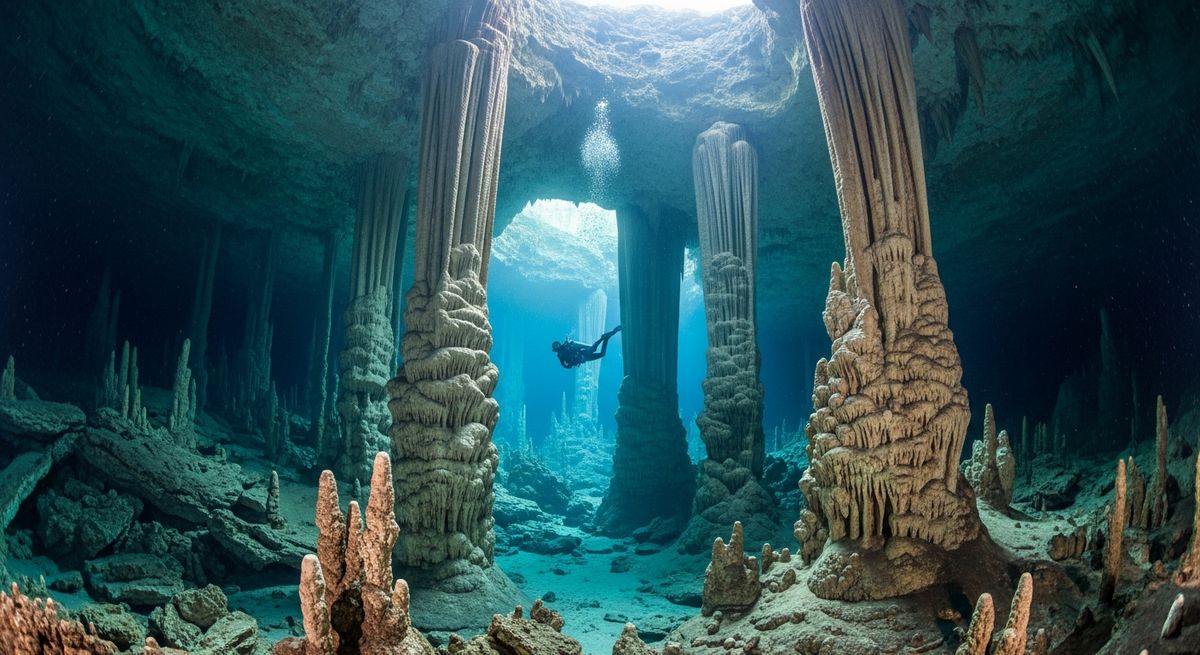
Eolienne
Why dive here
With 146+ marine species recorded in the area - including blacktip reef sharks, dolphins, giant moray eels, octopuses and sperm whales - Eolienne offers some of Rangiroa's richest cenote diving. Water ranges 27-29°C, warmest February, March, April.
Eolienne is an absolute stunner, a real show-stopper for us in Rangiroa. We love it because it's such a complete experience, starting on this impossibly vibrant coral plateau that sits between ten and fourteen metres. The reef here is incredibly healthy, full of branching corals, and the light just floods the whole area. It feels like swimming through a living painting. From that plateau, it drops off sharply, and that's when the real fun begins. Eolienne is often the starting point for a drift through Tiputa Pass, which means you're almost guaranteed some big animal action. We've seen grey sharks and coral sharks patrolling the edge of the blue, and those bottlenose dolphins are regulars, sometimes coming in close to check you out. You'll also encounter dense schools of colourful reef fish – think fusiliers and triggerfish – making the whole drift feel like a parade. It’s ideal for pretty much any diver, from someone just getting comfortable with currents to seasoned pros looking for that classic Rangiroa thrill.
Typical Eolienne Dive Profile
Illustrative profile based on site depth and type. Actual dive profiles vary - always follow your dive computer and training.
Safety Notes
Overhead environment - never enter without proper cave/cavern training, redundant equipment, and a guideline.
Nearest Dive Centres to Eolienne
Dive shops near Eolienne
View all dive centres in RangiroaReviews for Eolienne
Conditions
Ocean conditions, forecast and tides for Eolienne
Eolienne Ocean Conditions
Monthly averages for Eolienne, sourced from Open-Meteo marine data + Copernicus Marine (EU) - nearest station: Open-Meteo marine grid (-14.98, -147.62) (32km away)
October Averages
Sea Temperature
28°C
82°F · Range: 27.2–28.7°C
Current Speed
11.05 cm/s
Direction: W (264.8°)
Chlorophyll-a
0.062 mg/m³
Very clear (oligotrophic)
Salinity
36.23 PSU
Based on 4 years of monitoring data · Data sources: Open-Meteo marine data + Copernicus Marine (EU)
Plan & book
Ways to dive Rangiroa, from day trips to liveaboards.
Day trips & courses
via GetYourGuideGuided dives, courses and snorkel trips with instant booking.
Find dive trips in RangiroaPlaces to stay
via Booking.comHotels and dive resorts near Rangiroa.
Search stays in RangiroaDive insurance
Most travel insurance excludes or limits scuba. Check what you need before you go.
Dive insurance explainedPartner links: we may earn a commission if you book, at no extra cost to you. How we make money
Where to Stay near Eolienne
Prices from Booking.com. We may earn a commission at no extra cost to you.