Blue Holes
Protected Area
Ngemelis Island Complex
Why dive here
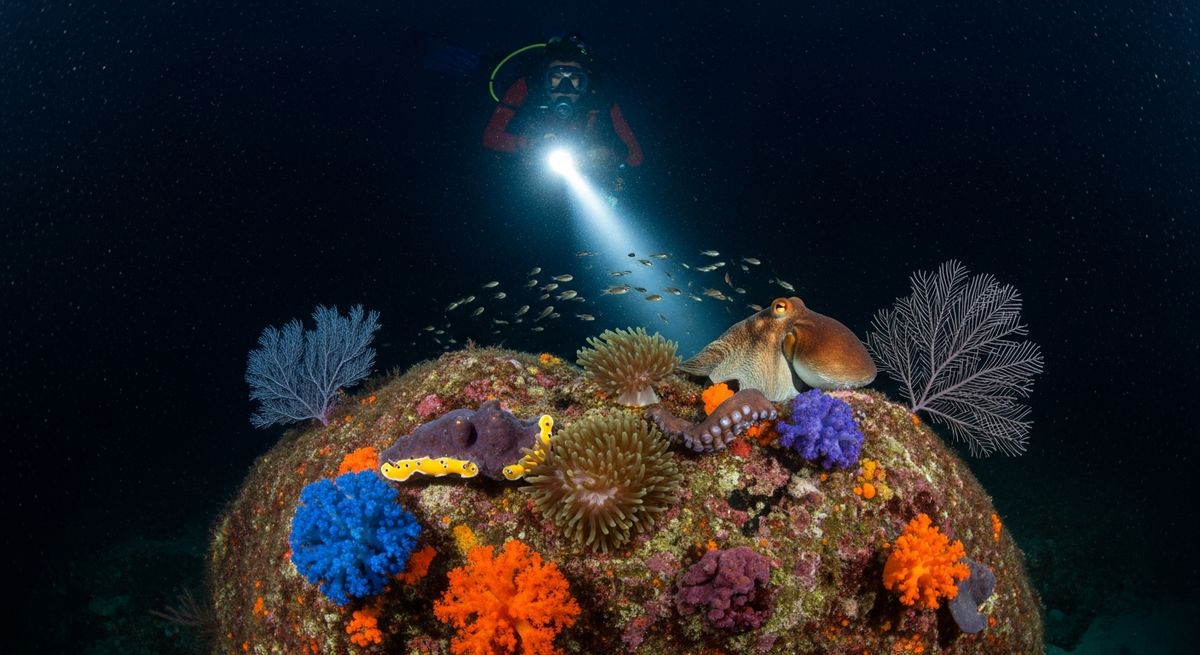
With 182+ marine species recorded in the area - including barracuda, lionfish, mandarin fish, napoleon wrasse and nautiluses - Blue Holes offers some of Rock Islands's richest diving. Water ranges 29-30°C, warmest June, October, November.
Blue Holes is one of those Palau sites that really sticks with you, a genuinely unique experience. We love dropping through the main chimney, around 10 meters down, watching the light rays pierce the darkness. It’s like entering a cathedral. You come out into a massive cavern, then drift out to the wall at 30 meters or so. Look up, and you’ll often see reef sharks silhouetted against the blue. The wall itself is gorgeous, full of Blackside Hawkfish perched on corals and the occasional Golden Butterflyfish flitting past. We’ve spotted some tiny beauties here too, like the Palespot Eviota, if you take the time to really look. Current can pick up, so this isn't a beginner drift, but if you’re comfortable moving with the water, it’s a brilliant ride along the reef. We always check the tides; slack high is our favourite for the clearest water and easier entry.
Nearest Dive Centres to Blue Holes
Dive shops near Blue Holes
Cruise Control palau
Cruise Control palau
DayDream Dive Center
Sam's Tours
Blue Marlin
Blue Marlin
Reviews for Blue Holes
Conditions
Ocean conditions, forecast and tides for Blue Holes
Blue Holes Ocean Conditions
Monthly averages for Blue Holes, sourced from Open-Meteo marine data + Copernicus Marine (EU) - nearest station: Open-Meteo marine grid (7.2, 134.3) (4km away)
October Averages
Sea Temperature
30°C
86°F · Range: 28.5–31.2°C
Current Speed
10.05 cm/s
Direction: N (5.7°)
Chlorophyll-a
0.026 mg/m³
Very clear (oligotrophic)
Salinity
33.62 PSU
Based on 4 years of monitoring data · Data sources: Open-Meteo marine data + Copernicus Marine (EU)
Plan & book
Ways to dive Rock Islands, from day trips to liveaboards.
Day trips & courses
via GetYourGuideGuided dives, courses and snorkel trips with instant booking.
Find dive trips in Rock IslandsPlaces to stay
via Booking.comHotels and dive resorts near Rock Islands.
Search stays in Rock IslandsDive insurance
Most travel insurance excludes or limits scuba. Check what you need before you go.
Dive insurance explainedPartner links: we may earn a commission if you book, at no extra cost to you. How we make money
Where to Stay near Blue Holes
Prices from Booking.com. We may earn a commission at no extra cost to you.