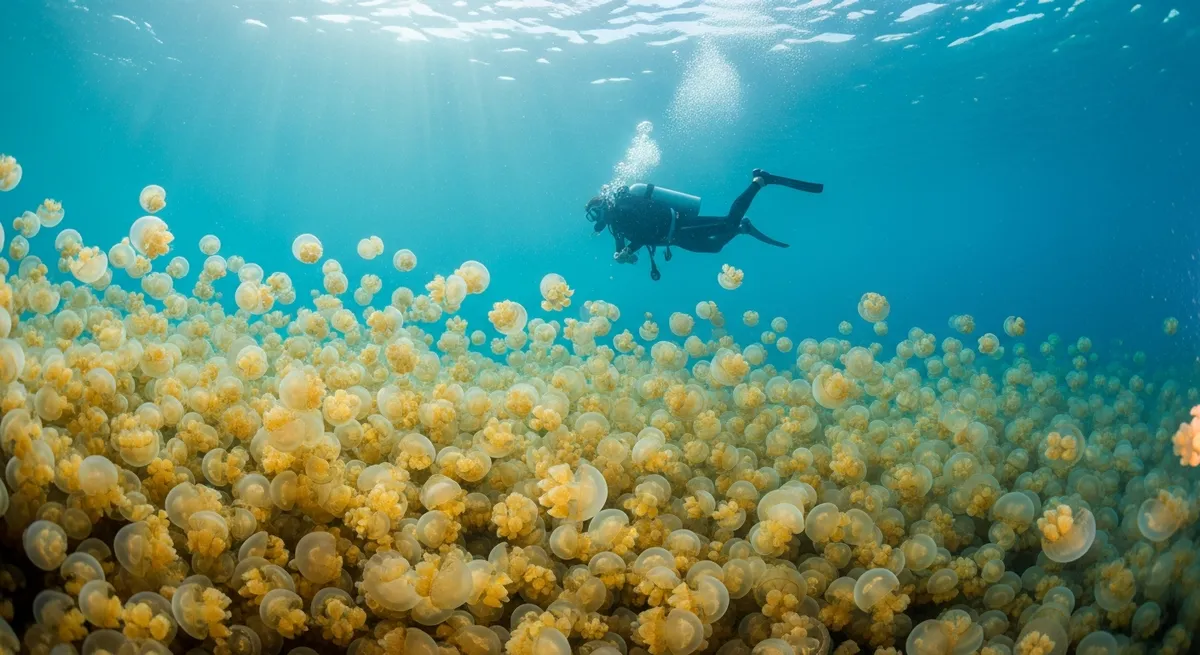
Diving in Rock Islands
Why dive here
Rock Islands offers some of Palau's richest diving, with 182+ marine species recorded in the area - including barracuda, lionfish, mandarin fish, napoleon wrasse and nautiluses. Water ranges 28-30°C, warmest September, October, November.
The Rock Islands. Just the name conjures up those iconic mushroom-shaped islets, carved by millennia of waves, standing sentinel over some truly spectacular diving. We’ve logged more than a few hours here and still find ourselves craning our necks on the surface and craning our necks underwater. It’s the sheer scale that gets you - those towering walls plummeting into the deep, often bathed in a current that’s perfect for a drift. Blue Corner is, of course, the star, and we love it for its reliable shark action. Not just a couple, but grey reefs, white-tips, sometimes even a hammerhead if you’re lucky enough to catch the right conditions. Hang on to your reef hook and watch the show. German Channel is our pick for mantas, especially during the new moon when they gather to feed and clean. You can often feel the slight temperature drop as they glide past, a cool whisper in the water. Beyond the big stuff, the walls themselves are plastered in colour, a living canvas of soft corals and anemones. Look closer, and you’ll find smaller wonders like the impossibly vibrant Marshall Dottyback or the oddly charming Crazy Fish. We always suggest an early morning dive at Ulong Channel; the light, filtering through the water, is just magical, and the currents tend to be a little calmer, offering a more relaxed drift past patrolling barracuda and snapper. Strong currents are a given in places, so be ready for that, but it’s precisely what brings in the pelagics.
Rock Islands Dive Site Map
Dive sites and dive centres in Rock Islands
Rock Islands Dive Sites
35 dive sites in Rock Islands
Big Drop Off
The Big Drop Off, true to its name, delivers a proper wall dive in Palau. We’re talking a sheer vertical face here, plunging deep, plastered with big sea fans, sponges, and plenty of colourful soft corals. It's a calmer dive than some of Palau’s speedier spots, perfect for slowing down, framing a wide-angle shot, or really looking close for nudibranchs. You’ll often find turtles cruising the wall, and reef sharks tend to glide by in the blue, making it a solid choice for a more relaxed dive experience.
Blue Corner
Blue Corner. Just saying the name brings a smile to any diver who’s been lucky enough to clip in there. This isn’t a leisurely drift, it’s a full-on immersion into the pelagic highway, a proper adrenaline shot. We love the feeling of hanging on the reef hook, watching the show unfold in front of you. Schools of barracuda swirl past, sometimes so many they turn the water silver. Grey reef sharks patrol the drop-off, a constant presence, sometimes coming so close you can count their gills. What makes Blue Corner so special, for us, is that feeling of being an observer in a truly wild place. The sheer volume of fish is astounding. We’ve seen entire walls of fusiliers, so thick they momentarily block out the sun, only to part for a passing Napoleon wrasse. Look out for the Golden-girdled Coralfish darting amongst the coral, or a stealthy Twinspot Hawkfish perched, waiting. The current can be strong, often ripping, which is exactly why everything is here. It’s definitely not for beginners, and we always suggest a thorough briefing on current diving and reef hook technique before you even think about dropping in. Our favourite approach is to dive it at an incoming tide for maximum action, but be ready for a lively ride. If you're after big fish action and don't mind a bit of a workout, Blue Corner is your spot.
Blue Corner (and Blue Holes)
Blue Corner, often paired with the Blue Holes, is where you really start to understand Palau’s reputation. We’ve seen it described as a fish aggregation device, and that feels accurate. Hook in and watch the show: schools of snapper, jacks, and chevron barracuda, sometimes so thick they blot out the sun. Sharks are a constant presence, usually grey reef, with tuna and wahoo making quick passes in the blue. It’s a drift dive, often with strong currents, so it’s definitely one for experienced divers comfortable managing their buoyancy while suspended in the flow.
Blue Holes
Blue Holes is one of those Palau sites that really sticks with you, a genuinely unique experience. We love dropping through the main chimney, around 10 meters down, watching the light rays pierce the darkness. It’s like entering a cathedral. You come out into a massive cavern, then drift out to the wall at 30 meters or so. Look up, and you’ll often see reef sharks silhouetted against the blue. The wall itself is gorgeous, full of Blackside Hawkfish perched on corals and the occasional Golden Butterflyfish flitting past. We’ve spotted some tiny beauties here too, like the Palespot Eviota, if you take the time to really look. Current can pick up, so this isn't a beginner drift, but if you’re comfortable moving with the water, it’s a brilliant ride along the reef. We always check the tides; slack high is our favourite for the clearest water and easier entry.
Chandelier Cave
Chandelier Cave. It’s exactly what it sounds like, and we love it for its sheer novelty. You drop into a dark maw, just a few minutes’ boat ride from Koror, and then it’s a short swim into the first chamber. What hits you first isn't the scale, but the silence. No surge, no engine noise, just the sound of your own regulator. The cavern itself is a series of five chambers, each with an air pocket, and the stalactites hanging from the ceiling really do look like enormous, natural chandeliers. We’re talking ancient geology here, slowly growing downwards over millennia. We've explored these with just the beam of a dive light, illuminating the formations, and it’s a truly eerie, beautiful experience. Watch for the tiny life hugging the walls – the Red Foram glows bright against the rock, and we've spotted the occasional Dashed-line Blenny darting into crevices. We’d suggest this dive for anyone comfortable in enclosed spaces, or those looking for something completely different from Palau’s ripping currents and pelagic action. It’s a gentle, reflective dive, a nice counterpoint to the more adrenaline-fueled sites. Don’t expect big fish, but do expect a geological marvel and a unique perspective on the Rock Islands. Take your time, really soak in the atmosphere.
Chandelier Caves
Chandelier Caves isn't a wreck dive, despite what some might say, but a fascinating multi-chamber cavern system near Koror. We're talking four distinct air-filled chambers that you can surface in, each with incredible stalactites hanging like, well, chandeliers. You navigate through relatively shallow depths, around 10-12 metres, making it a great option for divers comfortable with overhead environments but not necessarily deep diving. Keep an eye out for the small shrimp and crabs clinging to the walls, and enjoy the eerie silence of the caves.
Chuyo Maru
The *Chuyo Maru* in Palau's Rock Islands isn't just a sunken ship; it’s a time capsule. We love how the story of this WWII supply ship unfolds as you descend, the sheer scale of it emerging from the blue. It sits upright and relatively intact, a genuine wreck dive for those who appreciate history and exploration. Dropping down, the ship’s mast points towards the surface, encrusted with a rough tapestry of coral and sponges. Inside the cargo holds, we often find shafts of light cutting through, illuminating schools of fusiliers so thick they practically block the view. Look closely for the smaller residents – Nagasaki damsels flitting between the rusted beams and cryptic gobies tucked into crevices. Out on the deck, large lionfish often pose, unbothered by divers, and we’ve spotted sizable mottled conger morays peering from pipes. This wreck rewards a slow, observant dive, giving you time to appreciate the blend of human history and natural reclamation. It’s definitely our pick for divers who want more than just a quick look.
German Channel
The German Channel is one of those Palau sites you hear about before you even get on the plane, and for good reason. Originally carved by German forces in World War II to move phosphates, it's now a thoroughfare for the bigger stuff. We've often spent a good chunk of a dive just watching manta rays glide in for a clean, sometimes three or four at a time, their huge mouths agape as tiny wrasse pick them over. You'll usually spot a few grey reef sharks patrolling the edges too, and it’s not uncommon to see eagle rays elegantly passing by. It’s a great spot for newer divers, with a manageable depth and consistently impressive animal encounters.
Helmet Wreck
The Helmet Wreck lies on its port side, a Japanese army cargo ship from WWII. You'll find plenty of sake bottles, dishes, and, of course, gas masks and helmets scattered about. It’s a great dive for wreck enthusiasts who appreciate history and don't mind a lack of big pelagics, though we often spot lionfish and nudibranchs here. Depths run from 34m to a silty 98m, so plan for a deeper dive.
Iro
The Iro is a Japanese WWII oiler, lying mostly intact between 16 and 131 feet. It’s a proper wreck dive, with plenty of penetration opportunities for those with the right training, but even from the deck, you’ll spot a surprising amount of detail. Keep an eye out for batfish and snapper shoals that often hang around the superstructure. It's a solid choice for advanced divers looking for a piece of history.
Iro Maru Wreck Palau
The Iro Maru is one of those wrecks we always make time for when we're in Palau, especially if we have newer divers in the group. It’s a 143-meter oiler, sunk during Operation Hailstone in 1944, sitting upright on the seabed at a comfortable 27 meters. What we really love about the Iro is its sheer accessibility and how much there is to poke around in without needing advanced certs. You can swim through the superstructure, peer into the engine room, and even pop down into the cargo holds if you're comfortable. Light filters in through bomb damage and open hatches, illuminating schools of glassfish that swirl like silver clouds. We've seen moray eels peeking from pipes, schools of batfish circling the mast, and robust lionfish perched regally on decks. It’s an almost perfect introduction to wreck diving, with plenty of intact structure to explore and a fascinating history you can practically feel. The bow gun is always a highlight, a really stark reminder of its past. We’d suggest going in the morning; the light penetration can be magic.
Jake SeaPlane
Dropping onto the Jake SeaPlane wreck, you're immediately struck by the sheer lack of fuss. It's a bomber, an Aichi E13A "Jake" reconnaissance seaplane, resting upright in about 15 metres. No dramatic canyons here, just open water and the plane. We love the way the light filters down, illuminating the cockpit and the engine, still mostly intact. It feels like stepping back into a very specific moment in history. The plane itself is a magnet for the smaller stuff. We've spent ages just watching the Pink Squirrelfish dart in and out of the fuselage, while the Onelined wrasse pick over the coral growth. Keep an eye out for those Bearded Flathead Gobies, they're masters of camouflage on the wing. You can swim through the cockpit, which is a tight squeeze but worth it for the sense of being inside. Our favourite part? The way the soft corals have started to colonise the propeller blades, turning them into these vibrant, swaying sculptures. It's a mellow dive, perfect for photographers or anyone who appreciates a bit of quiet contemplation with their history.
Show all 35 dive sites in Rock Islands
- Jellyfish Lake - Ongeim’l Tketau
- Lighthouse Channel
- Mandarinfish Lake
- MT ARAYAT
- New Drop-Off
- New Drop Off / Ngemillis Wall
- New Drop Offs
- Ngerechong Drop-off
- Ngerechong North Coral Garden
- Paradies Corner
- Peleliu Cut
- Peleliu Wall
- Peleliu Wall (& Cut)
- Peliliu Corner
- Sand Bar
- Short Drop Off
- Siaes Corner
- Siaes Tunnel
- Temple of Doom
- Teshio Maru
- The Big Drop Off
- The New Drop Off
- Ulong Channel
Rock Islands Dive Centres
19 dive shops and operators in Rock Islands
Ocean Wildlife in Rock Islands
182 species recorded in Rock Islands
Rock Islands Daylight & Sunrise/Sunset
Sunrise and sunset times for Rock Islands, calculated from coordinates
Today - Sunday 11 October
Sunrise
05:50
Sunset
17:50
Daylight
12h 0m
Golden Hour
17:22
First light (dawn) at 05:29 · Last light (dusk) at 18:11
Monthly Averages
| Month | Sunrise | Sunset | Daylight |
|---|---|---|---|
| Jan | 06:20 | 18:05 | 11h 45m |
| Feb | 06:21 | 18:15 | 11h 54m |
| Mar | 06:10 | 18:15 | 12h 4m |
| Apr | 05:55 | 18:12 | 12h 17m |
| May | 05:46 | 18:13 | 12h 27m |
| JunLongest | 05:48 | 18:20 | 12h 32m |
| Jul | 05:54 | 18:24 | 12h 30m |
| Aug | 05:57 | 18:19 | 12h 22m |
| Sep | 05:54 | 18:04 | 12h 10m |
| OctNow | 05:50 | 17:48 | 11h 58m |
| Nov | 05:54 | 17:42 | 11h 48m |
| DecShortest | 06:07 | 17:50 | 11h 42m |
Times are approximate local times based on longitude. Actual times may vary slightly depending on the exact timezone observed in Rock Islands.
Where to Stay near Rock Islands
Prices from Booking.com. We may earn a commission at no extra cost to you.
Marine Protected Areas near Rock Islands
47 protected areas near Rock Islands - please respect local regulations when diving
Palau National Marine Sanctuary
Domestic Fishing Zone
Coastal State Waters
Northern Reef Fisheries Management Project
Northern Reef Co-Managed Commercial Fisheries Zone
Lagon sud des îles Chelbacheb
Rock Island Southern Lagoon Management Area
Koror Southern Lagoon
Ngarchelong Subsistence Fishing Zone
Velasco Commercial Fishing Zone
Ngaremeduu Bay Network
Ngkesol Barrier Reef
Showing 12 largest of 47
Getting to Rock Islands
Babelthuap Island
Yap Island
Plan & book
Ways to dive Rock Islands, from day trips to liveaboards.
Day trips & courses
via GetYourGuideGuided dives, courses and snorkel trips with instant booking.
Find dive trips in Rock IslandsPlaces to stay
via Booking.comHotels and dive resorts near Rock Islands.
Search stays in Rock IslandsDive insurance
Most travel insurance excludes or limits scuba. Check what you need before you go.
Dive insurance explainedPartner links: we may earn a commission if you book, at no extra cost to you. How we make money