German Channel
Protected Area
Ngemelis Island Complex
Why dive here
With 182+ marine species recorded in the area - including barracuda, lionfish, mandarin fish, napoleon wrasse and nautiluses - German Channel offers some of Rock Islands's richest drift diving. Water ranges 29-30°C, warmest June, October, November.
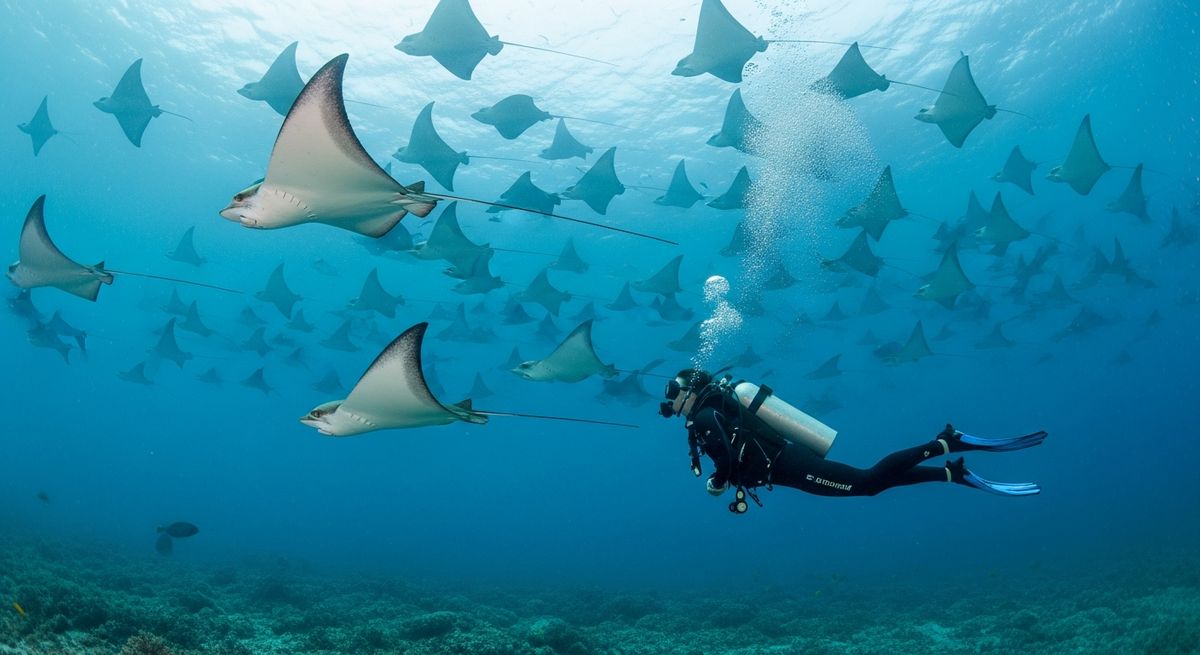
The German Channel is one of those Palau sites you hear about before you even get on the plane, and for good reason. Originally carved by German forces in World War II to move phosphates, it's now a thoroughfare for the bigger stuff. We've often spent a good chunk of a dive just watching manta rays glide in for a clean, sometimes three or four at a time, their huge mouths agape as tiny wrasse pick them over. You'll usually spot a few grey reef sharks patrolling the edges too, and it’s not uncommon to see eagle rays elegantly passing by. It’s a great spot for newer divers, with a manageable depth and consistently impressive animal encounters.
Typical German Channel Dive Profile
Illustrative profile based on site depth and type. Actual dive profiles vary - always follow your dive computer and training.
Safety Notes
Depth of 21m - Advanced Open Water certification recommended.
Drift dive - carry a surface marker buoy (SMB) and stay with your group. Brief the current direction before entry.
Always perform a 3-minute safety stop at 5m before surfacing.
Nearest Dive Centres to German Channel
Dive shops near German Channel
Cruise Control palau
Cruise Control palau
DayDream Dive Center
Sam's Tours
Blue Marlin
Blue Marlin
Reviews for German Channel
Conditions
Ocean conditions, forecast and tides for German Channel
German Channel Ocean Conditions
Monthly averages for German Channel, sourced from Open-Meteo marine data + Copernicus Marine (EU) - nearest station: Open-Meteo marine grid (7.2, 134.3) (4km away)
October Averages
Sea Temperature
30°C
86°F · Range: 28.5–31.2°C
Current Speed
10.05 cm/s
Direction: N (5.7°)
Chlorophyll-a
0.026 mg/m³
Very clear (oligotrophic)
Salinity
33.62 PSU
Based on 4 years of monitoring data · Data sources: Open-Meteo marine data + Copernicus Marine (EU)
Plan & book
Ways to dive Rock Islands, from day trips to liveaboards.
Day trips & courses
via GetYourGuideGuided dives, courses and snorkel trips with instant booking.
Find dive trips in Rock IslandsPlaces to stay
via Booking.comHotels and dive resorts near Rock Islands.
Search stays in Rock IslandsDive insurance
Most travel insurance excludes or limits scuba. Check what you need before you go.
Dive insurance explainedPartner links: we may earn a commission if you book, at no extra cost to you. How we make money
Where to Stay near German Channel
Prices from Booking.com. We may earn a commission at no extra cost to you.