Aussie Point - Iron Bottom Sound

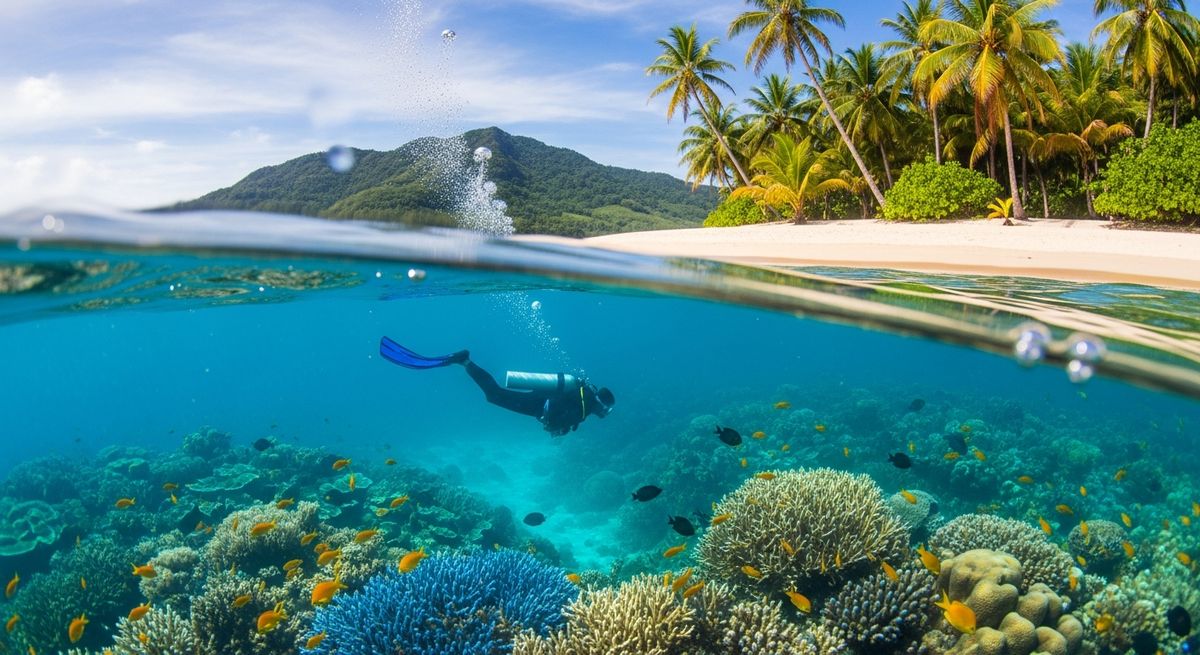
Aussie Point gives you that classic Iron Bottom Sound feel, even without a wreck. The point itself drops off deep, though we usually stick to the top 21 meters, where the reef is in great shape. You’ll spot huge gorgonian sea fans swaying in the current and the place is alive with fish – schools of barracuda and trevally are common. We’ve had some good luck here with pelagics too, seeing reef sharks and the occasional mobula ray glide by. For divers who appreciate a healthy reef with a chance for big animal encounters, it’s a solid choice.

Location
Iron Bottom Sound, Solomon Islands, Central & South Pacific
Coordinates
-8.315700, 157.444100
Type
reef

Marine Protected Area: Duduli Rereghana

Best Time to Dive in Iron Bottom Sound

The warmest water temperatures in Iron Bottom Sound occur in January, averaging 30.5°C. The coolest conditions are in December at 30.5°C.

Monthly Water Temperatures

  • January: 30.5°C (air: 26.9°C)
  • February: 30.5°C (air: 26.7°C)
  • March: 30.5°C (air: 26.7°C)
  • April: 30.5°C (air: 26.8°C)
  • May: 30.5°C (air: 26.9°C)
  • June: 30.5°C (air: 26.5°C)
  • July: 30.5°C (air: 26.5°C)
  • August: 30.5°C (air: 26.3°C)
  • September: 30.5°C (air: 26.5°C)
  • October: 30.5°C (air: 26.7°C)
  • November: 30.5°C (air: 26.7°C)
  • December: 30.5°C (air: 26.9°C)

Nearby Dive Sites in Iron Bottom Sound

Nearest Dive Centres to Aussie Point

Marine Life in Iron Bottom Sound

Home to 415 recorded species including 320 reef fish, 29 hard corals, 18 sea snails & nudibranchs, 16 sea cucumbers, 7 seagrass & algae, 5 clams & mussels.

Notable Species

Recommended Packing List for Aussie Point

Based on average water temperature of 30.5°C.

  • Shorty or Rashguard - warm 30°C water needs minimal exposure protection
  • Mask - essential for every dive
  • Fins
  • BCD - buoyancy compensator
  • Regulator - your most safety-critical piece of gear
  • Dive Computer - tracks depth, time, and NDL
  • Surface Marker Buoy (SMB) - essential for boat pickups
  • Dive Torch - useful for crevices and colour at depth
  • Underwater Camera - capture your diving memories

Frequently Asked Questions

What is the typical depth range for diving at Aussie Point?
Divers at Aussie Point can typically explore down to a maximum depth of 21m. While the point itself drops off hundreds of meters deep, the main reef exploration occurs within this range, offering a diverse experience.
What kind of marine life and underwater features can divers expect to see at Aussie Point?
Aussie Point is renowned for frequent sightings of hammerhead sharks, along with Reef Sharks, Green and Hawksbill Turtles, and Mobula and Eagle Rays. Divers will also encounter schools of bumphead parrotfish, barracuda, and trevally amidst an excellent health reef featuring many huge Gorgonian Sea Fans.
How challenging is diving at Aussie Point, and is it suitable for beginner divers?
Diving at Aussie Point is rated as intermediate difficulty. This suggests it may not be suitable for absolute beginner divers, who might find the conditions or depth challenging. Divers should have some experience to comfortably enjoy this site.
What is the best time of year to dive Aussie Point for optimal conditions and marine encounters?
The provided data does not specify the best time of year to dive Aussie Point for optimal conditions or marine encounters. For general information on seasonal diving in the Solomon Islands, please refer to our When to Dive guide.
What scuba diving certifications are required or recommended to dive at Aussie Point?
Given the intermediate difficulty of Aussie Point, divers are typically recommended to hold an Advanced Open Water certification or equivalent. This ensures they have the necessary skills and experience for deeper dives and potentially varying conditions.
What are the typical currents and water conditions like at Aussie Point?
Divers at Aussie Point can expect excellent water clarity, with an average visibility of 32m. The provided data does not specify typical current strengths or water temperatures for this site.