G Spot - Iron Bottom Sound

Lighthouse Reef is one of our favourite afternoon drifts. Not too deep, maxing out at about 18 metres, it’s a brilliant site for soaking in the Caribbean vibe without worrying too much about your NDLs. We love dropping in near the West End dock and just letting the current carry us gently along the inner reef. You’ll find plenty of swim-throughs here, perfect for poking around to spot slipper lobsters tucked into crevices or a nurse shark having a snooze under an overhang. The light plays beautifully through the coral formations, especially when the sun is high, illuminating schools of bluestriped grunts and French grunts that just hang suspended in the water column. Keep an eye out for the smaller stuff too – dusky damselfish flitting around the bluestriped grunts, and we’ve even spotted the occasional conchfish. Visibility here averages around 24 metres, which makes for some lovely wide-angle photo opportunities of the reef structure. It’s a super relaxed dive, ideal for a multi-tank day or when you just want a straightforward, enjoyable tour of a healthy reef.

Location
Iron Bottom Sound, Solomon Islands, Central & South Pacific
Coordinates
-7.504900, 158.727300
Type
reef

Marine Protected Area: Kia

Best Time to Dive in Iron Bottom Sound

The warmest water temperatures in Iron Bottom Sound occur in January, averaging 30.5°C. The coolest conditions are in December at 30.5°C.

Monthly Water Temperatures

  • January: 30.5°C (air: 26.9°C)
  • February: 30.5°C (air: 26.7°C)
  • March: 30.5°C (air: 26.7°C)
  • April: 30.5°C (air: 26.8°C)
  • May: 30.5°C (air: 26.9°C)
  • June: 30.5°C (air: 26.5°C)
  • July: 30.5°C (air: 26.5°C)
  • August: 30.5°C (air: 26.3°C)
  • September: 30.5°C (air: 26.5°C)
  • October: 30.5°C (air: 26.7°C)
  • November: 30.5°C (air: 26.7°C)
  • December: 30.5°C (air: 26.9°C)

Nearby Dive Sites in Iron Bottom Sound

Nearest Dive Centres to G Spot

Marine Life in Iron Bottom Sound

Home to 415 recorded species including 320 reef fish, 29 hard corals, 18 sea snails & nudibranchs, 16 sea cucumbers, 7 seagrass & algae, 5 clams & mussels.

Notable Species

Recommended Packing List for G Spot

Based on average water temperature of 30.5°C.

  • Shorty or Rashguard - warm 30°C water needs minimal exposure protection
  • Mask - essential for every dive
  • Fins
  • BCD - buoyancy compensator
  • Regulator - your most safety-critical piece of gear
  • Dive Computer - tracks depth, time, and NDL
  • Surface Marker Buoy (SMB) - essential for boat pickups
  • Dive Torch - useful for crevices and colour at depth
  • Underwater Camera - capture your diving memories

Frequently Asked Questions

What is the typical depth range for diving at the G Spot dive site in Turks and Caicos?
The G Spot dive site described in our data is located in the Solomon Islands, not Turks and Caicos. At this site, divers can explore a bommie that starts at 5 meters and extends down to a maximum depth of 26 meters. This offers a good range for intermediate divers to explore the vibrant reef.
What kind of marine life and underwater features can I expect to see when diving the G Spot in French Cay?
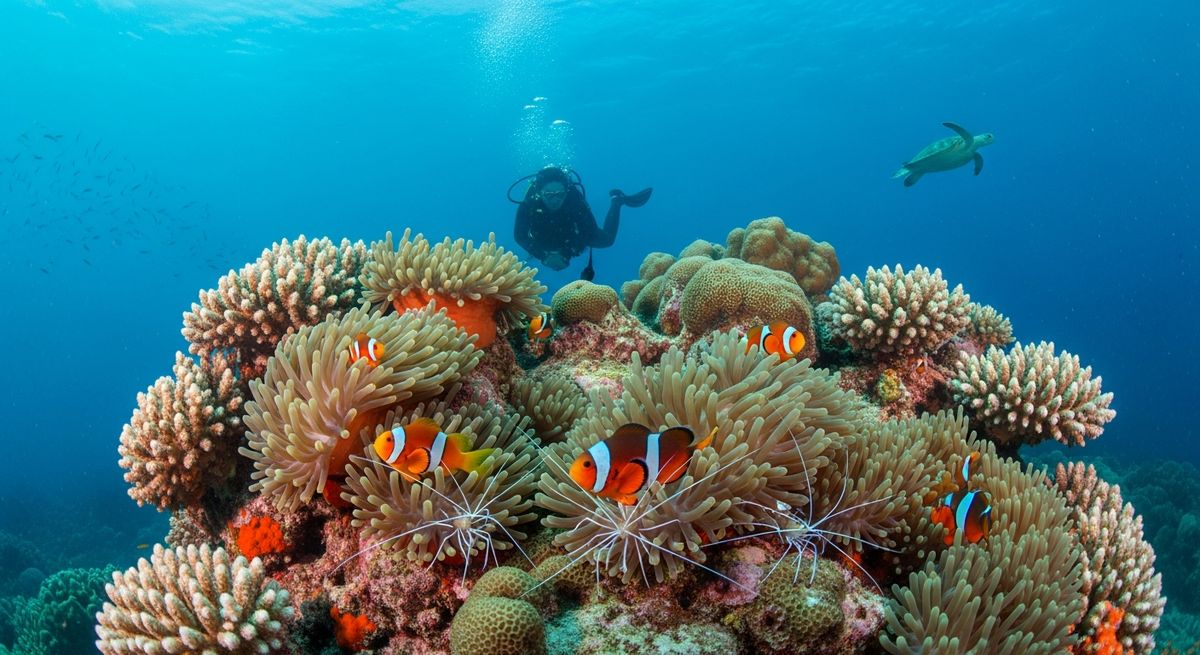
The G Spot dive site we have information on is located in Iron Bottom Sound, Solomon Islands, not French Cay. Here, you can expect to see a vibrant bommie covered in colourful anemones, creating an underwater city for clownfish. Large fish species like barracuda often swim by, and turtles are also frequently spotted, making it plentiful in sea life. For more information on marine life, visit our wildlife database.
How challenging is the G Spot dive site for divers, and what skill level is recommended?
The G Spot dive site is rated as an intermediate difficulty level. This site is exposed and can experience large swell and current, which contributes to its intermediate rating. Divers should be comfortable with these conditions to fully enjoy the site.
What is the best time of year to dive the G Spot in Turks and Caicos, considering weather and conditions?
Our data for the G Spot dive site pertains to the Solomon Islands, not Turks and Caicos. While specific information on the best time of year to dive this G Spot is not provided, the description notes it is "best on a sunny day" as it can be hard to spot when rough. For general guidance on diving seasons, you might consult our when to dive resource.
What scuba diving certifications are recommended or required to dive the G Spot dive site?
While specific certification requirements are not listed for the G Spot dive site, its intermediate difficulty suggests that divers should possess at least an Advanced Open Water certification or equivalent experience. This would ensure comfort and proficiency in dealing with the exposed conditions, including potential large swell and current. For more information on certifications, you can explore general scuba diving equipment and training resources.
What are the typical current conditions and visibility like at the G Spot dive site?
The G Spot dive site is exposed and typically experiences large swell and current, which divers should be prepared for. Despite these conditions, the average visibility at the site is excellent, recorded at 22 meters. This allows for clear views of the vibrant marine life and reef structure.