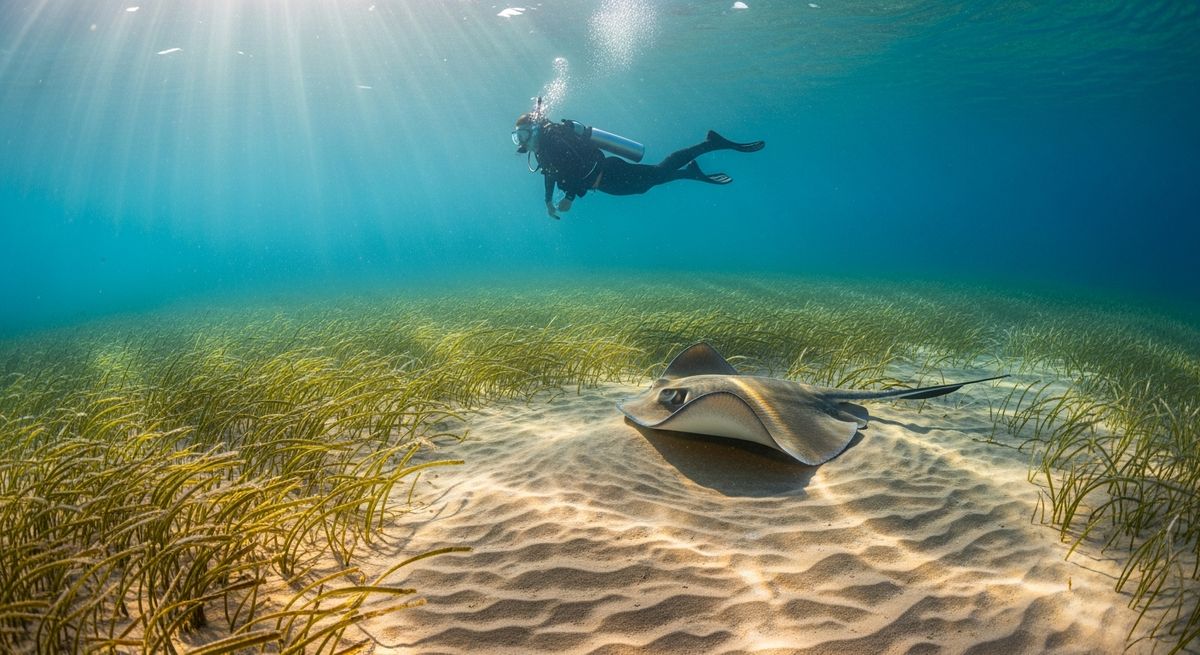
Guadalcanal - Iron Bottom Sound

Iron Bottom Sound, right off Honiara, Guadalcanal, is a proper history lesson underwater. We’re talking shallow wrecks, mostly Japanese transport ships like the Kinugawa Maru, close enough to shore you can just walk in from Bonegi Beach. The visibility can vary, but we've seen schools of fusiliers darting through the rusted metal, and sometimes a napoleon wrasse will cruise by. It's a great spot for wreck enthusiasts who like to take their time exploring, no deep diving necessary, and there's a real sense of connection to the past here.

Location
Iron Bottom Sound, Solomon Islands, Central & South Pacific
Coordinates
-9.433300, 159.950000

Marine Protected Area: Tulagi Island

Best Time to Dive in Iron Bottom Sound

The warmest water temperatures in Iron Bottom Sound occur in January, averaging 30.5°C. The coolest conditions are in December at 30.5°C.

Monthly Water Temperatures

  • January: 30.5°C (air: 26.9°C)
  • February: 30.5°C (air: 26.7°C)
  • March: 30.5°C (air: 26.7°C)
  • April: 30.5°C (air: 26.8°C)
  • May: 30.5°C (air: 26.9°C)
  • June: 30.5°C (air: 26.5°C)
  • July: 30.5°C (air: 26.5°C)
  • August: 30.5°C (air: 26.3°C)
  • September: 30.5°C (air: 26.5°C)
  • October: 30.5°C (air: 26.7°C)
  • November: 30.5°C (air: 26.7°C)
  • December: 30.5°C (air: 26.9°C)

Nearby Dive Sites in Iron Bottom Sound

Nearest Dive Centres to Guadalcanal

Marine Life in Iron Bottom Sound

Home to 415 recorded species including 320 reef fish, 29 hard corals, 18 sea snails & nudibranchs, 16 sea cucumbers, 7 seagrass & algae, 5 clams & mussels.

Notable Species

Recommended Packing List for Guadalcanal

Based on average water temperature of 30.5°C.

  • Shorty or Rashguard - warm 30°C water needs minimal exposure protection
  • Mask - essential for every dive
  • Fins
  • BCD - buoyancy compensator
  • Regulator - your most safety-critical piece of gear
  • Dive Computer - tracks depth, time, and NDL
  • Surface Marker Buoy (SMB) - essential for boat pickups
  • Dive Torch - useful for crevices and colour at depth
  • Underwater Camera - capture your diving memories

Frequently Asked Questions

What are the typical depths of dive sites and wrecks around Guadalcanal, and are they suitable for recreational divers?
While the general depths for all dive sites around Guadalcanal are not specified, the famous Bonegi I, II, and III wrecks are described as "relatively shallow". These Japanese shipwrecks, including the Horkawa Maru, Kinugawa Maru, and Kysyu Maru, are accessible by walking in from the beach. This makes them highly suitable for recreational divers exploring the historical treasures of Iron Bottom Sound.
What kind of marine life and historical WWII wrecks can divers expect to see when diving in Guadalcanal's Iron Bottom Sound?
Divers exploring Iron Bottom Sound around Guadalcanal can expect to encounter an incredible variety of historical WWII wrecks, including ships, planes, and even submarines. Notable examples are the Bonegi I, II, and III Japanese shipwrecks-the Horkawa Maru, Kinugawa Maru, and Kysyu Maru. While the data does not specify particular marine life, the area is renowned for its extensive collection of submerged historical artifacts.
How challenging is the diving in Guadalcanal, particularly for non-technical divers exploring the numerous wreck sites?
Diving in Guadalcanal is generally rated as intermediate difficulty. For non-technical divers, the Bonegi I, II, and III Japanese shipwrecks offer accessible options, being "relatively shallow" and diveable by walking in from the beach. These sites provide an excellent opportunity to explore the historical wrecks of Iron Bottom Sound without requiring advanced technical skills.
When is the best time of year to dive in Guadalcanal for optimal visibility, calm seas, and marine encounters?
The provided data does not specify the best time of year for optimal visibility, calm seas, or marine encounters in Guadalcanal. For general information on seasonal diving conditions, please refer to our When to dive guide.
What dive certifications are typically required to explore the various dive sites and wrecks in Guadalcanal?
The provided data does not specify the typical dive certifications required to explore the various dive sites and wrecks in Guadalcanal. Divers should always consult with local dive operators regarding specific certification requirements and necessary dive equipment for the planned dives.
What are the usual visibility, water temperature, and current conditions like for diving around Guadalcanal?
The provided data does not include specific details regarding the usual visibility, water temperature, or current conditions for diving around Guadalcanal. Divers planning a trip should consult with local dive centers for the most up-to-date information on these conditions.