Haipe Reef
Protected Area
Rendova Harbor
Why dive here
With 391+ marine species recorded in the area - including barracuda, blacktip reef sharks, grey reef sharks, humpback whales and orcas - Haipe Reef offers some of Iron Bottom Sound's richest reef diving. Water ranges 29-31°C, warmest January, April, December.
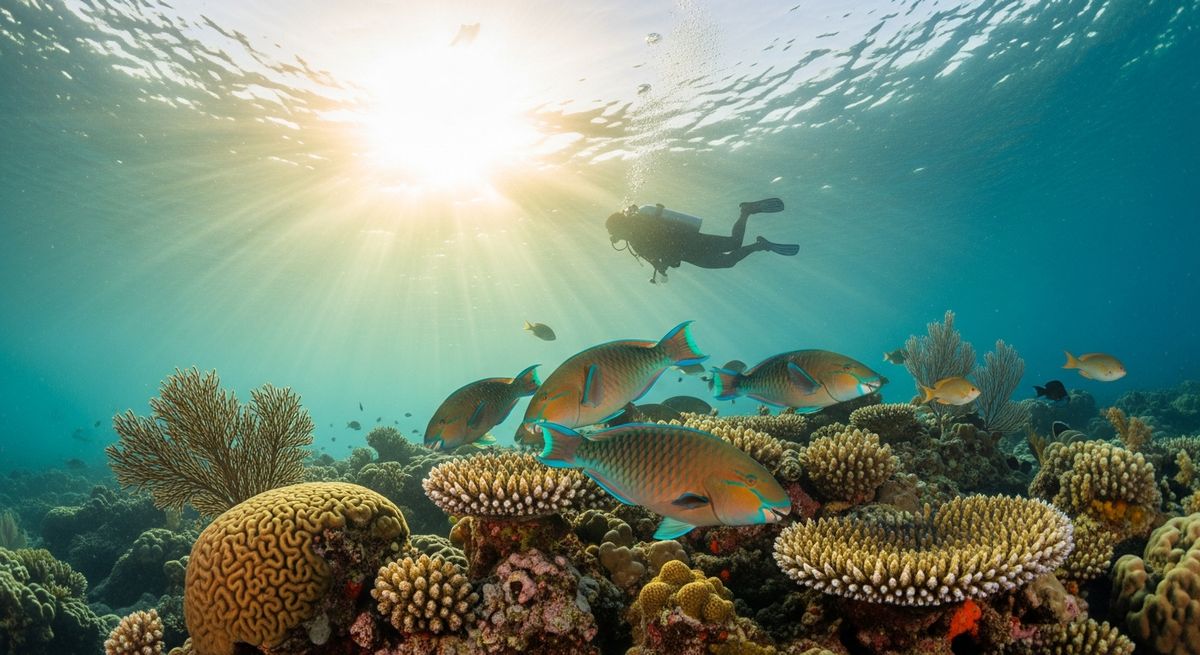
Haipe Reef is one of those Solomon Islands spots that just feels right, especially first thing in the morning when the light hits the wall. It’s a 30-minute boat ride from Munda, out to the wilder west coast of Rendova, and it’s well worth the journey. We love the way the reef drops away, a proper sloping wall adorned with serious hard coral bommies that have clearly been growing for centuries, mixed with bursts of soft coral colour. The visibility here often hits 25 metres, sometimes more, giving you a chance to spot the resident bumphead parrotfish as they cruise by in their dozens, completely unfazed. Keep an eye out for turtles too; they’re pretty common. For the macro enthusiasts, we’ve found everything from tiny blennies like the Chestnut and Red-streaked, tucked into crevices, to the more elusive Carnelian Cowry. We’ve even seen the odd manta ray glide past when there's a gentle current running. It's a relaxed drift, perfectly suited for anyone who appreciates healthy coral and wants to take their time exploring the small stuff without feeling rushed.
Reviews for Haipe Reef
Conditions
Ocean conditions, forecast and tides for Haipe Reef
Haipe Reef Ocean Conditions
Monthly averages for Haipe Reef, sourced from Open-Meteo marine data - nearest station: Open-Meteo marine grid (-9.03, 159.16) (58km away)
October Averages
Sea Temperature
30°C
85°F · Range: 28.7–30.5°C
Air Temperature
27°C
80°F
Wind Speed
3.74 m/s
7.3 knots
Atmospheric Pressure
1010.5 hPa
Based on 4 years of monitoring data · Data sources: Open-Meteo marine data
Plan & book
Ways to dive Iron Bottom Sound, from day trips to liveaboards.
Day trips & courses
via GetYourGuideGuided dives, courses and snorkel trips with instant booking.
Find dive trips in Iron Bottom SoundPlaces to stay
via Booking.comHotels and dive resorts near Iron Bottom Sound.
Search stays in Iron Bottom SoundDive insurance
Most travel insurance excludes or limits scuba. Check what you need before you go.
Dive insurance explainedPartner links: we may earn a commission if you book, at no extra cost to you. How we make money
Where to Stay near Haipe Reef
Prices from Booking.com. We may earn a commission at no extra cost to you.