USS Aaron Ward (Wreck)
Protected Area
Tulagi Island
Why dive here
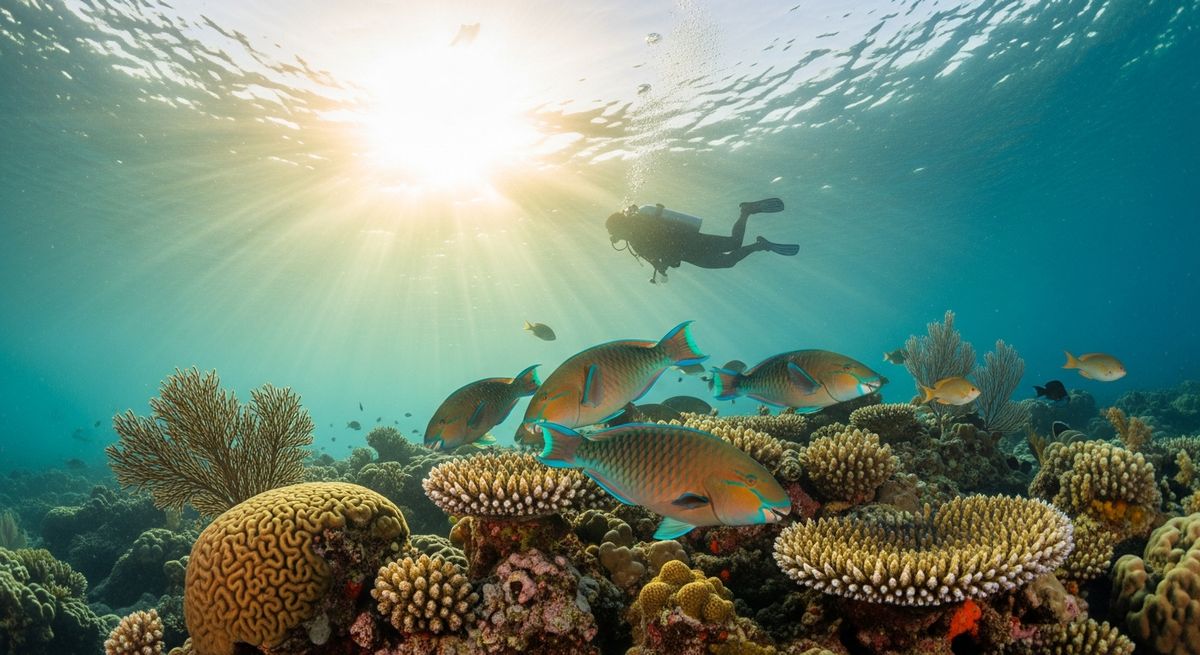
With 391+ marine species recorded in the area - including barracuda, blacktip reef sharks, grey reef sharks, humpback whales and orcas - USS Aaron Ward (Wreck) offers some of Iron Bottom Sound's richest reef diving. Water ranges 29-31°C, warmest January, April, December.
The USS Aaron Ward is a truly special dive, one we always look forward to when we’re in Iron Bottom Sound. She’s a big wreck, lying on her port side at 61 metres, and she’s absolutely covered in life. We love finning along her hull, watching black triggerfish dart between the honeycombs of coral that have grown on the plating, and spotting stout red shrimp tucked into crevices. The scale of the Aaron Ward is what really gets you; you can spend an entire dive just exploring the bow or the stern, seeing how the deck guns and torpedo tubes have become encrusted. Visibility here is often a solid 20 metres, sometimes more, which is great for appreciating her full length. We’d suggest a slack tide dive to avoid any strong currents, making the penetration into some of the more open areas, like the engine room, much smoother. You’ll often see schools of trevally and barracuda circling above the mast, and if you’re lucky, a grey reef shark might cruise by in the mid-water. It’s a site for experienced wreck divers, definitely, but one that rewards the effort.
Nearest Dive Centres to USS Aaron Ward (Wreck)
Dive shops near USS Aaron Ward (Wreck)
View all dive centres in Iron Bottom SoundReviews for USS Aaron Ward (Wreck)
Conditions
Ocean conditions, forecast and tides for USS Aaron Ward (Wreck)
USS Aaron Ward (Wreck) Ocean Conditions
Monthly averages for USS Aaron Ward (Wreck), sourced from Open-Meteo marine data - nearest station: Open-Meteo marine grid (-9.03, 159.16) (58km away)
October Averages
Sea Temperature
30°C
85°F · Range: 28.7–30.5°C
Air Temperature
27°C
80°F
Wind Speed
3.74 m/s
7.3 knots
Atmospheric Pressure
1010.5 hPa
Based on 4 years of monitoring data · Data sources: Open-Meteo marine data
Plan & book
Ways to dive Iron Bottom Sound, from day trips to liveaboards.
Day trips & courses
via GetYourGuideGuided dives, courses and snorkel trips with instant booking.
Find dive trips in Iron Bottom SoundPlaces to stay
via Booking.comHotels and dive resorts near Iron Bottom Sound.
Search stays in Iron Bottom SoundDive insurance
Most travel insurance excludes or limits scuba. Check what you need before you go.
Dive insurance explainedPartner links: we may earn a commission if you book, at no extra cost to you. How we make money
Where to Stay near USS Aaron Ward (Wreck)
Prices from Booking.com. We may earn a commission at no extra cost to you.