Diving in Quirimbas Archipelago
Why dive here
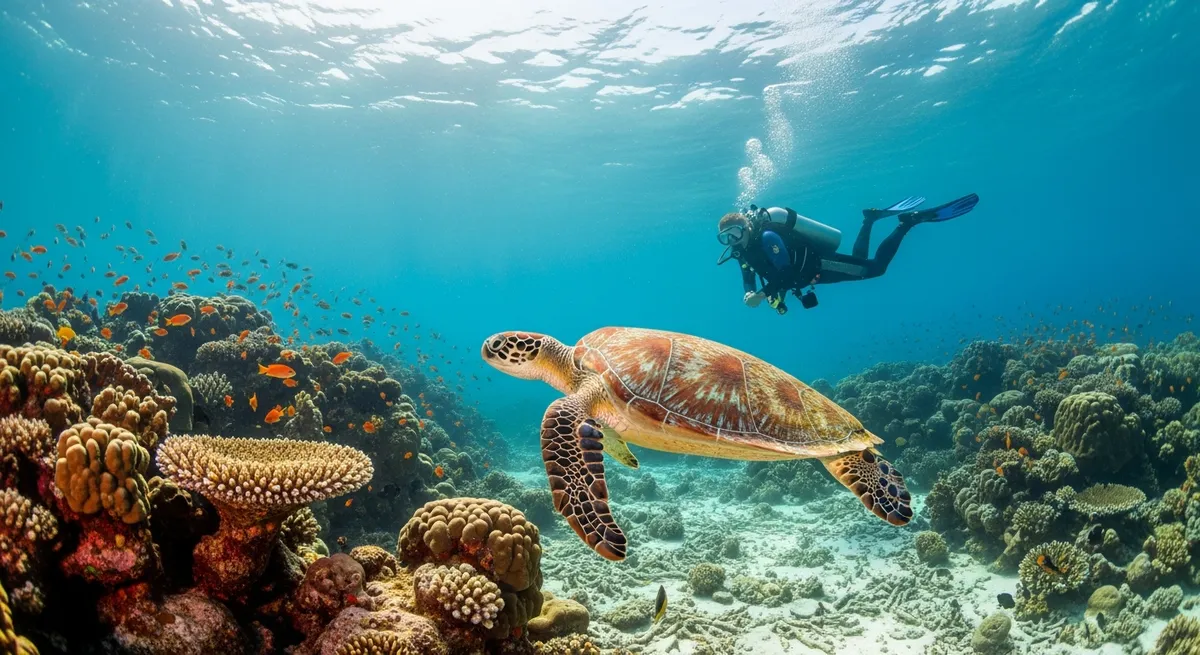
Quirimbas Archipelago offers some of Mozambique's richest diving, with 309+ marine species recorded in the area - including barracuda, blue-spotted stingrays, oceanic whitetip sharks, sea turtles and sperm whales. Water ranges 26-30°C, warmest February, March, December.
Northern Mozambique feels like the edge of the world, and the Quirimbas Archipelago captures that remoteness perfectly. We love it because it’s still relatively untouched, a true expedition into an ecosystem that hasn't seen much traffic. Picture yourself dropping onto pinnacles draped in enormous gorgonian fans, so wide they ripple in the current like giant purple sails. You’ll spot unusual corals here, like the ridged plates of wrinkle coral and delicate Chinese lettuce coral, alongside thickets of staghorn. Keep an eye out for bluestripe pipefish darting through the seagrass beds of thalassia. The reef drops to 30 meters in places, revealing checkerboard wrasse and the occasional orange-lined triggerfish. Tuna and jacks often zip past in hunting formations. The real draw for us, though, is the humpback whale season. From July to October, you’ll hear their songs underwater, a haunting chorus that vibrates through your chest, and sometimes you’ll even see them breaching at the surface. Currents can pick up, so be prepared for a drift, but the visibility usually stays good, around 20 meters. It’s not a bustling dive scene; with only one dive centre, you often have the sites all to yourself.
Quirimbas Archipelago Dive Site Map
Dive sites and dive centres in Quirimbas Archipelago
Quirimbas Archipelago Dive Sites
19 dive sites in Quirimbas Archipelago
Baixo de São Gonçalo
Baixo de São Gonçalo, for us, is one of those spots that just *feels* right from the moment you roll in. It’s got that classic Quirimbas vibe – clear water, healthy corals, but with a punch of bigger fish action that we really appreciate. Drop in and you’re immediately immersed in clouds of fusiliers, often so thick they dim the light filtering through from the surface. We love drifting along the reef edge, watching the parade of groupers and parrotfish go by. Our favourite trick here is to keep an eye on the sand patches between the coral bommies. You’ll often spot Reticulate Sandgobies darting back into their burrows or even a well-camouflaged Honeycomb Filefish swaying gently with the current. It’s a great site for divers who appreciate the subtle beauty of reef life alongside the more dramatic scenes. Expect strong currents at times, especially around new and full moons, so come prepared for some drift diving. The sheer volume of fish means there’s always something happening, no matter the conditions, though we’d suggest trying to hit it on a rising tide for the best visibility.
Baixo Magive Cobua
Baixo Magive Cobua offers a glimpse into the Quirimbas’ quieter corners. We’ve found decent hard coral formations here, and it’s a reliable spot for green turtle sightings, often just cruising over the reef. It’s not the most dramatic dive in the archipelago, but it’s a peaceful drift that suits those looking for a relaxed exploration rather than big pelagics.
Baixo Nameguo
Baixo Nameguo sits within Mozambique's Quirimbas Archipelago, an area known for healthy reefs. Expect decent visibility and a good chance to spot a variety of reef fish, sometimes turtles too. It's a solid, undemanding dive, well-suited for relaxed exploration rather than seeking out big pelagics. We'd suggest it for divers looking for a mellow day underwater.
Baixo Tambula
Tambula is one of those Quirimbas sites that reminds you why you flew all this way. The reef edge here has a lot of texture, perfect for spotting the smaller stuff, and we’ve spent happy bottom time just watching blue surgeonfish drift through the corals. Keep an eye out for the threadfin cardinalfish, they’re often hanging out in the crevices. If you’re lucky, a great barracuda might cruise by in the blue, though they tend to keep their distance. It’s a good spot for a relaxed dive, suitable for anyone comfortable with a little current, if it picks up.
Baixo Techantia
Baixo Techantia sits in the Quirimbas, offering a decent dive without breaking any records. We’ve found it to be a pretty reliable spot for an easy cruise, often with good visibility. Keep an eye out for the smaller stuff here: Comettailed wrasse darting through the coral, Bennett's Pufferfish looking grumpy, and sometimes a flash of a Blue-spotted Stingray on the sand. It’s a comfortable dive, good for getting your bearings in the Quirimbas, or just enjoying a relaxed hour underwater. We’d say it’s a solid choice for those who appreciate the quieter moments over big pelagics.
Baixo Varuni
Baixo Varuni, in Mozambique's Quirimbas Archipelago, is a drift dive along a sloping reef. We often find green turtles resting here amongst the coral bommies. Currents can be strong, so it’s best for divers comfortable with a faster pace, making it a good second dive of the day.
Baixo Zala
Baixo Zala is a good spot if you’re looking to just cruise along a reef with plenty of colourful reef fish. We’ve seen Goldbar wrasse darting between corals and Parrotfish munching away, completely oblivious to us. Keep an eye out for Blue-spotted Stingrays resting in the sand. It’s not a thrill-a-minute kind of dive, but it’s relaxing and consistently delivers a solid showing of common Indian Ocean species. If you enjoy a calm dive where you can take your time identifying fish, Baixo Zala fits the bill.
Cryptomania
Cryptomania, in the Quirimbas Archipelago, is a solid choice for an easy dive. At a gentle 13 metres, it’s a perfect spot to get comfortable in the water, especially if you’re new to these parts. We often see a good mix of smaller reef fish darting around the coral patches, and if you take it slow, you might even spot some nudibranchs. It’s not a site that will blow your mind with massive pelagics, but for a relaxed afternoon with plenty to observe, it hits the mark.
Hulls Rock
Hulls Rock offers a relaxed dive, ideal for beginners or those getting back in the water. We usually find smaller reef fish darting around the bommies and the occasional juvenile snapper. It's not a site for big pelagics or dramatic topography, but it’s a gentle introduction to the Quirimbas reefs. Think of it as a nice warm-up dive.
Lulu Deep
Lulu Deep sits a little off the main reef, offering a slightly different vibe to some of the closer sites. We usually find the visibility here holds up pretty well, often giving you a good 20 metres to spot the whitetip reef sharks cruising by. It’s a comfortable intermediate dive, nothing too taxing at 26 metres, just a nice drift along the reef’s edge. If you're looking for a relaxed dive with a decent chance of seeing some larger pelagics in the Quirimbas, Lulu Deep is a solid choice.
Miniliths
Miniliths in the Quirimbas Archipelago sits at a consistent 24 metres, making it an easy drift for newer divers looking for a mellow introduction to these waters. We’ve always found the name a bit charming, conjuring images of miniature ancient stones, though what you’ll actually find are a series of smaller coral heads and bommies scattered across a sandy bottom. Look closely amongst the coral, and you’re bound to spot a few moray eels peeking out, or perhaps a curious reef shark making a slow pass. It’s a solid spot for a relaxed dive, good for getting comfortable with the rhythm of the Indian Ocean here.
Monoliths
Monoliths might not scream 'epic drift dive,' but it’s a really pleasant spot, especially for those getting comfortable in the Indian Ocean. Dropping down to 22 metres, you’ll find a series of large, coral-encrusted boulders that give the site its name. We often see sweetlips schooling around the bigger formations and plenty of smaller reef fish darting between the crevices. It’s a gentle dive, generally with minimal current, making it a good choice for newer divers or anyone looking for a relaxed bottom time.
Show all 19 dive sites in Quirimbas Archipelago
Quirimbas Archipelago Dive Centres
1 dive shop and operator in Quirimbas Archipelago
Ocean Wildlife in Quirimbas Archipelago
309 species recorded in Quirimbas Archipelago
Quirimbas Archipelago Daylight & Sunrise/Sunset
Sunrise and sunset times for Quirimbas Archipelago, calculated from coordinates
Today - Sunday 11 October
Sunrise
05:57
Sunset
18:15
Daylight
12h 17m
Golden Hour
17:47
First light (dawn) at 05:36 · Last light (dusk) at 18:36
Monthly Averages
| Month | Sunrise | Sunset | Daylight |
|---|---|---|---|
| Jan | 06:08 | 18:49 | 12h 41m |
| Feb | 06:20 | 18:47 | 12h 27m |
| Mar | 06:23 | 18:34 | 12h 10m |
| Apr | 06:23 | 18:15 | 11h 52m |
| May | 06:27 | 18:05 | 11h 37m |
| JunShortest | 06:35 | 18:05 | 11h 30m |
| Jul | 06:39 | 18:11 | 11h 33m |
| Aug | 06:32 | 18:17 | 11h 45m |
| Sep | 06:14 | 18:16 | 12h 2m |
| OctNow | 05:55 | 18:15 | 12h 20m |
| Nov | 05:46 | 18:22 | 12h 36m |
| DecLongest | 05:52 | 18:37 | 12h 45m |
Times are approximate local times based on longitude. Actual times may vary slightly depending on the exact timezone observed in Quirimbas Archipelago.
Where to Stay near Quirimbas Archipelago
Prices from Booking.com. We may earn a commission at no extra cost to you.
Marine Protected Areas near Quirimbas Archipelago
6 protected areas near Quirimbas Archipelago - please respect local regulations when diving
Primeiras & Segundas
Maputo
iSimangaliso Wetland Park – Maputo National Park
Bazaruto
Ponta do Ouro
Cabo de São Sebastião
Getting to Quirimbas Archipelago
Mtwara
Moroni
Dar es Salaam
Plan & book
Ways to dive Quirimbas Archipelago, from day trips to liveaboards.
Day trips & courses
via GetYourGuideGuided dives, courses and snorkel trips with instant booking.
Find dive trips in Quirimbas ArchipelagoPlaces to stay
via Booking.comHotels and dive resorts near Quirimbas Archipelago.
Search stays in Quirimbas ArchipelagoDive insurance
Most travel insurance excludes or limits scuba. Check what you need before you go.
Dive insurance explainedPartner links: we may earn a commission if you book, at no extra cost to you. How we make money