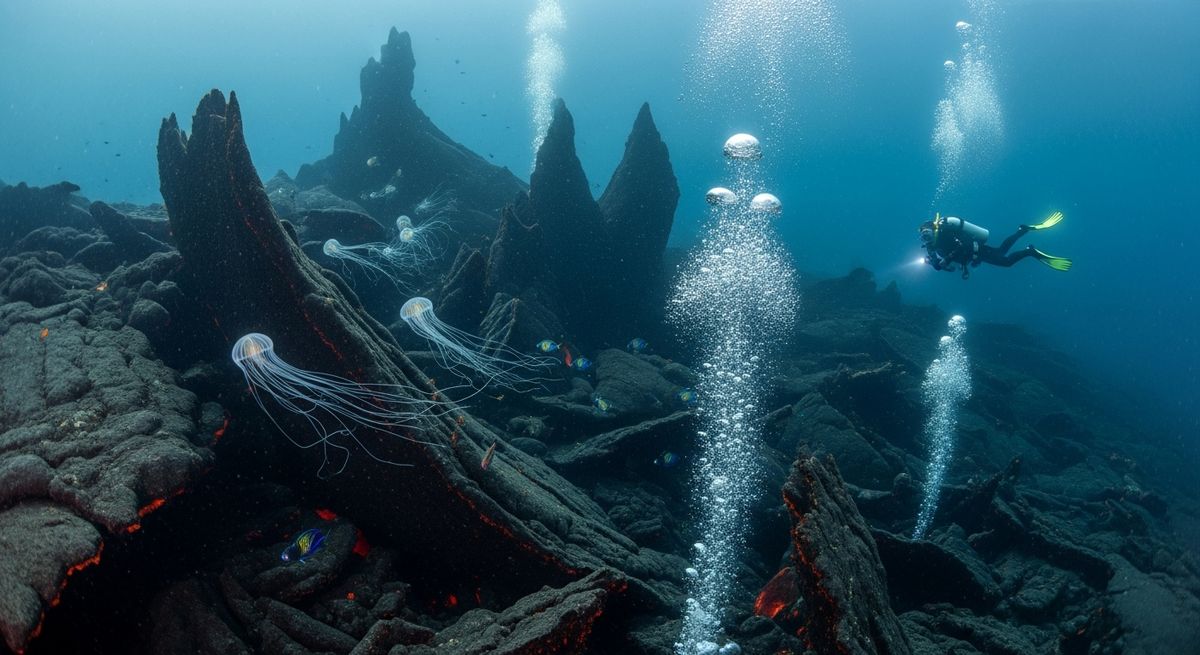
Beau Vallon Beach
Protected Area
North East Point Shell Reserve
Why dive here
With 183+ marine species recorded in the area - including barracuda, dolphins, sea turtles, sperm whales and lionfish - Beau Vallon Beach offers some of Inner Islands's richest shore diving. Water ranges 27-30°C, warmest March, April, May.
Beau Vallon Beach, right in front of the dive centre, isn't going to blow your mind with dramatic topography or huge pelagics. Let's be honest, it’s a sandy bottom at a maximum of 4m. But we love it for what it is: a brilliant, gentle introduction to the Indian Ocean. Think of it as a nursery. The water here is usually calm, though you'll often feel a little surge, a gentle push and pull that's a good lesson in buoyancy control for newer divers. We’ve spent countless hours here, perfecting fin pivots and mask clears, and you’d be surprised what pops up. Keep your eyes peeled on the sand; we’ve spotted tiny mimic blennies darting into holes, bigmouth gobies eyeing you from their burrows, and even sleepy gobies trying to blend in. The real magic, though, is the chance encounter. We’ve had baby eagle rays glide past, their shadows momentarily dimming the sand, and even the occasional baby shark finning by. It’s a calm, shallow training ground, perfect for Open Water students or anyone wanting a relaxed, easy dive with a chance of a delightful surprise or two.
Typical Beau Vallon Beach Dive Profile
Illustrative profile based on site depth and type. Actual dive profiles vary - always follow your dive computer and training.
Nearest Dive Centres to Beau Vallon Beach
Dive shops near Beau Vallon Beach
Blue Sea Divers
Ocean Dream Divers
Dive Seychelles Underwater Centre
Big Blue Divers
Silhouette Cruises
UDive Centre Mahe
Reviews for Beau Vallon Beach
Conditions
Ocean conditions, forecast and tides for Beau Vallon Beach
Beau Vallon Beach Ocean Conditions
Monthly averages for Beau Vallon Beach, sourced from Open-Meteo marine data + Copernicus Marine (EU) - nearest station: Open-Meteo marine grid (-4.5, 55.52) (2km away)
October Averages
Sea Temperature
28°C
82°F · Range: 26.1–30.1°C
Current Speed
7.28 cm/s
Direction: W (285.9°)
Chlorophyll-a
0.213 mg/m³
Clear water
Salinity
35.24 PSU
Based on 4 years of monitoring data · Data sources: Open-Meteo marine data + Copernicus Marine (EU)
Plan & book
Ways to dive Inner Islands, from day trips to liveaboards.
Day trips & courses
via GetYourGuideGuided dives, courses and snorkel trips with instant booking.
Find dive trips in Inner IslandsPlaces to stay
via Booking.comHotels and dive resorts near Inner Islands.
Search stays in Inner IslandsDive insurance
Most travel insurance excludes or limits scuba. Check what you need before you go.
Dive insurance explainedPartner links: we may earn a commission if you book, at no extra cost to you. How we make money
Where to Stay near Beau Vallon Beach
Prices from Booking.com. We may earn a commission at no extra cost to you.