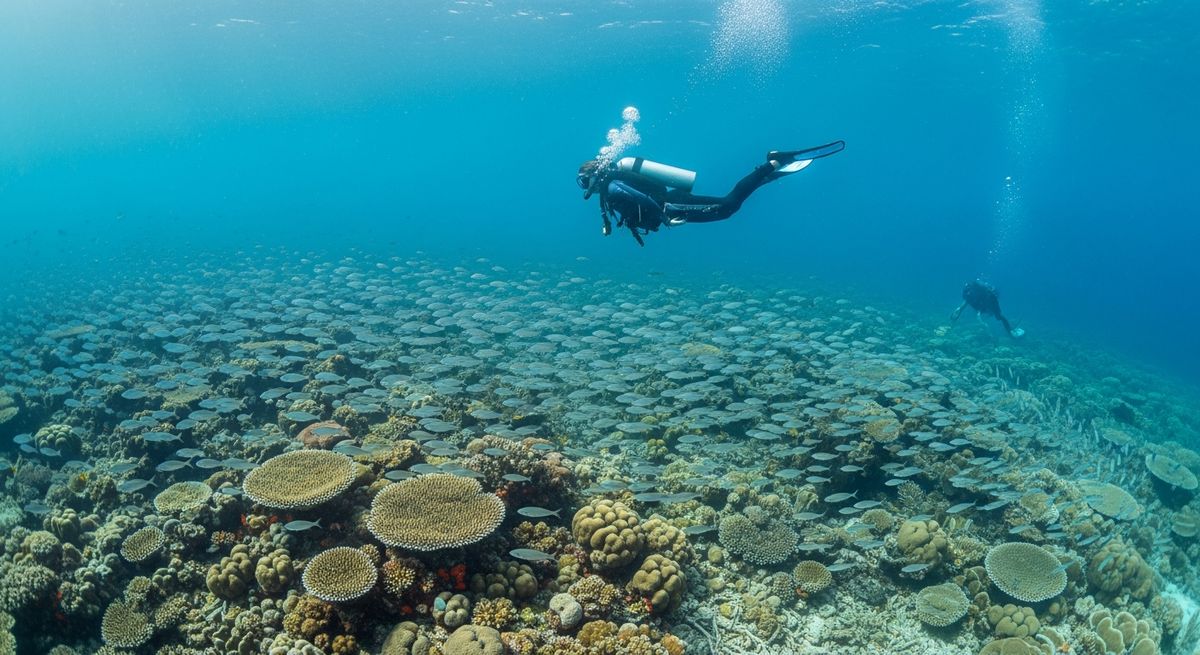
Brizare Rock, Mahé
Protected Area
North East Point Shell Reserve
Why dive here
With 183+ marine species recorded in the area - including barracuda, dolphins, sea turtles, sperm whales and lionfish - Brizare Rock, Mahé offers some of Inner Islands's richest drift diving. Water ranges 27-30°C, warmest March, April, May.
Brizare Rock is a proper open-water adventure. Getting there can be a bumpy ride from Mahé, but we think it’s worth the splash. This is a drift, usually, so you’ll be covering ground, watching the rock formations slip by, cloaked in corals. We’ve had some cracking encounters here, particularly with large eagle rays gliding past in schools of fifty or more – a truly hypnotic sight. The sheer size of the bumphead parrotfish at Brizare is something else; they’re enormous, casually munching away. Keep an eye out for grey reef sharks cruising the perimeter and the occasional bull shark passing through the bluer water. We’ve always found the visibility here to be consistently good, around 20 metres, making those distant silhouettes nice and clear. It’s a site for divers who enjoy a bit of current and the thrill of bigger pelagics, perfect for intermediate to experienced folk.
Typical Brizare Rock, Mahé Dive Profile
Illustrative profile based on site depth and type. Actual dive profiles vary - always follow your dive computer and training.
Safety Notes
Drift dive - carry a surface marker buoy (SMB) and stay with your group. Brief the current direction before entry.
Always perform a 3-minute safety stop at 5m before surfacing.
Nearest Dive Centres to Brizare Rock, Mahé
Dive shops near Brizare Rock, Mahé
Big Blue Divers
Ocean Dream Divers
Silhouette Cruises
Blue Sea Divers
Dive Seychelles Underwater Centre
Oceanika Diving Club
Reviews for Brizare Rock, Mahé
Conditions
Ocean conditions, forecast and tides for Brizare Rock, Mahé
Brizare Rock, Mahé Ocean Conditions
Monthly averages for Brizare Rock, Mahé, sourced from Open-Meteo marine data + Copernicus Marine (EU) - nearest station: Open-Meteo marine grid (-4.5, 55.52) (2km away)
October Averages
Sea Temperature
28°C
82°F · Range: 26.1–30.1°C
Current Speed
7.28 cm/s
Direction: W (285.9°)
Chlorophyll-a
0.213 mg/m³
Clear water
Salinity
35.24 PSU
Based on 4 years of monitoring data · Data sources: Open-Meteo marine data + Copernicus Marine (EU)
Plan & book
Ways to dive Inner Islands, from day trips to liveaboards.
Day trips & courses
via GetYourGuideGuided dives, courses and snorkel trips with instant booking.
Find dive trips in Inner IslandsPlaces to stay
via Booking.comHotels and dive resorts near Inner Islands.
Search stays in Inner IslandsDive insurance
Most travel insurance excludes or limits scuba. Check what you need before you go.
Dive insurance explainedPartner links: we may earn a commission if you book, at no extra cost to you. How we make money
Where to Stay near Brizare Rock, Mahé
Prices from Booking.com. We may earn a commission at no extra cost to you.