Chuckles
Protected Area
North East Point Shell Reserve
Why dive here
With 183+ marine species recorded in the area - including barracuda, dolphins, sea turtles, sperm whales and lionfish - Chuckles offers some of Inner Islands's richest reef diving. Water ranges 27-30°C, warmest March, April, May.
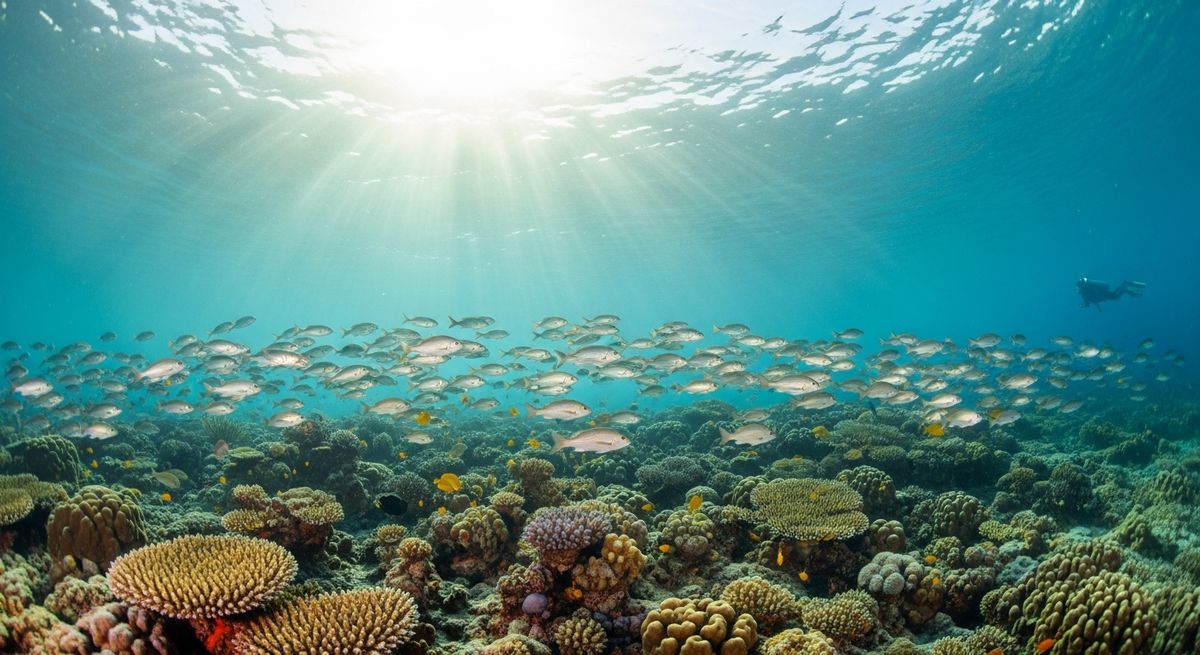
Chuckles is one of our go-to sites when we’re diving out of Mahé, especially if the weather is a bit squally. It’s a granite boulder field, which means you get these incredible swim-throughs and overhangs. The maximum depth is around 17 metres, making it perfect for a relaxed extended bottom time. We love exploring the nooks and crannies here. You’ll find White Tip Reef Sharks resting on the sand patches, and the resident octopuses are masters of camouflage, always a fun challenge to spot. Look closely, and you might see the small, colourful Rainbowfish flitting about, or a Coral Hawkfish perched on a coral head. The reef itself is a mix of hard and soft corals, with some nice staghorn formations, providing shelter for countless smaller creatures. We often see large schools of Glasseye Snapper here, their eyes catching the light as they move in unison. The current can be changeable, sometimes a gentle drift, other times quite strong, so it’s a site for those comfortable with varied conditions. Your dive operator will likely pick you up wherever you surface, which is always a bonus. For us, Chuckles offers a fantastic opportunity to explore a classic Seychelles granite landscape, full of surprises and plenty of macro life if you take your time.
Nearest Dive Centres to Chuckles
Dive shops near Chuckles
Big Blue Divers
Ocean Dream Divers
Blue Sea Divers
Dive Seychelles Underwater Centre
Silhouette Cruises
Oceanika Diving Club
Reviews for Chuckles
Conditions
Ocean conditions, forecast and tides for Chuckles
Chuckles Ocean Conditions
Monthly averages for Chuckles, sourced from Open-Meteo marine data + Copernicus Marine (EU) - nearest station: Open-Meteo marine grid (-4.5, 55.52) (2km away)
October Averages
Sea Temperature
28°C
82°F · Range: 26.1–30.1°C
Current Speed
7.28 cm/s
Direction: W (285.9°)
Chlorophyll-a
0.213 mg/m³
Clear water
Salinity
35.24 PSU
Based on 4 years of monitoring data · Data sources: Open-Meteo marine data + Copernicus Marine (EU)
Plan & book
Ways to dive Inner Islands, from day trips to liveaboards.
Day trips & courses
via GetYourGuideGuided dives, courses and snorkel trips with instant booking.
Find dive trips in Inner IslandsPlaces to stay
via Booking.comHotels and dive resorts near Inner Islands.
Search stays in Inner IslandsDive insurance
Most travel insurance excludes or limits scuba. Check what you need before you go.
Dive insurance explainedPartner links: we may earn a commission if you book, at no extra cost to you. How we make money
Where to Stay near Chuckles
Prices from Booking.com. We may earn a commission at no extra cost to you.