Corsair Reef
Protected Area
Port Glaud
Why dive here
With 183+ marine species recorded in the area - including barracuda, dolphins, sea turtles, sperm whales and lionfish - Corsair Reef offers some of Inner Islands's richest wall diving. Water ranges 27-30°C, warmest March, April, May.
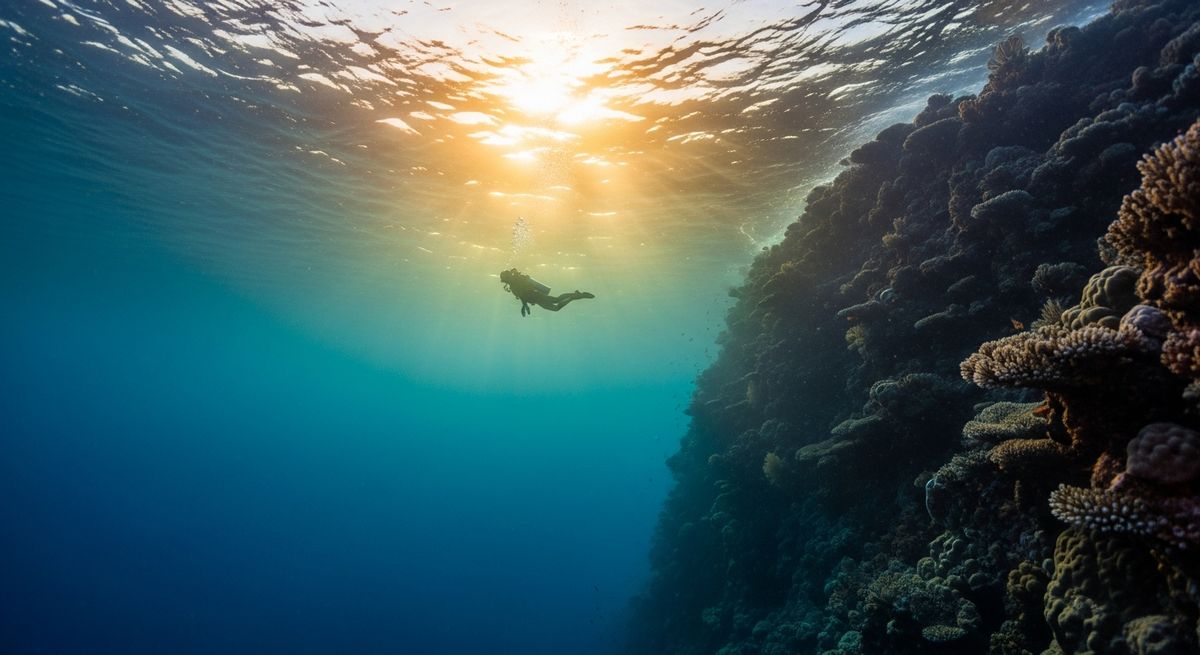
Corsair Reef sits just a short boat ride from Beau Vallon, a really easy skip out for a relaxed afternoon dive. We love that it’s reliably shallow, topping out around 15 metres, which means plenty of bottom time and lots of light penetration for those corals. You drop onto a mix of sand and reef, and immediately we’re looking for the big schools of fusiliers that seem to constantly patrol the place – they’re thick enough sometimes to feel like a wall of silver. Keep an eye out for the smaller stuff too; we often spot Pale-spotted Combtooth-Blenny peeking out from the coral heads, and there are always Bennett's Pufferfish wobbling around. The table and staghorn corals here are healthy, providing homes for Checkerboard wrasse and juvenile Blue Surgeonfish. While the currents are usually light, we’ve hit it when there's a gentle drift, making it an effortless cruise past the colourful reef. It’s a site that suits anyone looking for a chilled dive with consistent reef activity, without the need for deep or challenging conditions.
Nearest Dive Centres to Corsair Reef
Dive shops near Corsair Reef
Dive Seychelles Underwater Centre
Blue Sea Divers
Ocean Dream Divers
Big Blue Divers
GVI Seychelles
UDive Centre Mahe
Reviews for Corsair Reef
Conditions
Ocean conditions, forecast and tides for Corsair Reef
Corsair Reef Ocean Conditions
Monthly averages for Corsair Reef, sourced from Open-Meteo marine data + Copernicus Marine (EU) - nearest station: Open-Meteo marine grid (-4.5, 55.52) (2km away)
October Averages
Sea Temperature
28°C
82°F · Range: 26.1–30.1°C
Current Speed
7.28 cm/s
Direction: W (285.9°)
Chlorophyll-a
0.213 mg/m³
Clear water
Salinity
35.24 PSU
Based on 4 years of monitoring data · Data sources: Open-Meteo marine data + Copernicus Marine (EU)
Plan & book
Ways to dive Inner Islands, from day trips to liveaboards.
Day trips & courses
via GetYourGuideGuided dives, courses and snorkel trips with instant booking.
Find dive trips in Inner IslandsPlaces to stay
via Booking.comHotels and dive resorts near Inner Islands.
Search stays in Inner IslandsDive insurance
Most travel insurance excludes or limits scuba. Check what you need before you go.
Dive insurance explainedPartner links: we may earn a commission if you book, at no extra cost to you. How we make money
Where to Stay near Corsair Reef
Prices from Booking.com. We may earn a commission at no extra cost to you.