Diving in Mafia Island
Why dive here
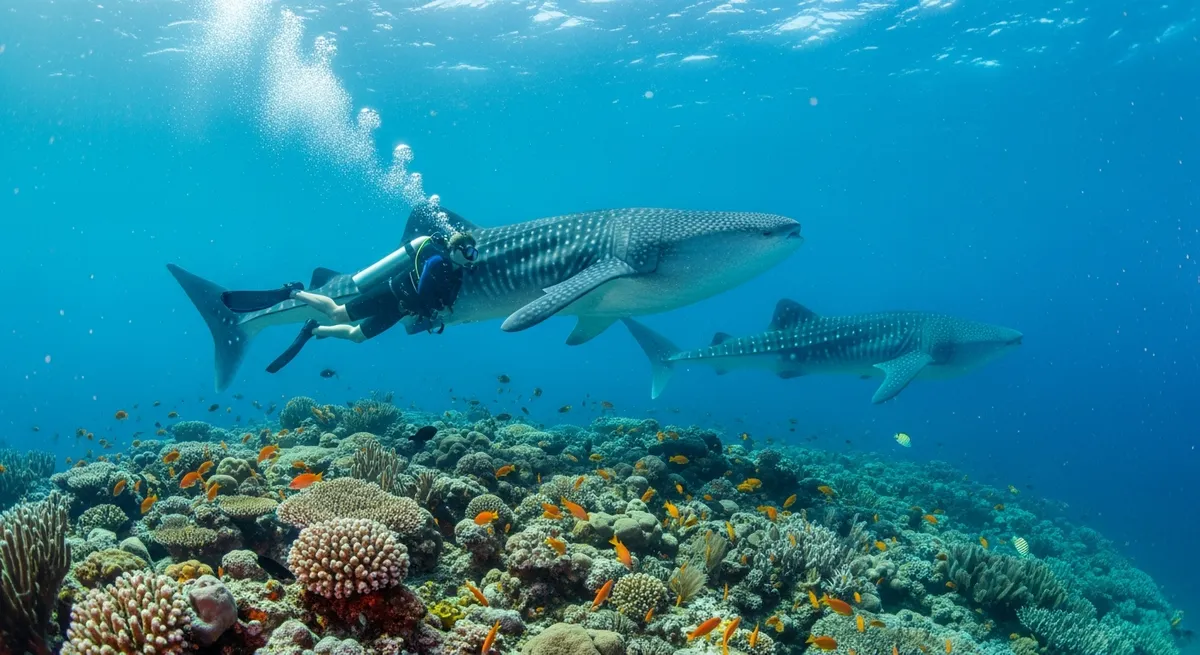
Mafia Island offers some of Tanzania's richest diving, with 165+ marine species recorded in the area - including humpback whales, sea turtles, sperm whales and whale sharks. Water sits around 29°C.
Mafia Island, often overlooked for its flashier neighbours, holds a quiet charm for divers who appreciate uncrowded reefs. The diving here is wonderfully varied, from gentle coral gardens that we love to explore with newer divers, to exhilarating drift dives along walls peppered with unusual stony corals. Our favourite sites often involve following the current past whip corals and gorgonians, keeping an eye out for those tricky-to-spot black rock pipefish - they’re masters of disguise. What really sets Mafia apart, though, is the feeling of discovery. With only a handful of dive centres, you rarely share a site, and the reefs within the Marine Park feel genuinely healthy. We’ve had some incredible moments drifting alongside schools of bullet mackerel, and if you're there between October and March, the chance to snorkel with whale sharks is a real draw. While not strictly a dive, it’s an experience that’s hard to beat. Just be ready for varying visibility depending on the plankton blooms, especially during whale shark season.
Mafia Island Dive Site Map
Dive sites and dive centres in Mafia Island
Mafia Island Dive Sites
47 dive sites in Mafia Island
Bwejuu Wall
Bwejuu Wall is a solid choice when you’re exploring Mafia. It’s a bit of a trek, about three hours south of the main island, but worth the boat ride. The wall itself doesn't drop to crazy depths, topping out around 18 metres, but the rock formations are impressive, both above and below the surface, draped in whip corals. We’ve found the currents here can be pretty lively, which often means good fish action. Keep an eye out for the trevally species – Coastal, White-spot, Golden, Yellow Spotted, and Longfin are all regulars, often schooling. The site transitions nicely into a shallower reef, making for a relaxed end to the dive. Visibility averages around 8 metres, so it’s not a wide-angle dream, but perfect for spotting those trevally cruising by.
Bwejuu Wall
Bwejuu Wall is a solid choice when you’re exploring Mafia. It’s a bit of a trek, about three hours south of the main island, but worth the boat ride. The wall itself doesn't drop to crazy depths, topping out around 18 metres, but the rock formations are impressive, both above and below the surface, draped in whip corals. We’ve found the currents here can be pretty lively, which often means good fish action. Keep an eye out for the trevally species – Coastal, White-spot, Golden, Yellow Spotted, and Longfin are all regulars, often schooling. The site transitions nicely into a shallower reef, making for a relaxed end to the dive. Visibility averages around 8 metres, so it’s not a wide-angle dream, but perfect for spotting those trevally cruising by.
Chekechea
Chekechea, which means 'Kindergarten' in Swahili, really lives up to its name. It’s a shallow spot, topping out at 16 meters, and often feels like a giant underwater nursery. We’ve spent some fantastic dives here just poking around the mud bottom, discovering juvenile fish species, pipefish, and even some unusual Indian walkman. It's a relaxed dive, usually with good light, making it perfect for newer divers, those of us honing our buoyancy, or anyone with a keen eye for macro life and a camera in hand. You might even catch a glimpse of a dusky shark cruising by in the deeper sections, or if you’re very lucky, a whale shark passing through the area.
Chole Reef North
Chole Reef North is a good choice for an easy afternoon dive, especially if the wind’s picked up elsewhere. We usually start around 5 metres, drifting over a mix of coral bommies and sandy patches that eventually slope down to about 16 metres. Keep an eye out for green turtles, they often cruise the shallower sections, and we’ve spotted dusky sharks here a few times too. It's a relaxed dive, good for stretching out a long bottom time, with plenty of fusiliers and damsels flickering in the sun.
Coral Gardens
Coral Gardens is a gentle drift over a relatively shallow hard coral landscape, topping out around 15 metres. We’ve found it’s the smaller stuff here that really shines, especially on the coral bommies acting as little cleaning stations. Keep an eye out for Leaf Fish, often in those tricky-to-spot browns and greens, and we’ve spotted plenty of electric rays tucked into the sand. It’s a comfortable dive, usually with mild currents, making it a good choice for newer divers or anyone wanting a relaxed second dive.
Coral Islands
Coral Islands is one of those Mafia sites that just feels right for a relaxed morning dive. You drop in, and the reef starts at around 9 metres, unfolding into these three distinct, healthy coral patches. We love how the sand channels separate them, they really brighten the whole place, bouncing the light around the corals. It’s a low-stress dive, rarely deeper than 16 metres, perfect for just cruising along and taking it all in. We’ve spent ages here just watching the garden eels. There are so many of them, swaying in the current, then popping back into the sand as you get a little too close. Keep an eye out for the smaller stuff too: Hotlips Triplefins perched on the coral, Big Long-nosed Butterflyfish poking around, and the ubiquitous Six-line Wrasse zipping past. Visibility averages about 12 metres, which is plenty to appreciate the details of the reef. It’s a great spot for photographers looking for macro subjects or anyone who wants a chill dive without strong currents.
Corinne’s Reef
Corinne’s Reef is a site we always try to fit in when we’re on Mafia. We’ve had some truly fantastic dives here, especially when the light hits just right, illuminating the seagrass beds. It’s shallow, maxing out at 16m, which means plenty of bottom time to really soak it all in. What makes it a standout for us is the variety you find in such a compact area. You’ll drift over gentle corals, spotting those bigspot rockcods tucked into crevices, then suddenly the reef gives way to these expansive seagrass meadows. We often find green turtles here, lazily grazing, and we’ve seen some huge rays settled on the sand, almost blending in until they decide to glide away. The schools of beautiful fusiliers are often so dense they cast shadows over the reef, and it’s a site where we frequently spot blackside hawkfish perched on corals, watching the world go by. Keep an eye out for banded tobies and blackbar filefish, too. It’s a site that rewards slow, careful exploration rather than a frantic dash, perfect for photographers or anyone who just wants to relax and observe.
Critters Alley
Critters Alley is Mafia's quintessential muck dive, and we're always up for a good rummage in the sand here. It’s shallow, never more than 9 metres, so you get plenty of bottom time to scan the patches of weed and the odd abandoned pipe. Keep your eyes peeled for seahorses, frogfish, and nudibranchs - the kind of small, bizarre creatures that make muck diving so addictive. Visibility averages around 8 metres, which is perfectly fine for hunting out those tiny wonders. It’s a site for patient divers who love macro photography and don't mind getting up close and personal with the seabed.
Cryptomania
Cryptomania is a spot we always enjoy when we’re after something a bit different in Mafia. It’s a shallow site, really, topping out around 13 metres, but the interest isn’t in the depth. Instead, you're looking at a gentle slope of rubble, sand, and seagrass, broken up by coral bommies and small caves. This is prime muck diving territory. We’ve had good luck here finding robust and ornate pipefish, often a few different octopus, and if you’re patient, you might even spot a seahorse or a frogfish tucked away. It’s definitely a site for those who like to take it slow and hunt for the smaller, more unusual critters. Visibility averages around 14 metres, which is usually plenty for getting up close with the macro life.
Dindini Wall
Dindini Wall is our pick when you want a proper drift without the chaos of a washing machine. It’s a solid wall dive, starting around 8 metres and dropping to 23 metres. We love the way the reef just spills down, a mix of rock and coral, making for some interesting swim-throughs and overhangs. Keep an eye out for those Bigspot Rockcods lurking in the shadows; they get pretty hefty here. The visibility averages 17 metres, which is decent enough to really take in the scale of the wall as you glide past. You'll often see schools of beautiful fusiliers shimmering against the blue, and we've had some memorable encounters with large pelagics off the wall itself – Bigeye tuna aren't uncommon. The whip corals and sea fans add a delicate texture to the rugged rock, and it’s always fun spotting the smaller stuff like the Banded Tobies and Bennett’s Pufferfish tucked into crevices. This site suits divers who enjoy a relaxed current and the feeling of covering ground without much effort, all while admiring a classic Indian Ocean wall.
Hulls Rock
Hulls Rock on Mafia Island offers a good drift, a gentle ride over a reef that starts deep and slopes up. We usually drop in around 30-40 meters and let the current carry us, watching for blue-spotted rays tucked into the sand and the occasional turtle gliding past. The deeper sections have some impressively sized barrel sponges, while the upper reef, from about 18 meters shallower, is where you find the healthier corals and schools of fusiliers. Keep an eye out for the Gilded Triggerfish; it’s a bit of a local celebrity here. This site is a solid choice for divers who enjoy a relaxed drift and aren't chasing big pelagics, though the reef fish are plentiful.
Jina Wall
Jina Wall is our pick when we're around the north end of Jina Island. It’s not about grand vistas here, more about the texture of the reef and what lives in its nooks. The wall itself drops from about 8 metres to a gravelly bottom at 21, and we love poking into the shallow caverns and overhangs. That's where you'll often find the smaller, shyer stuff – chestnut blennies bobbing their heads and blackside hawkfish perched just so. The star of the show, though, and frankly a bit of a bully, is the resident potato grouper. He’s massive, he's persistent, and he'll likely be in your face, demanding attention. We’ve had him follow us for entire dives. Beyond his antics, keep an eye out for patrolling Allison’s tuna or the shimmer of a big long-nosed butterflyfish against the darker rock. Visibility averages around 16 metres, which is decent for scouting out the less obvious creatures. This site suits divers who enjoy a slower pace, who like to investigate cracks and crevices, and who don't mind a very close encounter with a large, curious fish. It’s a site for details, not wide-angle photography.
Show all 47 dive sites in Mafia Island
- Juani North
- Juani South
- Kasa
- Kinasi Pass
- Kinasi Wall
- Kitutia
- KONIGSBERG
- Lulu Deep
- Mange Reef
- Marimbani
- Mikadini
- Milimani North
- Milimani South
- Miniliths
- Monoliths
- Msumbiji
- NEWBRIDGE
- Nudibranch City
- Nyororo Reef
- Nyororo Reef
- Nyororo Reef
- Nyororo Reef
- Nyororo Reef
- Nyororo Reef
- Oasis
- Pyramid
- Red Buoy
- Rose Garden
- Seamount
- Shangani Reef
- Shoulder
- Small Rock
- SOMALI
- The Hill
- Tom’s Garden
Mafia Island Dive Centres
3 dive shops and operators in Mafia Island
Ocean Wildlife in Mafia Island
165 species recorded in Mafia Island
Mafia Island Daylight & Sunrise/Sunset
Sunrise and sunset times for Mafia Island, calculated from coordinates
Today - Sunday 11 October
Sunrise
06:01
Sunset
18:16
Daylight
12h 15m
Golden Hour
17:48
First light (dawn) at 05:40 · Last light (dusk) at 18:37
Monthly Averages
| Month | Sunrise | Sunset | Daylight |
|---|---|---|---|
| Jan | 06:14 | 18:47 | 12h 33m |
| Feb | 06:25 | 18:47 | 12h 22m |
| Mar | 06:26 | 18:35 | 12h 9m |
| Apr | 06:24 | 18:19 | 11h 55m |
| May | 06:26 | 18:10 | 11h 44m |
| JunShortest | 06:33 | 18:11 | 11h 38m |
| Jul | 06:37 | 18:18 | 11h 40m |
| Aug | 06:31 | 18:21 | 11h 50m |
| Sep | 06:16 | 18:19 | 12h 3m |
| OctNow | 05:59 | 18:16 | 12h 17m |
| Nov | 05:51 | 18:21 | 12h 30m |
| DecLongest | 05:58 | 18:35 | 12h 36m |
Times are approximate local times based on longitude. Actual times may vary slightly depending on the exact timezone observed in Mafia Island.
Where to Stay near Mafia Island
Prices from Booking.com. We may earn a commission at no extra cost to you.
Marine Protected Areas near Mafia Island
49 protected areas near Mafia Island - please respect local regulations when diving
Rufiji-Mafia-Kilwa
Mafia Island
Mangroves-Kilwa
Mangroves-Kisarawe
Mangrove
Mangroves (Mikindani)
Mangrove
Mangrove
Mangrove
Mangrove
Mangrove
Mangrove
Showing 12 largest of 49
Getting to Mafia Island
Dar es Salaam
Zanzibar
Mombasa
Plan & book
Ways to dive Mafia Island, from day trips to liveaboards.
Day trips & courses
via GetYourGuideGuided dives, courses and snorkel trips with instant booking.
Find dive trips in Mafia IslandPlaces to stay
via Booking.comHotels and dive resorts near Mafia Island.
Search stays in Mafia IslandDive insurance
Most travel insurance excludes or limits scuba. Check what you need before you go.
Dive insurance explainedPartner links: we may earn a commission if you book, at no extra cost to you. How we make money