APOLLO
Why dive here
With 46+ marine species recorded in the area - including dolphins, sea turtles and cuttlefish - APOLLO offers some of Istria Peninsula's richest wreck diving. Water ranges 12-26°C, warmest July, August, September.
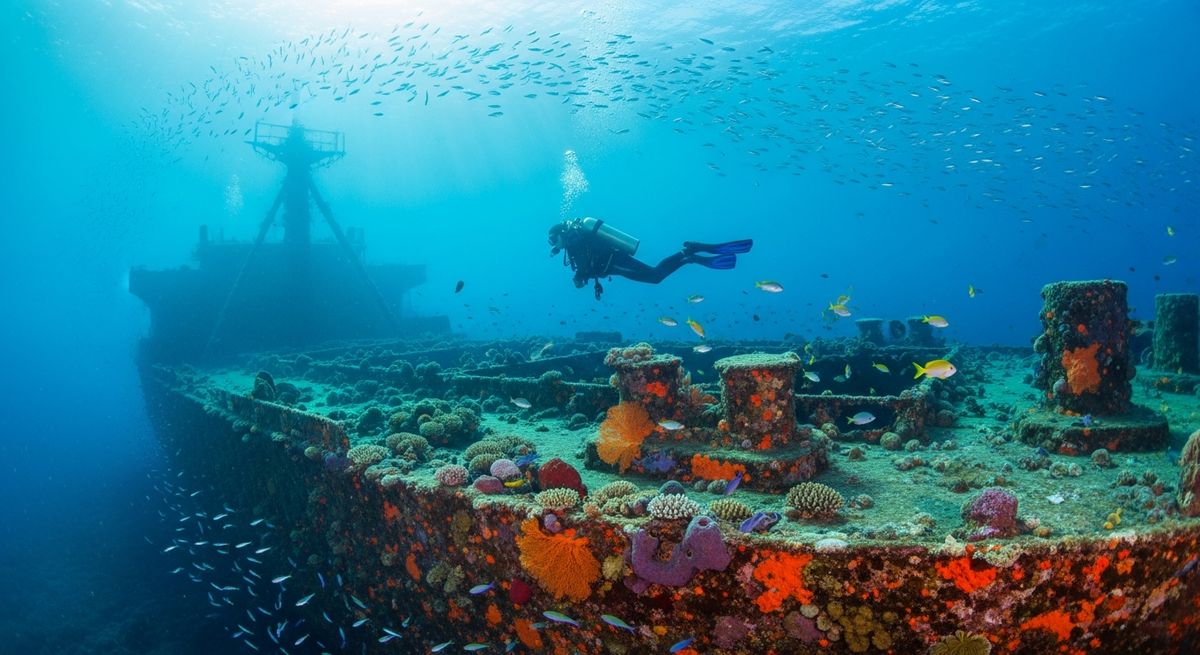
The Apollo wreck, resting just off the Istrian coast, is a lovely little dive, perfect for a relaxed afternoon. At a mere 7 metres, it’s a brilliant choice for newer divers or anyone wanting a long, easy bottom time. We love drifting over the main hull structure, which is surprisingly intact for a wreck declared "dangerous." You’ll often find schools of damselfish darting in and out of the rusted metal, and the occasional grumpy scorpionfish tucked away. It’s a motor vessel, and while the superstructure is long gone, the basic outline is still clear. We'd suggest taking your time to explore the nooks and crannies where the light catches the metallic sheen of chromis. The site isn't about grand penetration, it's more about the slow discovery of life that has claimed the wreck. For photographers, the ambient light at this depth is fantastic, especially around midday. Just keep an eye out for pleasure boats passing overhead in the summer. It’s not a deep, dramatic wreck, but it has a quiet charm that keeps us coming back.
Typical APOLLO Dive Profile
Illustrative profile based on site depth and type. Actual dive profiles vary - always follow your dive computer and training.
Safety Notes
Wreck site - avoid penetration without wreck diving certification. Watch for sharp metal and entanglement hazards.
APOLLO Wreck History
Vessel Type
warship
Cause
mine
Resting in the crystal-clear, shallow waters off Croatia's Istria Peninsula, the Apollo is an accessible wreck with a wartime past. Believed to be a German fast landing craft (Marinefährprahm) from the Second World War, her service in the Adriatic came to an abrupt end when she struck a naval mine. The powerful explosion tore the vessel apart, sending it to the seabed in just 7 meters of water. Due to its shallow depth and proximity to navigation routes, it is officially classified as a 'Dangerous Wreck'.
For divers, the Apollo offers a fascinating and easy exploration, perfect for novices or as a relaxed second dive. The wreck lies in two main sections on a sandy bottom, allowing for a leisurely swim around and through its broken hull. The shallow depth ensures excellent natural light, illuminating the structure and the abundant marine life that has taken up residence. It's an ideal site for underwater photography and provides a tangible connection to the turbulent WWII history of the Adriatic Sea.
Nearest Dive Centres to APOLLO
Dive shops near APOLLO
Albarella Diving Center SSDRL
Tre Pinne Sub
MEDITERRANEO SPORT
Issimo ASD
Y-40 The Deep Joy
Aquaemotion SSD SRL
Reviews for APOLLO
Conditions
Ocean conditions, forecast and tides for APOLLO
APOLLO Ocean Conditions
Monthly averages for APOLLO, sourced from Open-Meteo marine data + Copernicus Marine (EU) - nearest station: Open-Meteo marine grid (45.08, 14.15) (21km away)
October Averages
Sea Temperature
20°C
68°F · Range: 18.4–22.3°C
Current Speed
3.16 cm/s
Direction: W (288.4°)
Salinity
37.74 PSU
Based on 4 years of monitoring data · Data sources: Open-Meteo marine data + Copernicus Marine (EU)
Plan & book
Ways to dive Istria Peninsula, from day trips to liveaboards.
Day trips & courses
via GetYourGuideGuided dives, courses and snorkel trips with instant booking.
Find dive trips in Istria PeninsulaPlaces to stay
via Booking.comHotels and dive resorts near Istria Peninsula.
Search stays in Istria PeninsulaDive insurance
Most travel insurance excludes or limits scuba. Check what you need before you go.
Dive insurance explainedPartner links: we may earn a commission if you book, at no extra cost to you. How we make money
Where to Stay near APOLLO
Prices from Booking.com. We may earn a commission at no extra cost to you.