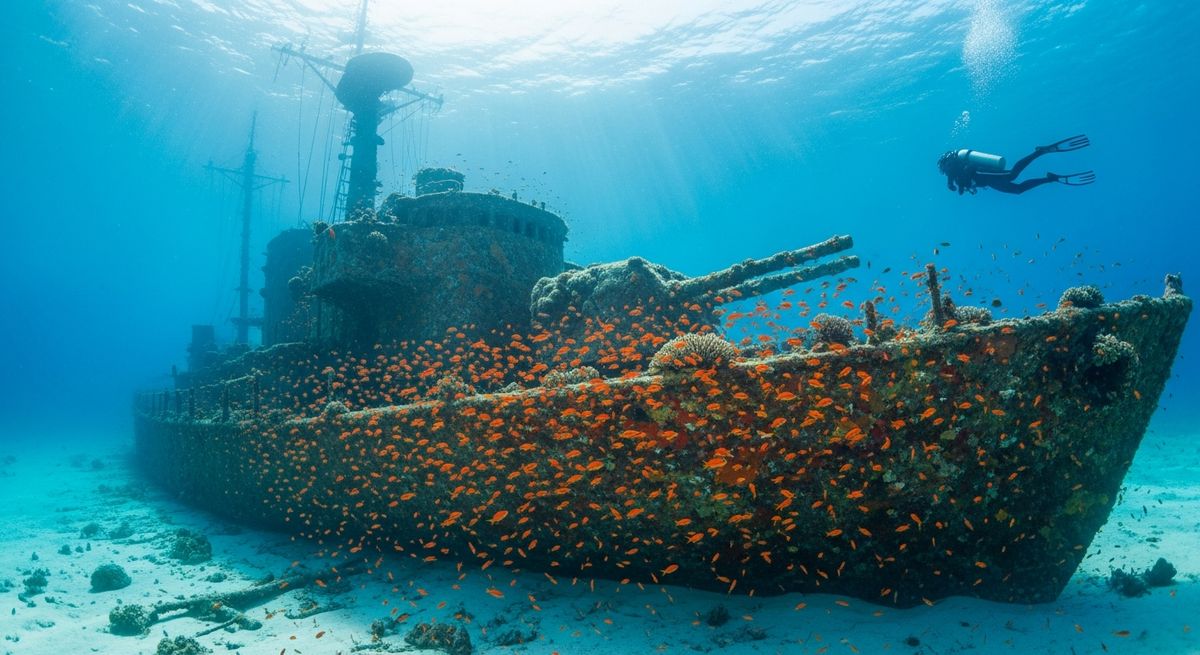
B-24 Liberator US Bomber
Protected Area
Vrsarski otoci
Why dive here
With 46+ marine species recorded in the area - including dolphins, sea turtles and cuttlefish - B-24 Liberator US Bomber offers some of Istria Peninsula's richest wreck diving. Water ranges 12-26°C, warmest July, August, September.
Diving the B-24 Liberator off Istria isn’t just a wreck dive, it’s a history lesson suspended in the Adriatic. We always feel a real sense of reverence dropping down to this site. The plane, a heavy bomber from World War II, sits upright on the seabed, remarkably intact despite the impact. You’ll see the massive wings, the fuselage largely complete, and even some of the turrets still in place, peering out into the blue. It’s an eery, poignant sight, seeing such a powerful machine brought to rest so gently. The sheer scale is what really gets you. Swimming along the length of the fuselage, you can almost picture the crew inside. Our favourite part is exploring the bomb bay doors, often slightly ajar, creating interesting swim-throughs for the more confident wreck diver. Schools of damselfish shimmer around the structure, and we’ve often spotted conger eels making their homes in the darker recesses. Visibility here is usually excellent, making the bomber stand out sharply against the sandy bottom. This dive is definitely for experienced wreck enthusiasts who appreciate both the historical weight and the incredible preservation of a significant piece of aviation history.
Safety Notes
Wreck site - avoid penetration without wreck diving certification. Watch for sharp metal and entanglement hazards.
B-24 Liberator US Bomber Wreck History
Year Sunk
1944
Vessel Type
aircraft
Cause
combat
The Adriatic Sea became a graveyard for many Allied aircraft during World War II. Crews flying missions from bases in Italy against targets in Germany, Austria, and the Balkans often had to traverse this stretch of water on their perilous return journeys. This B-24 Liberator is one such aircraft, a testament to the air war fought over occupied Europe. While the specific details of its final mission are not widely documented, it is believed to have been shot down or suffered critical damage during a raid in 1944, forcing its crew to ditch off the Istrian Peninsula.
For divers, this B-24 offers a direct connection to that history, resting on the seabed as a memorial to its crew and their sacrifice. The wreck lies on a sandy bottom, and while time and the sea have taken their toll, it remains an impressive sight. The massive wings are largely intact, with the four powerful engines still in their nacelles. Exploring the debris field reveals parts of the fuselage, landing gear, and other components, each telling a piece of the aircraft's final moments. The clear Adriatic water provides excellent visibility, making this a captivating dive into the past.
Nearest Dive Centres to B-24 Liberator US Bomber
Dive shops near B-24 Liberator US Bomber
Star Fish
Blue Lagoon diving
Diving Center Poreč
Rovinj Sub - Diving Center
Diving Rovinj
Mediterraneum Mare Sport
Reviews for B-24 Liberator US Bomber
Conditions
Ocean conditions, forecast and tides for B-24 Liberator US Bomber
B-24 Liberator US Bomber Ocean Conditions
Monthly averages for B-24 Liberator US Bomber, sourced from Open-Meteo marine data + Copernicus Marine (EU) - nearest station: Open-Meteo marine grid (45.08, 14.15) (21km away)
October Averages
Sea Temperature
20°C
68°F · Range: 18.4–22.3°C
Current Speed
3.16 cm/s
Direction: W (288.4°)
Salinity
37.74 PSU
Based on 4 years of monitoring data · Data sources: Open-Meteo marine data + Copernicus Marine (EU)
Plan & book
Ways to dive Istria Peninsula, from day trips to liveaboards.
Day trips & courses
via GetYourGuideGuided dives, courses and snorkel trips with instant booking.
Find dive trips in Istria PeninsulaPlaces to stay
via Booking.comHotels and dive resorts near Istria Peninsula.
Search stays in Istria PeninsulaDive insurance
Most travel insurance excludes or limits scuba. Check what you need before you go.
Dive insurance explainedPartner links: we may earn a commission if you book, at no extra cost to you. How we make money
Where to Stay near B-24 Liberator US Bomber
Prices from Booking.com. We may earn a commission at no extra cost to you.