Bucht Bobina (Wrack)
Protected Area
Plomin - Moščenička draga
Why dive here
With 46+ marine species recorded in the area - including dolphins, sea turtles and cuttlefish - Bucht Bobina (Wrack) offers some of Istria Peninsula's richest wreck diving. Water ranges 12-26°C, warmest July, August, September.
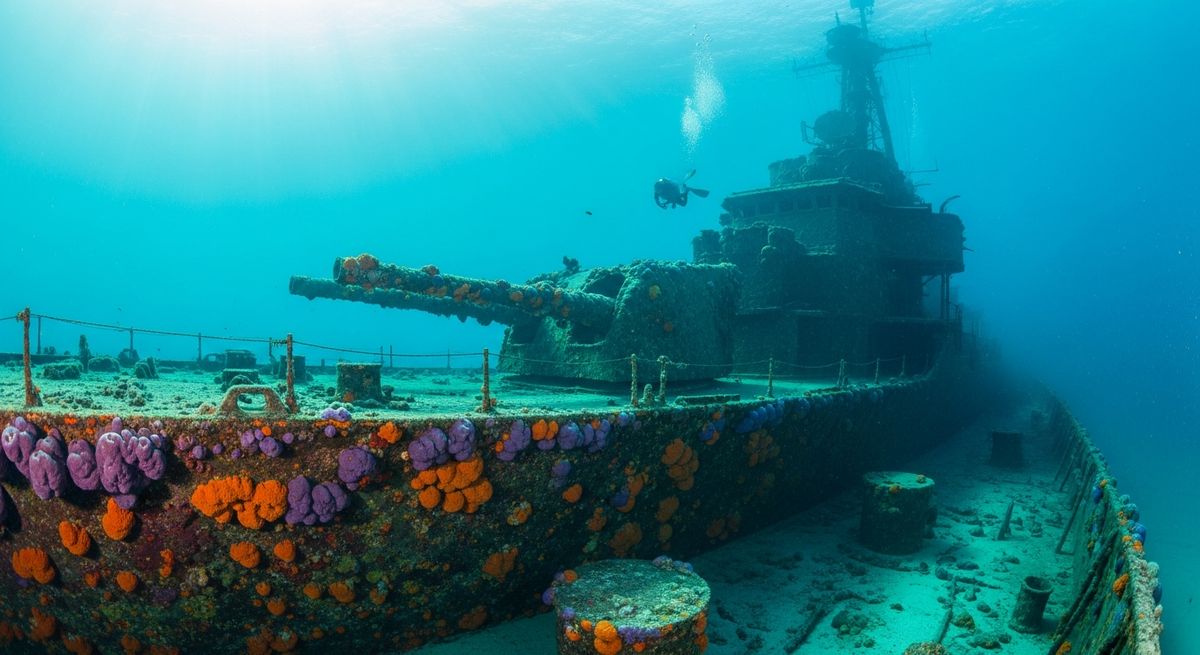
We’ve always been drawn to wrecks with a story, and the Bobina Bay wreck delivers. It’s not about grand scale here; it’s the quiet intimacy of a smaller vessel, likely a fishing boat or a barge, that’s settled into the seabed. The real draw is how the sea has reclaimed it. You’ll find the metal structure softened by vibrant overlays of bushy coral and delicate pink plate weeds. Our favourite discovery is often tucked into a crevice: the bright orange of a sunset cup coral, or a pair of tiny red snapping shrimp waving their antennae from a dark hole. This site is perfect for a relaxed dive, maybe a long bottom time, just exploring the details. Visibility can be excellent, and we’d suggest going in the morning before any wind picks up. Look closely at the hull and you’ll spot beadlet anemones clinging on, almost like jewels. It’s a site that rewards slow observation, allowing you to truly appreciate the life that now calls this sunken history home.
Safety Notes
Wreck site - avoid penetration without wreck diving certification. Watch for sharp metal and entanglement hazards.
Bucht Bobina (Wrack) Wreck History
Vessel Type
unknown
Cause
unknown
The "Bucht Bobina Wrack," or the Wreck in Bobina Bay, is an enigma waiting to be explored by divers in the clear Adriatic waters of Croatia's Istria Peninsula. Its name, likely German for its location, is one of the few clues available. The history of this vessel-its name, its purpose, and the story of how it sank-remains a mystery. The Istrian coast is steeped in maritime history, having seen intense naval activity during both World Wars, leaving open the possibility that this wreck could be anything from a small patrol boat to a cargo barge that met an untimely end.
For divers, the lack of a known history only adds to the allure. Every descent to the Bucht Bobina is a dive of pure discovery, where you become a maritime archaeologist for a day. Exploring its decaying structure, you can search for clues that might hint at its identity and purpose. The wreck itself serves as a thriving artificial reef, its metal surfaces now decorated with sponges and soft corals, providing shelter for fish, scorpionfish, and octopuses. It’s a dive that combines the thrill of exploration with the beauty of the Adriatic's underwater ecosystem.
Nearest Dive Centres to Bucht Bobina (Wrack)
Dive shops near Bucht Bobina (Wrack)
Lamkra
Marine Sport Dive Center
Scuba Center Sv. Marina
Buborek DC
diving Cres
Sea Mates
Reviews for Bucht Bobina (Wrack)
Conditions
Ocean conditions, forecast and tides for Bucht Bobina (Wrack)
Bucht Bobina (Wrack) Ocean Conditions
Monthly averages for Bucht Bobina (Wrack), sourced from Open-Meteo marine data + Copernicus Marine (EU) - nearest station: Open-Meteo marine grid (45.08, 14.15) (21km away)
October Averages
Sea Temperature
20°C
68°F · Range: 18.4–22.3°C
Current Speed
3.16 cm/s
Direction: W (288.4°)
Salinity
37.74 PSU
Based on 4 years of monitoring data · Data sources: Open-Meteo marine data + Copernicus Marine (EU)
Plan & book
Ways to dive Istria Peninsula, from day trips to liveaboards.
Day trips & courses
via GetYourGuideGuided dives, courses and snorkel trips with instant booking.
Find dive trips in Istria PeninsulaPlaces to stay
via Booking.comHotels and dive resorts near Istria Peninsula.
Search stays in Istria PeninsulaDive insurance
Most travel insurance excludes or limits scuba. Check what you need before you go.
Dive insurance explainedPartner links: we may earn a commission if you book, at no extra cost to you. How we make money
Where to Stay near Bucht Bobina (Wrack)
Prices from Booking.com. We may earn a commission at no extra cost to you.