Diving in Marseille & Calanques
Why dive here
Marseille & Calanques offers some of France's richest diving, with 157+ marine species recorded in the area - including blue sharks, dolphins, dwarf minke whales, humpback whales and mobula rays (devil rays). Water ranges 14-25°C, warmest July, August, September.
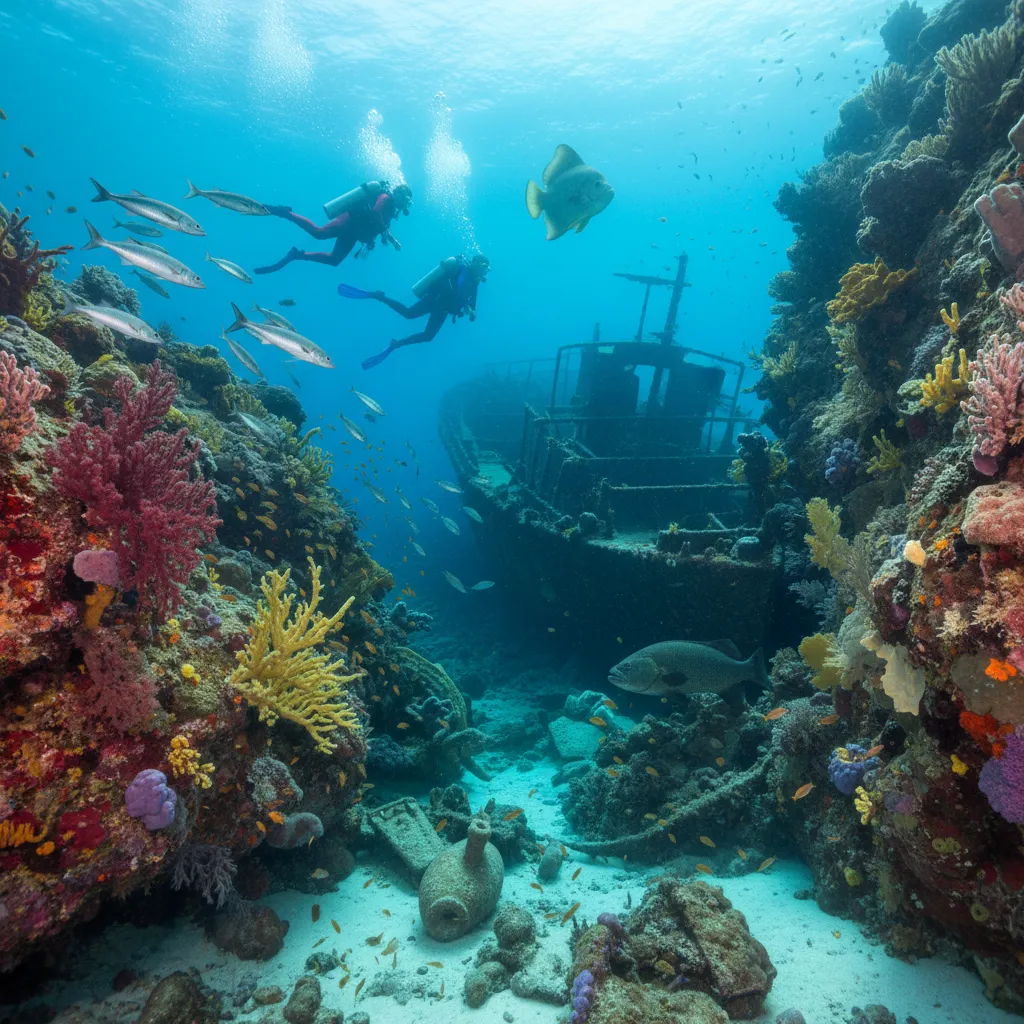
Marseille and the Calanques, it’s not your typical tropical getaway, but it’s absolutely worth the dive. We love the rugged, sun-baked coastline dropping sharply into the Med, making for some dramatic wall dives. Picture yourself drifting along a rocky face, spotting transparent gobies darting into crevices, or maybe a Cadenat's Rockfish peering out from a darker corner. The wrecks are a major draw here; there are hundreds, though many are deep. If you’re wreck-certified, you’ll find some incredible, well-preserved sites that tell a real story. And the caves - oh, the caves. Exploring the light shafts and grottoes, it feels like an adventure from a Jules Verne novel. Keep an eye out for a passing Blue-white Dolphin, especially in the deeper, open sections. Currents can be tricky, so always listen to your dive guide, but often they mean some excellent drift dives. Early autumn is our favourite time; the water is still warm, and the summer crowds have thinned out.
Marseille & Calanques Dive Site Map
Dive sites and dive centres in Marseille & Calanques
Marseille & Calanques Dive Sites
422 dive sites in Marseille & Calanques
3 îlots
The 3 îlots site offers an easy dive for intermediate divers, dropping to 42 metres. We often find schooling barracuda here, and occasionally spot an eagle ray gliding past. It's a relaxed spot for getting some depth in, especially if you want to avoid the busier routes. Not a showstopper, but always reliable for a solid Mediterranean dive.
ADMIRAL DUPERRE
The Admiral Duperre, resting just five metres down in the Calanques, is one of those spots we always point new divers towards. It's listed as "dangerous," which, for a wreck this shallow, always makes us chuckle a bit. What you’ll actually find here are scattered remains of a battleship broken up in 1922. Think twisted metal plates, sections of hull, and big, chunky pieces of the ship’s structure spread across the seabed. It’s less a single wreck and more an archaeological scatter, a real historical playground. We love poking around the debris field, imagining the ship's scale from these fragments. Light filters through the calm water, highlighting schooling damselfish that dart between the metal. Octopus often hide in crevices, and if you have a keen eye, you might spot a scorpionfish camouflaged on a barnacle-covered plate. It’s a super relaxed dive, perfect for working on buoyancy or just enjoying a long, shallow exploration. Come here on a sunny afternoon; the visibility usually stretches out beautifully, letting you appreciate the scale of the wreckage.
ADROIT
The Adroit isn't a deep dive, peaking at just 10 metres, but don't let that fool you. This is a genuinely compelling wreck. It was a torpedo boat, sunk deliberately in 1944, and the way it’s settled on the seabed gives it real character. We love how the bow points upwards, almost defiantly, while the stern lies broken, exposing twisted metal and internal structures. You can spend a good chunk of time exploring the hull, weaving around the skeletal remains. Schools of damselfish shimmer around the fragmented deck plating, and we’ve often spotted conger eels tucked deep inside the more sheltered sections. It’s an easy dive, perfect for newer wreck enthusiasts or photographers who want to take their time getting the shot without worrying about deco. Our favourite time to visit is late morning when the sun’s angle really brings out the textures of the corroded metal. It’s a site that tells a story, even without going deep.
Aile de Carro
The Aile de Carro offers a straightforward dive, often used for training or a relaxed afternoon trip. You'll find a series of rocky outcrops and small gorgonian patches, typical of the shallower Mediterranean. Keep an eye out for moray eels tucked into crevices and small groupers darting between the rocks. It’s a good option for newer divers looking to build confidence without strong currents or complex navigation.
ALERTE
The Alerte wreck is just plain fun, particularly if you’re into the historical aspect of diving. It sits upright in a sheltered bay, perfectly preserved at a shallow eight metres, making it accessible to pretty much anyone comfortable in the water. We love a good piece of history, and this one, a French Navy patrol boat scuttled in 1944, gives you a real feel for the past. Swimming along its deck, you can peer into the holds, imagine the crew moving about. Schools of silvery damselfish dart around the superstructure, and we’ve often spotted small octopus tucked into crevices in the hull plates. It’s a site that rewards a slow pace. Take your time, really look at the details, and let the story of the Alerte unfold around you. Our favourite part? The way the Mediterranean light filters through the water, illuminating patches of the wreck in a constantly shifting display. It’s a gentle dive, perfect for knocking off the rust or introducing a friend to wreck diving without the usual deep-water intensity.
ANNE BEWA
The *Anne Bewa* is a bit of a story, a cargo ship that caught fire back in '71, carrying everything from chemicals to cars before she was beached off Cap Cepet. What we love about this one is the atmosphere. It’s shallow, only ever reaching ten metres, which makes it perfect for a long, relaxed dive, really letting you soak in the details. We’re talking about exploring a surprisingly intact wreck here, a ghostly structure on the seabed. You can poke around the remains of the holds, imagining the chaos of that fire. The light penetration is excellent at this depth, catching the metallic sheen of the hull and illuminating the schools of damselfish that dart through the structure. For such a shallow site, it really pulls you in. Our pick for a second, easy dive when you want something more than just reef.
Anse au Canon
Anse au Canon offers a straightforward dive, accessible from shore, making it popular for training and those wanting an easy entry. The topography here is mostly rocky, with some seagrass patches where you might spot wrasse and small rays. It's not a site for big pelagics or dramatic corals, but for an easy dip or skill practice, it does the trick. We'd suggest it for newer divers or those looking for a relaxed afternoon underwater.
Aritay
Aritay, tucked into the Calanques, gives you a classic Mediterranean wall dive. We often find good visibility here, revealing rocky overhangs and crevices where moray eels hide. It’s a straightforward dive, well-suited for those looking for a relaxed exploration rather than strong currents or big pelagics. Expect to see plenty of damselfish and small wrasse darting around the rock formations.
Arpillon Drop-off
The Arpillon Drop-off offers a decent wall dive just outside Marseille. Divers will find a respectable wall descending into deeper water, providing a good opportunity to observe various Mediterranean species moving along the face. It’s a solid choice for divers looking for a straightforward, undemanding dive in the area. We’d say it suits those who appreciate a relaxed drift along a wall.
ARROYO (CIT)
The Arroyo, or CIT as many divers call it, is one of our absolute favourite wrecks in the Calanques. It’s not a natural sinking; the French Navy scuttled this tanker in 1953 as a training ground for their early dive groups. That history just adds a layer of intrigue, knowing it was deliberately placed for exploration. You’ll find the 55-meter wreck sitting upright at 33 meters, making it a solid deep dive for advanced recreational divers. We love dropping down onto the deck, the light filtering through the clear Mediterranean water, illuminating the superstructure. Penetrating the engine room is a highlight, though it’s silty, so good buoyancy is key. Inside, you’ll likely spook conger eels out of their hiding spots, and we often spot lobsters tucked into crevices in the cargo holds. The wreck itself has become a busy apartment block for marine life, with schools of glasseyes darting through the darker sections and vibrant jewel anemonies clinging to the metalwork. It’s a proper historical playground, a dive that feels like uncovering a secret every time.
ARTESIEN
Artesien is one of our favourite deep wrecks in the Calanques, a proper diver’s wreck if you’re comfortable at depth. This steamship went down in 1944, a casualty of a torpedo, and now rests upright at 48 metres. Dropping down, you’ll start to make out the sheer size of her, over 100 metres long, with a proud bow and stern that still feel imposing. We love finning along the deck, picking out details like winches and the remains of her superstructure, all wonderfully encrusted with gorgonians and sponges. The cargo holds are open, inviting a peek inside – just remember your torch, it gets dark down there. It’s not just the wreck itself; the resident marine life is fantastic. Conger eels poke their heads from every dark crevice, lobsters wave antennae from beneath plates of steel, and schools of anchovies often swirl above the mast. It’s a dive that combines history with serious atmosphere, best appreciated on a calm day when the visibility really opens up. Go early to avoid other boats.
Baie dès Milliardaires
Baie des Milliardaires is one of those spots that just feels good to be in, even before you drop in. Down below, it’s a gentle introduction to the Calanques, a calm, shallow bay that rarely throws up any surprises. Think sunlight dappling through the water onto a sandy bottom, with small schools of damselfish darting between the rocks. It’s perfect for new divers finding their buoyancy or for an easy second dive, a nice, relaxed way to spend an hour underwater. You’ll spot the usual Mediterranean suspects, sea bream, perhaps an octopus tucked into a crevice if you look closely. A chill dive, really.
Show all 422 dive sites in Marseille & Calanques
- BALEINIERE
- Banc des vieilles
- Banyuls Aquarium
- Baou Tailla
- BARGE OUVRIERE
- Base de plongée Port la Rague
- Batterie de la Mauresque
- Bec de l Aigle
- Bilitis
- BLUE MIST (POSSIBLY)
- BYMS 22 wreck
- Cabail Bernat
- Calafat
- Calanque de Seynerolles
- Calanque du Mugel
- Calanques National Park
- Cap Bear
- Cap Cacao
- Cap Canadell
- Cap Castell
- Cap Caveaux
- Cap Cerbere
- Cap de Nice
- Cap d En Vau
- Cape of Maire
- Cap l abeille
- Cap La Vieille
- Cap Negre
- Carro
- Cerbere L epave
- Cerbere Le port
- Cerbere Mole
- Chamagnieu
- Charavines - Les Baigneurs
- Chatillon
- CHELLA
- Cimetiere de Port-Vendres
- Cockpit et moteur du Dornier 24
- Crau de Nao
- Crique de la Pointe de l’Aiguille
- Dalles de Bagaud
- Digue des Catalans
- DROME
- DROME (PART OF POSSIBLY)
- ’écomusée sous-marin
- ENFER DE DANTE
- Epave petit open
- Escampobariou
- ESPINGOLE (PROBABLY)
- ETANDART 4 (POSSIBLY)
- Etang de Thau - La phare
- Etang de Thau - Le ponton
- FERRANDO
- Filets anti sous marins
- Fora Simona
- Fouille Nord
- Foux de Pompignan
- FRANCESCA
- Gabiniere - East wall
- Goul de la Tannerie
- Goul du Pont
- Grand bleu
- Grand Congloue
- Grotte à Corail
- Grotte de Boulegeade
- Grotte de Callelongue
- GROTTE DU CAPELAN
- Grotte et Tunnels des Lecques
- Grotte porte de Rome
- Grotte Sainte Marguerite
- HMML 563
- IENA
- Ile rousse (Tombant est)
- INTREPIDE
- JCC
- Junker 88 II
- KERBIHAN
- L' Arche
- La Balise de L Esquillade
- La Barge aux Tuiles
- La Barge de Carro et Aile
- La Basse Reinette
- La BCD
- La calanque du Pouar
- La cassidaigne
- La Cathedrale
- Lac de Laffrey
- Lac de sollieres
- La Chainette
- La cheminée
- la digue
- La Donatello D
- La faille du soldat
- La Fouillée
- La Fourmigue Nord
- La Gotte du Cap Estel
- La Grande Baie
- La grande Grenille
- La Grande Quairolle
- La Grosse Minouche
- La Grotte a Corail
- La grotte a Perez
- La grotte du renard
- La Grotte du Semaphore
- La grotte sans fond
- L Alice-Robert
- La Love
- La Merveilleuse
- La Mona
- La Moulade
- L anse du canon
- La pierre a Joseph
- la pierre a la bague
- La pierre a Maya
- La Pierre a Syca
- La pierre de Cassis
- La Pierre de Jas
- La Pierre du Levant
- La pierre qui tramolle
- La Pilotine et Voilier
- La Piscine de La Ciotat
- La piscine des Medes
- La piscine du lion de mer
- La plaine
- La Pointe Caussiniere
- La pointe de Caramasagne
- La pointe de la Luque
- La Poubelle
- La Poursuivante
- La Principale
- La Puissante
- L Aragnon
- La Ramere
- L Arche
- L Arche du Dramont
- La reine des flots
- L’Arenas
- L Ariane
- La Roche aux Merous
- La Roche aux Serpents
- La roche bleue
- La Roche Fini Nord
- La Rourre
- La Seiche d Alon
- la source
- L Astree
- La tache jaune
- La Tantine
- La Theiere
- Lausel
- La Vaquette
- La vedette
- La vedette bimoteur
- La vedette des fromages
- La vesse
- La vierge de Bendor
- L avion
- L avion de planier
- La Vitrine
- Le 5 Doigts du Tiboulin du Frioul
- Le Bananier
- Le Barancan
- Le Barbier
- Le Bassin
- Le Bateguier
- Le Batéguier
- Le Bestouan
- Le Bois de Carry
- Le Boule
- Le Boulet
- Le Boute
- Le Caboteur
- Le Cannonier du Nord
- Le canoubier
- Le cap de Jarron
- Le Cap Plane
- Le CATALINA
- Le chalan Labillon
- Le Chalutier
- Le chalutier en plastique
- Le Chalutier et les Ancres
- Le Chameau
- Le Chaouen Wreck
- Le Chilton
- Le Chinois Arche
- Le cimentier
- Le couloir des gorgones
- L ecueil du milieu
- Le Donator
- Le Dornier 24
- Le Fer a Cheval
- Le Ferrando
- Le Frapao
- Le Ghrib
- LE GLENN MARTIN
- Le Grand Boule
- Le Grand Moure
- Le grand Salaman
- Le grand St Antoine
- Le Grec partie Avant
- Le Guarani
- Le Guivier
- Le Haricot
- Le Heinkel
- Le Hellcat
- Le Jardin
- Le Jardin
- Le Jardin de gorgones
- Le Junker 88 de Cassis
- Le Ker Bihan
- Le Kleber
- Le Lagoubran
- Le Latecotere 298
- Le Lion de Mer
- Le Lion Sur Mer
- Le Maraudeur B26
- Le Marcel
- Le Masque
- Le Middlebury Victory
- Le Miquelon
- Le Mirage
- Le Miro
- Le moteur d avion
- Le Moulon
- Le mur
- Le Mustang
- Le Natal
- Le Navarre
- Le Niedersachsen
- Le Pain de Sucre
- L Eperlan
- Le Petit Cap Roux
- Le Petit Moure
- Le Petit Saint Dominique
- Le ponton-grue
- Le Protee
- Le puit Degaby
- Le Pytheas
- Le Rascoui
- Le Relax
- L Erevine
- Le Robuste
- LE ROBUSTE II
- Le rocher Cacaveaux
- Le Rousteau Nord
- Les Aiguilles de Tayat 1
- Le Saint-Lucien
- Les amphores de Giens
- Les amphores de Niolon
- Le Samson
- Le Saumur
- Les Bankaws
- Les Basses Mouliniere
- Les bouteilles
- L escalette
- Les chambres
- Les Deux Doigts
- Les Deux Jumelles
- Les Dolias
- Le Sécanion
- Le Sec de L Armoire
- Le Sec de l Ile d Or
- Le sec de Saint Elme
- Le Sec des Suisses
- Le sec Exocet
- Les Eyglaudes
- Les failles d Eissadon
- Les failles Marlet
- Les farillons
- Les Fourmigues de Giens et Fourmigon
- Les Fourmigues Est
- Les jardins de Sausset
- Les Medes
- Les Moines
- Les moyades
- Le Souquet
- Les pains de sucre
- Les Peniches d Antheor
- Les pierres du matelot
- Les pierres tombees
- L Espingole
- Les Portes de l Atlantide
- Les Rosiers
- Les sardineaux
- Le Stella
- Les tignes
- Les Trompettes
- Les yeux de chat
- Le Tell
- Le Tombant aux Langoustes
- Le tombant de Niolon
- Le Tombant des Allemands
- Le tombant des Americains
- Le Tombant de Sophie
- Le tombant de Villefranche
- Le Tombant du Cap Gros
- Le Tombant du Planier
- Le Tombant du Vengeur
- Le Toulonnais
- le Trafik
- Le tunnel et les failles
- Le Vengeur
- Le Vengeur 2
- Le Village Englouti
- Le Ville de Grasse
- Le voilier de plane
- L'hélicoptère
- LIBAN
- Lion de Terre
- Lockheed P38
- LOTTE
- L'oursin
- LST 282
- Magnons
- Maire s coral cave
- MARIA SYLVIA
- MELANIE
- Menthon Saint-Bernard
- MICHEL SAY
- MIQUELON (POSSIBLY)
- MISE A L EAU DE MARAVENNE
- Morgiou
- Mur de l Elevine ou Erevine
- Musee Subaquatique de Marseille
- N-19Q
- Novi Wreck
- P 38 Lightning
- Passe du Gaou
- Passy
- PHECDA
- Pierre de Jas 1 des Embiez
- Pierre Jaques
- Piste de ski
- Piton
- Piton des Pyramides
- Plage Bernardi Nord
- Plage de Marina
- Plage des Meuniers
- Plage du Barry
- Plage du Capellan
- Plage Golf Juan
- Plateforme CIP Bendor
- Pointe Caussiniere
- Pointe de la croix
- Pointe de la galere
- Pointe de la rascasse
- Pointe de Maupertuis
- Pointe de Montremian
- Pointe de Pomegue
- Pointe du Bau
- Pointe du moulin
- Pointe du vaisseau
- Pointe Malalongue
- POLYPHEME
- Port-Cros National Park
- Port Du Niel
- POURSUIVANTE
- P SCHIAFFINO
- Q 313
- RAMON
- Raventurier
- Riou s coral cave
- Roche d'Aurelle
- Roche Fendue
- Roche Maeva
- Saint Fereol
- Sec de la Jaune Garde
- Sec de la Passe
- Sec de Merlo
- Sec des Aiguilles
- Sec du gendarme
- Sec du Langoustier
- Sec du sarragnier
- sèche saint pierre
- Semaphore Drop-Off
- Sentier sous marin
- Source de la Bisse
- Source de Marnade
- SPAHI
- ST ELME
- ST NICOLAS
- TANTINE
- TELL
- Tete de la vache
- The Batavia Wreck
- The France Wreck
- The Gapeau Wreck
- The Rose-Virginie wreck
- tombant a Dudu
- Tombant de Castel Vieil
- Tombant de Figuerolles
- tombant de la roche percée
- Tombant de l Emissaire
- Tombant de Ratonneau
- Tombant Maeterlink
- TORPILLE (POSSIBLY)
- Torpilleur T 178
- TORRENT
- TOZEUR
- Tradeliere Nord
- TROIS MATS
- TROMBLON
- TRONCON (BOW)
- TRONCON (STERN)
- Tunnel de la Moyade
- Veyron s caves
- VILLA DE SOLER
- VILLE DE GRASSE
- Wildcat
- Y.M.S. 24 (PART OF)
Marseille & Calanques Dive Centres
43 dive shops and operators in Marseille & Calanques
Anaya Plongée
Aqua Pro Dive International
ATELIER DE LA MER
Balanea
BeFree2Dive
BORMES PLONGEE
Bubble Diving
Cap Ferrat Diving
Show all 43 dive centres in Marseille & Calanques
- Cassis Calanques Plongée
- Centre De Plongée De La Rague
- CIP Fréjus
- Club Sous l'Eau
- Dune La Londe
- École de plongée
- École de plongée des Issambres
- H2O
- La Calanque
- La Cigale Plongée
- La Palanquée
- Lavandou Plongée
- Le Brusc Plongée
- Mio Palmo plongée
- Neptune Plongée
- Nice Diving
- OMNIBLUE FREEDIVE
- Palmes Beach
- Paradis Plongée
- PIANETA BLU
- PlongeeO
- PLONGEE PASSION CARRY
- Porquerolles Plongée
- RAND’EAU ÉVASION
- Saint Aygulf Plongée
- Saint-Mandrier Plongée
- SAINT P HYERES PLONGEE
- Scubazar
- Sub-Marine
- SUBVISION PLONGEE
- TIKI DIVE / SAS SEA PROJECT
- Toulon Plongée
- UCPA Cap Croisette
- UCPA Sanary-sur-Mer
- Ulysse Plongée
Ocean Wildlife in Marseille & Calanques
157 species recorded in Marseille & Calanques
Marseille & Calanques Daylight & Sunrise/Sunset
Sunrise and sunset times for Marseille & Calanques, calculated from coordinates
Today - Sunday 11 October
Sunrise
05:46
Sunset
17:02
Daylight
11h 16m
Golden Hour
16:24
First light (dawn) at 05:17 · Last light (dusk) at 17:31
Monthly Averages
| Month | Sunrise | Sunset | Daylight |
|---|---|---|---|
| Jan | 07:07 | 16:25 | 9h 18m |
| Feb | 06:37 | 17:06 | 10h 28m |
| Mar | 05:52 | 17:41 | 11h 50m |
| Apr | 04:57 | 18:18 | 13h 21m |
| May | 04:15 | 18:53 | 14h 38m |
| JunLongest | 03:56 | 19:18 | 15h 22m |
| Jul | 04:09 | 19:16 | 15h 7m |
| Aug | 04:41 | 18:43 | 14h 2m |
| Sep | 05:15 | 17:51 | 12h 35m |
| OctNow | 05:49 | 16:57 | 11h 8m |
| Nov | 06:29 | 16:15 | 9h 46m |
| DecShortest | 07:02 | 16:02 | 9h 0m |
Times are approximate local times based on longitude. Actual times may vary slightly depending on the exact timezone observed in Marseille & Calanques.
Where to Stay near Marseille & Calanques
Prices from Booking.com. We may earn a commission at no extra cost to you.
Marine Protected Areas near Marseille & Calanques
49 protected areas near Marseille & Calanques - please respect local regulations when diving
Grands dauphins du golfe du Lion
Oiseaux marins sud golfe du Lion
Camargue
Port-Cros [Aire D\'Adhésion]
Calanques [Aire D\'Adhésion]
Récifs des canyons Lacaze-Duthiers, Pruvot et Bourcart
Côte languedocienne
Rade d'Hyères
Iles d'Hyères
Calanques
Calanques et îles marseillaises - Cap Canaille et massif du Grand Caunet
Iles Marseillaises - Cassidaigne
Showing 12 largest of 49
Getting to Marseille & Calanques
Le Castellet, Var
Marignane, Bouches-du-Rhône
Nice, Alpes-Maritimes
Plan & book
Ways to dive Marseille & Calanques, from day trips to liveaboards.
Day trips & courses
via GetYourGuideGuided dives, courses and snorkel trips with instant booking.
Find dive trips in Marseille & CalanquesPlaces to stay
via Booking.comHotels and dive resorts near Marseille & Calanques.
Search stays in Marseille & CalanquesDive insurance
Most travel insurance excludes or limits scuba. Check what you need before you go.
Dive insurance explainedPartner links: we may earn a commission if you book, at no extra cost to you. How we make money