HMS RAGLAN
Protected Area
FENGARI SAMOTHRAKIS, ANATOLIKES AKTES, VRACHONISSIDA ZOURAFA KAI THALASSIA ZONI
Why dive here
HMS RAGLAN is a wreck dive where divers can encounter dolphins. Water ranges 14-27°C, warmest July, August, September.
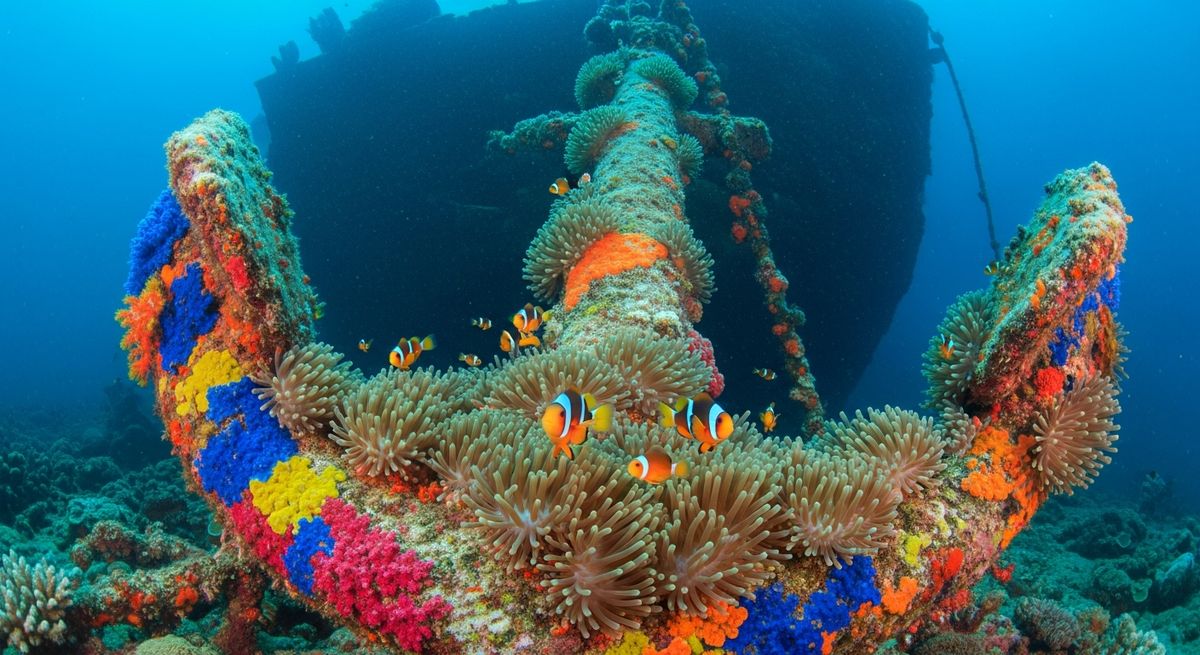
The HMS Raglan, sitting shallow off Halkidiki, isn't your average Mediterranean wreck. This monitor, built in 1915, feels like a real piece of history down there. We particularly love that she was armed with serious guns, and while those are long gone, you can still trace the outline of where they would have sat, giving a real sense of her former might. At a consistent 12 meters, she's perfect for extended bottom times and suits almost any diver. The wreck, though broken in parts, is still substantial at 97.5 meters long, with plenty to explore without ever feeling like you're pushing boundaries. We often find schools of damselfish flitting through the superstructure, and the occasional octopus peeking out from a sheltered nook. On a good day, with the sun high, the light filtering through the clear water onto the hull is beautiful, illuminating the rusted metal. We'd suggest going mid-morning before any potential afternoon chop picks up, when the visibility is usually at its best. It's not a deep, dark penetration dive, but a chance to leisurely explore a proper warship, colonised by the sea.
Typical HMS RAGLAN Dive Profile
Illustrative profile based on site depth and type. Actual dive profiles vary - always follow your dive computer and training.
Safety Notes
Wreck site - avoid penetration without wreck diving certification. Watch for sharp metal and entanglement hazards.
Always perform a 3-minute safety stop at 5m before surfacing.
Nearest Dive Centres to HMS RAGLAN
Dive shops near HMS RAGLAN
DIVEPARK
Gallipoli Wrecks Dive Center
SUB SAOS - SAMOTHRAKI DIVING CENTER
Reviews for HMS RAGLAN
Conditions
Ocean conditions, forecast and tides for HMS RAGLAN
HMS RAGLAN Ocean Conditions
Monthly averages for HMS RAGLAN, sourced from Open-Meteo marine data + Copernicus Marine (EU) - nearest station: Open-Meteo marine grid (40.12, 23.98) (28km away)
October Averages
Sea Temperature
22°C
71°F · Range: 19.4–24.3°C
Current Speed
10 cm/s
Direction: SW (216.9°)
Chlorophyll-a
0.135 mg/m³
Clear water
Salinity
34.09 PSU
Based on 4 years of monitoring data · Data sources: Open-Meteo marine data + Copernicus Marine (EU)
Plan & book
Ways to dive Halkidiki, from day trips to liveaboards.
Day trips & courses
via GetYourGuideGuided dives, courses and snorkel trips with instant booking.
Find dive trips in HalkidikiPlaces to stay
via Booking.comHotels and dive resorts near Halkidiki.
Search stays in HalkidikiDive insurance
Most travel insurance excludes or limits scuba. Check what you need before you go.
Dive insurance explainedPartner links: we may earn a commission if you book, at no extra cost to you. How we make money
Where to Stay near HMS RAGLAN
Prices from Booking.com. We may earn a commission at no extra cost to you.