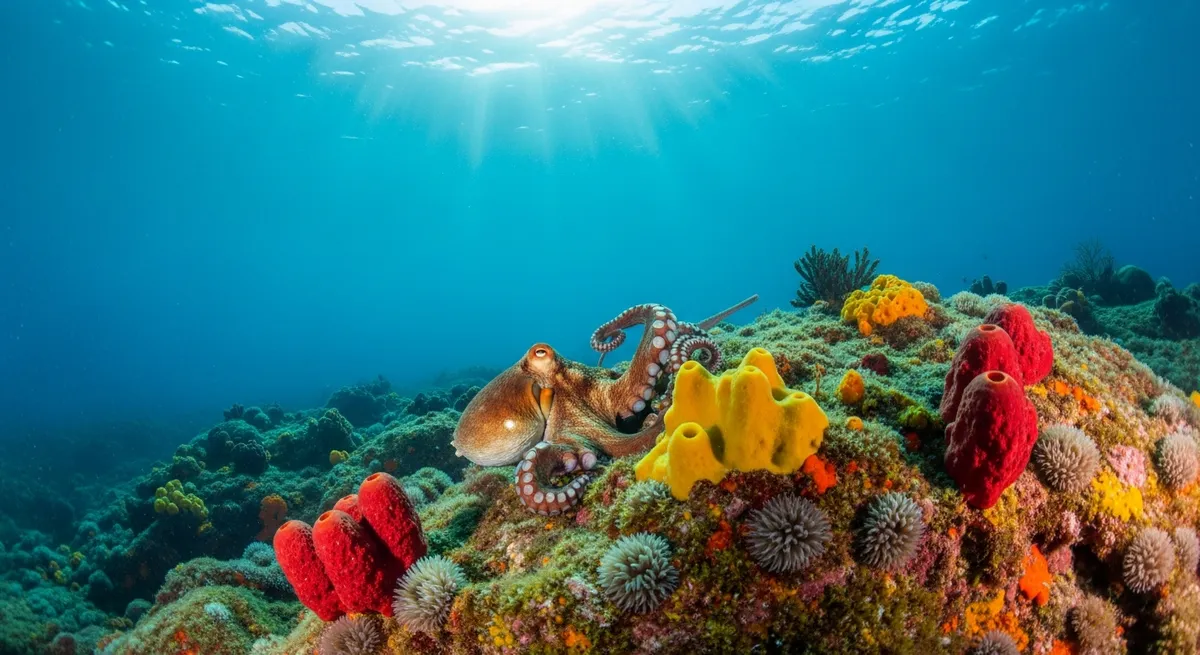
Diving in Halkidiki
Why dive here
Halkidiki is a diving destination where divers can encounter dolphins. Water ranges 14-27°C, warmest July, August, September.
Halkidiki often surprises people. You come for the beaches and end up staying for the diving. We love how the three peninsulas offer such varied underwater topography, from gentle reefs perfect for a lazy afternoon dive to dramatic walls that just drop away into the deep. Our favourite sites are often found off the Kassandra peninsula, where the rocky outcrops create fascinating swim-throughs and small caves. You won't find the big pelagics here, but you will find a vibrant Mediterranean ecosystem. Keep an eye out for the intricate Sunset cup corals, a real treat to spot, and the rather endearing Mediterranean Tooth-footed Snapping Shrimp. We've often spent a good chunk of a dive just watching them scurry about. Visibility is generally excellent, especially in late spring and early autumn, making it easy to appreciate the smaller details like the Hairy Sea-mat or the elegant Mediterranean feather stars clinging to the rocks. The water temperatures are pleasant well into October, allowing for comfortable diving without a drysuit. If you're into history, there are a few World War II wrecks scattered around, offering a different kind of exploration. Just be aware that some of the more exposed sites can experience currents, so it’s always worth checking conditions with your local dive centre.
Halkidiki Dive Site Map
Dive sites and dive centres in Halkidiki
Halkidiki Dive Sites
44 dive sites in Halkidiki
AGIOS NIKOLAOS
Agios Nikolaos is one of our absolute favourite dives in Halkidiki, not for its grand size, but for its compelling history and the way the sea has reclaimed it. This isn't a massive freighter, but a fascinating old slop barge, deliberately sunk back in '83. We often find ourselves just floating above its bow, imagining its working life, collecting waste from ships for over a century before it became an artificial reef. Dropping down, the visibility here is usually excellent, giving you a good look at its structure, which is surprisingly intact for its age. You can trace its outline easily, and while penetration isn't really the point, there are plenty of nooks and crannies for curious divers. Look closely and you'll spot moray eels peering out from shadowed openings. Octopus are regulars, often camouflaged against the rust-red plating, and the deck itself is a magnet for schools of damselfish, darting in and out of the emerging sponges. We’ve even seen the occasional inquisitive amberjack cruise past. This site is perfect for those who appreciate wrecks with a story, offering a relaxing dive that invites exploration rather than just observation. It’s a photographer's dream, especially on a bright day when the sun dapples through the water, illuminating the barge’s weathered hull.
Akti Kalogrias
Akti Kalogrias offers a straightforward shore dive, good for getting your fins wet or checking your gear. The sandy bottom slopes gently, eventually meeting some scattered rocks and small boulders. You'll likely spot small gobies, maybe a wrasse or two, and plenty of sea stars in the shallows. It's a relaxed spot, ideal for new divers building confidence or snorkelers exploring close to shore.
ALEKOS
Alekos, a fishing vessel, rests upright on the seabed off Halkidiki at a solid 55 metres. This isn't a site for your casual resort diver, no, this is one for the properly qualified, those comfortable with deeper decompression profiles. We love how intact the vessel remains; you can still make out the superstructure and the working areas, giving it a real ghost ship vibe. The sheer depth means the light takes on a beautiful, ethereal quality down here. Spend your bottom time exploring the deck, imagining the last moments of its working life. Look closely, because while it's a relatively young wreck, it’s already becoming a home for a surprising amount of Mediterranean life. Think small scorpionfish tucked into crevices, moray eels peeking from shadowed corners, and schooling damselfish darting around the mast. Our favourite detail is the way the fishing nets are still draped, almost artfully, across parts of the wreck. It’s a somber, silent reminder of its past. We’d suggest diving this one early in the morning for the best visibility before any thermoclines start to play tricks.
ANTHOULA
Anthoula, in Halkidiki, is one of our favourite Greek wrecks for its sheer accessibility and surprising character. This isn't a deep dive, sitting at just 11 metres, making it perfect for newer wreck divers or those wanting a relaxed hour underwater. The motor vessel, built in '57, went down after a collision in '76 as she was coming into port. You can still make out the superstructure and parts of the hull, stretched out across the sandy bottom. We love finning along the deck, picking out the large openings that lead into the cargo holds. Sunlight streams in, illuminating schools of small fish darting between the metal beams. It’s not uncommon to spot an octopus tucked into a crevice or a moray eel peeking from a dark corner. The stern offers some great photo opportunities with the prop shaft still largely intact. Our pick for the best time to visit is late morning when the sun is high, really bringing out the detail on the wreck and the flashes of colour from the resident fish. The low depth means you get decent bottom time, and it’s a site that rewards a slow, observant swim.
Armenistis bay
Armenistis Bay offers a straightforward dive, good for shaking off the rust or for those newer to Mediterranean diving. You'll likely encounter smaller reef fish, maybe a curious octopus or a stingray gliding over the sandy patches. It's a relaxed spot, easy to navigate, and generally free from strong currents, making it a comfortable afternoon dive. We'd suggest it for an easygoing exploration rather than a hunt for big pelagics.
Avlaki
Avlaki offers a straightforward shore dive, good for getting your buoyancy dialed in. We've seen octopus tucked into the rocks and small schools of bream grazing the seagrass. It's not a dramatic site, but if you're looking for a relaxed afternoon dip, or if you're working on your photography, it’s a decent option away from the busier spots. Good for beginners or those wanting a calm dive.
CAPTAIN NIKOS (PROBABLY)
We’re big fans of the Captain Nikos (Probably) wreck. It’s a 33-metre tug, went down in '93, and now sits upright in about 20 metres of water. It’s remarkably intact, which is what we love about it. You can glide over the deck, peek into the wheelhouse where the windows are long gone, and even fin your way through parts of the superstructure. What really sells it for us, though, is how the Mediterranean has reclaimed it. Schools of damselfish shimmer around the mast, and we’ve often spotted octopus tucked into crevices in the hold. The coral growth isn't Technicolor like the tropics, but it's beautiful, a mosaic of purples and greens coating the metal. Visibility here is usually decent, often 15-20 metres, making it easy to appreciate the wreck's full profile as you approach. Our tip? Go early. You might get the whole thing to yourself before the day boats arrive.
Dias island
Dias Island offers a straightforward dive, good for getting your fins wet in Halkidiki. We’ve found the gentle slopes around the island make for relaxed explorations, often spotting small Mediterranean wrasse and groupers tucked into the rocks. It’s a solid pick if you’re looking for an easy afternoon dive or a good spot to practice skills without much current to worry about.
ERIKA
The Erika wreck, just off Halkidiki, sits upright at a shallow 9 metres, making for a relaxed dive. We found the old motor vessel, sunk in '73, has settled nicely into the seabed, its hull now a rough canvas for sponges and small anemones. You can swim over the deck, spotting damselfish darting in and out of the rusted superstructure, and we've seen moray eels peeking from the darker recesses. It’s a gentle introduction to wreck diving, perfect for newer divers or those looking for an easy second dive, with good light penetrating all the way down.
EVDOKIA
We love a good wreck with a story, and the Evdokia, a cargo ship that went down in 1976, absolutely delivers. She sits upright, pretty much intact, resting in a deep enough spot that you really feel like you’re dropping into the blue to meet her. As you descend, the sheer scale starts to emerge – a proper ship shape rather than just a pile of debris. The bridge is our favourite part to explore, still recognisable, and you can imagine the crew’s final moments. Penetration is possible for suitably qualified divers, with the holds offering wide, relatively safe spaces where the light filters in, creating an eerie, almost cathedral-like atmosphere. Keep an eye out for the resident groupers, they’re massive here, often lurking in the shadows of the deck fittings, and we’ve spotted moray eels peeking from every crevice. Visibility is usually good, but the depth means you’ll want to be mindful of your no-deco limits. It’s a standout dive for wreck enthusiasts and experienced divers looking for something a bit more substantial than your average Mediterranean rock formation.
FAIRY TALE
Fairy Tale isn't your typical grizzled shipwreck. This motor yacht, purpose-built in 1987, went down in 1992 after a fire on its way to Port Carras. She sits upright and surprisingly intact at 24 metres, which we always appreciate, no weird angles or broken pieces. What we love about this one is the way the Mediterranean has completely softened its edges. The deckhouse is still very much there, giving a real sense of its former life. The visibility here is usually pretty good, and the light filtering down onto the wreck gives it a somewhat ethereal glow, hence the name, we suspect. Shoals of tiny silversides shimmer around the mast, and you'll spot scorpionfish tucked into every nook and cranny. Keep an eye out for nudibranchs on the railings, they’re often vibrantly coloured against the grey. It’s a comfortable dive, perfect for advanced open water divers looking for a relaxing wreck exploration without strong currents or complex navigation. We’d suggest a late morning dive to catch the best of the light.
FETICH BOULEN
Fetich Boulen, just off Halkidiki, is one of those wrecks that really sticks with you. We love it because it’s not just a collection of rusty metal; it feels like stepping back into a moment in time. This isn't some deep, dark tech dive, it's a wonderfully accessible 10-meter swim over a well-preserved wooden fishing boat. You can still make out the bow, the stern, and parts of the deck, all completely covered in a thick carpet of colourful sponges and small anemones. The best part? The light filters down beautifully, illuminating the vibrant growth and the schools of juvenile damselfish darting in and out of the hull. We've spent ages just watching them, almost hypnotised. It’s shallow enough that you get fantastic bottom time, perfect for photographers or divers who just want to relax and absorb the atmosphere. We’d suggest going in the late morning when the sun is high for the clearest visibility and best light penetration. It’s a gentle dive, suited to anyone comfortable in the water, and our favourite kind of Mediterranean history lesson.
Show all 44 dive sites in Halkidiki
- Fidonisi
- Finger reef
- HMMS 101 (POSSIBLY)
- HMS HYTHE
- HMS M.28
- HMS MAJESTIC
- HMS RAGLAN
- HMS TRIUMPH (POSSIBLY)
- Kalamitsi
- Koursaros
- LIANA M
- LIZA
- LUCANO, DELORO MICHIGAN & ORUBA
- MASSEUA
- Mitilini wreck
- Mourtzeflos cape
- nemesis
- NEWCASTLE CITY
- NORSEMAN
- PANAGIA IMVROU
- PANAYIA KASTRO
- PELMARINER
- PHILIPPOS D
- Plaka Litohoro Mole
- Platanitsi
- Porto Koufo Wall
- Porto Valitsa
- San Antonio
- Sithonia
- STELLA POLARE
- TINDALO
- TRIKHONIS
Halkidiki Dive Centres
25 dive shops and operators in Halkidiki
AQUALAND
ARGOS DALIS MERKEZI
AZURE DIVING CENTER
BLUE DIVING CENTER
CAT DIVING CENTER
Dive Club Kassandra
DIVEPARK
Diversity Diving Center
Show all 25 dive centres in Halkidiki
- DIVER TO DIVER
- Diving center
- Diving center
- Gallipoli Wrecks Dive Center
- Kara Balik Dalis Merkezi
- Nemo Scuba Diving Resort
- Nomad Diving School
- Northern Greece Underwater Explorers
- OCEANIC Diving Center
- PRIME DIVE CENTER
- SCUBA DIVING KAVALA
- SEA UNDER
- Sea world
- Sea World Scuba Diving Center
- SREDETZ-DIVE GROUP
- SUB SAOS - SAMOTHRAKI DIVING CENTER
- Zoumbosub
Ocean Wildlife in Halkidiki
20 species recorded in Halkidiki
Halkidiki Daylight & Sunrise/Sunset
Sunrise and sunset times for Halkidiki, calculated from coordinates
Today - Sunday 11 October
Sunrise
06:30
Sunset
17:51
Daylight
11h 22m
Golden Hour
17:15
First light (dawn) at 06:02 · Last light (dusk) at 18:18
Monthly Averages
| Month | Sunrise | Sunset | Daylight |
|---|---|---|---|
| Jan | 07:44 | 17:21 | 9h 37m |
| Feb | 07:18 | 17:58 | 10h 41m |
| Mar | 06:36 | 18:30 | 11h 54m |
| Apr | 05:47 | 19:00 | 13h 13m |
| May | 05:09 | 19:31 | 14h 22m |
| JunLongest | 04:54 | 19:54 | 15h 1m |
| Jul | 05:06 | 19:53 | 14h 48m |
| Aug | 05:34 | 19:24 | 13h 50m |
| Sep | 06:03 | 18:36 | 12h 32m |
| OctNow | 06:33 | 17:47 | 11h 14m |
| Nov | 07:09 | 17:08 | 9h 59m |
| DecShortest | 07:39 | 16:59 | 9h 20m |
Times are approximate local times based on longitude. Actual times may vary slightly depending on the exact timezone observed in Halkidiki.
Where to Stay near Halkidiki
Prices from Booking.com. We may earn a commission at no extra cost to you.
Marine Protected Areas near Halkidiki
77 protected areas near Halkidiki - please respect local regulations when diving
ETHNIKO THALASSIO PARKO ALONNISOU – VOREION SPORADON, ANATOLIKI SKOPELOS
ETHNIKO THALASSIO PARKO ALONNISOU – VOREION SPORADON, ANATOLIKI SKOPELOS
Ethniko Thalassio Parko Alonnisou Voreion Sporadon
Zoni A9: Periochi Eidikon Rythmiseon Ethnikou Thalassiou Parkou Alonnisou Voreion Sporadon
THALASSIA PERIOCHI THRAKIS
THALASSIA PERIOCHI KAVALAS - THASOU
THALASSIA PERIOCHI KAVALAS - THASOU
Zoni Oikistikon Rythmiseon B2 kai B3 kai Zoni B4 Ethnikou Thalassiou Parkou Alonnisou Voreion Sporadon
NISIDES SKYROU KAI THALASSIA PERIOCHI
LIMNOS, LIMNES CHORTAROLIMNI KAI ALYKI, KOLPOS MOUDROU ELOS DIAPORI KAI CHERSONISOS FAKOS, NISOS SERGITSI KAI NISIDES DIAVATES KOMPIOKASTRIA, TIGANI, KARKALAS, PRASONISI KAI THALASSIA PERIOCHI
THALASSIA PERIOCHI DYTIKIS LESVOU
NISIDES ASPRONISOS, ARGKOS, MARAGKOS, REPI, TSOUGKRIA, TSOUGKRIAKI KAI THALASSIA PERIOCHI NISON SKIATHOU KAI SKOPELOU
Showing 12 largest of 77
Getting to Halkidiki
Kavala
Thessaloniki
Plovdiv
Plan & book
Ways to dive Halkidiki, from day trips to liveaboards.
Day trips & courses
via GetYourGuideGuided dives, courses and snorkel trips with instant booking.
Find dive trips in HalkidikiPlaces to stay
via Booking.comHotels and dive resorts near Halkidiki.
Search stays in HalkidikiDive insurance
Most travel insurance excludes or limits scuba. Check what you need before you go.
Dive insurance explainedPartner links: we may earn a commission if you book, at no extra cost to you. How we make money