NEWCASTLE CITY
Protected Area
LIMNOS: CHORTAROLIMNI - LIMNI ALYKI KAI THALASSIA PERIOCHI
Why dive here
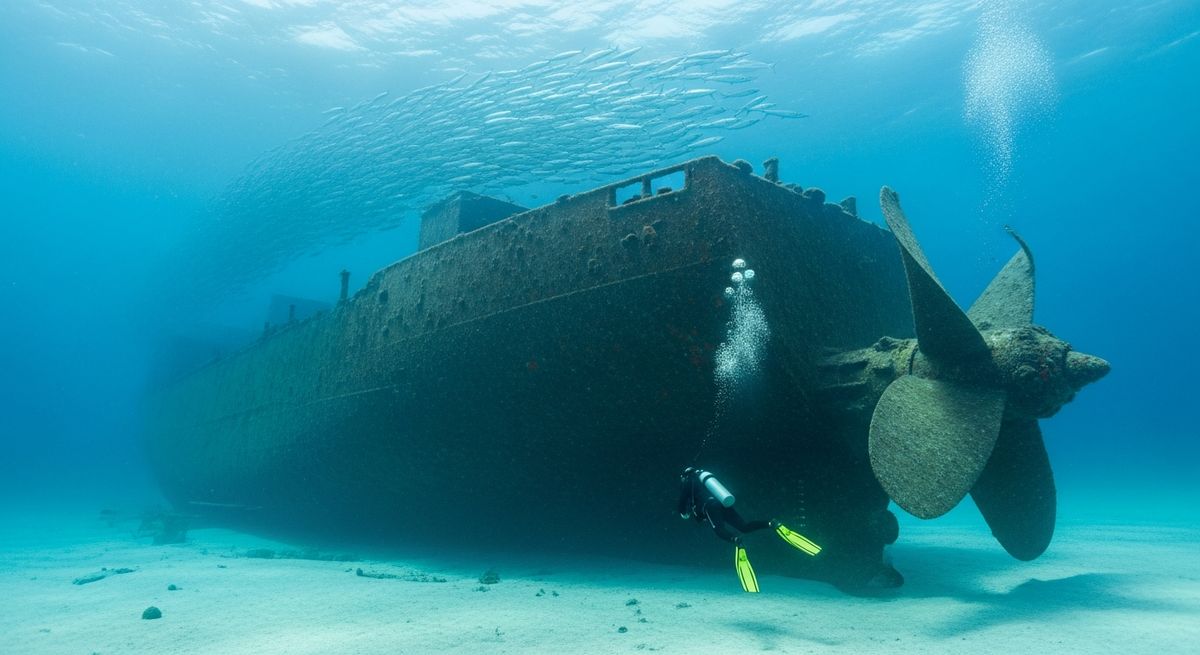
NEWCASTLE CITY is a wreck dive where divers can encounter dolphins. Water ranges 14-27°C, warmest July, August, September.
The Newcastle City, an old bulk carrier, settled on the seabed in 1992 and has since become one of Halkidiki's most intriguing shallow dives. At just 9 meters, it's accessible to almost everyone, a gentle introduction to wreck diving with plenty of stories in its steel bones. We love how the light plays on the structure, filtering through the clear Mediterranean water and illuminating sections of the hull. You can trace its length, imagining the cargo it once carried, before exploring the superstructure which has become a canvas for soft corals. Our favourite part is the sheer scale – 152 meters of history stretching out beneath you. The bow section is particularly photogenic, often draped in schools of damselfish that scatter as you approach. Look closely, and you'll spot nudibranchs clinging to the metalwork, alongside tube worms and the occasional octopus tucked into a crevice. It’s not about big pelagics here; it's about the intricate details of life reclaiming a man-made structure. We'd suggest going in the morning; the early light really brings out the colours on the wreck and avoids any potential afternoon boat traffic. This site is a truly relaxing dive, perfect for photographers or anyone who enjoys exploring a wreck without the pressure of depth or strong currents.
Typical NEWCASTLE CITY Dive Profile
Illustrative profile based on site depth and type. Actual dive profiles vary - always follow your dive computer and training.
Safety Notes
Wreck site - avoid penetration without wreck diving certification. Watch for sharp metal and entanglement hazards.
Nearest Dive Centres to NEWCASTLE CITY
Dive shops near NEWCASTLE CITY
DIVEPARK
Gallipoli Wrecks Dive Center
Kara Balik Dalis Merkezi
Reviews for NEWCASTLE CITY
Conditions
Ocean conditions, forecast and tides for NEWCASTLE CITY
NEWCASTLE CITY Ocean Conditions
Monthly averages for NEWCASTLE CITY, sourced from Open-Meteo marine data + Copernicus Marine (EU) - nearest station: Open-Meteo marine grid (40.12, 23.98) (28km away)
October Averages
Sea Temperature
22°C
71°F · Range: 19.4–24.3°C
Current Speed
10 cm/s
Direction: SW (216.9°)
Chlorophyll-a
0.135 mg/m³
Clear water
Salinity
34.09 PSU
Based on 4 years of monitoring data · Data sources: Open-Meteo marine data + Copernicus Marine (EU)
Plan & book
Ways to dive Halkidiki, from day trips to liveaboards.
Day trips & courses
via GetYourGuideGuided dives, courses and snorkel trips with instant booking.
Find dive trips in HalkidikiPlaces to stay
via Booking.comHotels and dive resorts near Halkidiki.
Search stays in HalkidikiDive insurance
Most travel insurance excludes or limits scuba. Check what you need before you go.
Dive insurance explainedPartner links: we may earn a commission if you book, at no extra cost to you. How we make money
Where to Stay near NEWCASTLE CITY
Prices from Booking.com. We may earn a commission at no extra cost to you.