CHEMICAL CHALLENGER
Protected Area
Isole Tino - Tinetto
Why dive here
With 70+ marine species recorded in the area - including blue sharks, dolphins, humpback whales, mobula rays (devil rays) and oceanic whitetip sharks - CHEMICAL CHALLENGER offers some of Portofino & Liguria's richest wreck diving. Water ranges 14-27°C, warmest July, August, September.
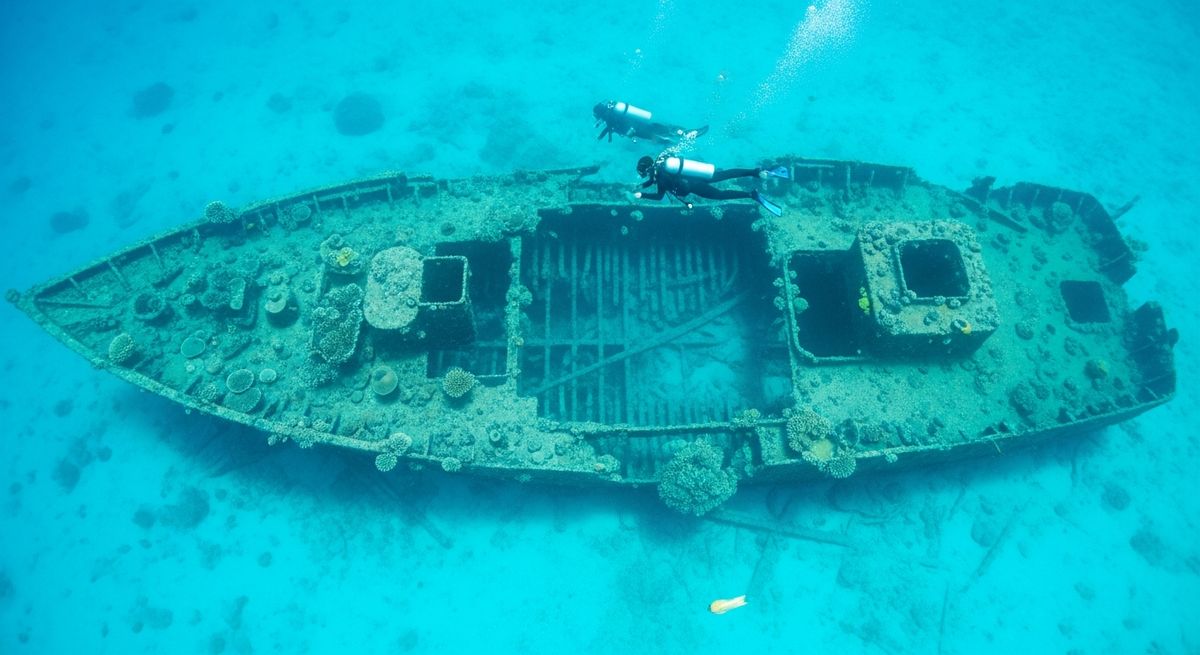
The *Chemical Challenger* is a big ol' beast of a wreck, a tanker that met its end spectacularly in 1981 after an explosion ripped through its bow. We love that fiery history, it gives the whole dive a real sense of drama. Dropping down to 30 meters, you’re greeted by the sheer scale of the thing – 170 meters of crumpled steel. It’s not a site for poking into tiny crevices, but rather for appreciating the grandeur of a shipwreck. Our favourite part is exploring the bridge area, where schools of barracuda often hang motionless, their silver scales catching the light that penetrates from above. You can peek into the shattered superstructure, imagining the chaos of its final moments. Keep an eye out for moray eels tucked into the darker corners and the occasional scorpionfish camouflaged on the deck plates. This wreck is surprisingly intact in places, offering plenty to explore on a single dive and we think it’s best suited for divers comfortable with depth and who appreciate a substantial piece of history. Dive it early to beat any crowds and enjoy the clearer morning light.
Typical CHEMICAL CHALLENGER Dive Profile
Illustrative profile based on site depth and type. Actual dive profiles vary - always follow your dive computer and training.
Safety Notes
Depth of 30m - Advanced Open Water certification recommended.
Wreck site - avoid penetration without wreck diving certification. Watch for sharp metal and entanglement hazards.
Always perform a 3-minute safety stop at 5m before surfacing.
Nearest Dive Centres to CHEMICAL CHALLENGER
Dive shops near CHEMICAL CHALLENGER
LERICI FREEDIVING
SSI Scuba Diving
Associazione Diving 5 Terre
LORENZO SUB DIVING CENTER
Reviews for CHEMICAL CHALLENGER
Conditions
Ocean conditions, forecast and tides for CHEMICAL CHALLENGER
CHEMICAL CHALLENGER Ocean Conditions
Monthly averages for CHEMICAL CHALLENGER, sourced from Open-Meteo marine data - nearest station: Open-Meteo marine grid (44.38, 9.02) (43km away)
October Averages
Sea Temperature
21°C
70°F · Range: 19–23.2°C
Air Temperature
18°C
64°F
Wind Speed
4.49 m/s
8.7 knots
Atmospheric Pressure
1017.3 hPa
Based on 4 years of monitoring data · Data sources: Open-Meteo marine data
Plan & book
Ways to dive Portofino & Liguria, from day trips to liveaboards.
Day trips & courses
via GetYourGuideGuided dives, courses and snorkel trips with instant booking.
Find dive trips in Portofino & LiguriaPlaces to stay
via Booking.comHotels and dive resorts near Portofino & Liguria.
Search stays in Portofino & LiguriaDive insurance
Most travel insurance excludes or limits scuba. Check what you need before you go.
Dive insurance explainedPartner links: we may earn a commission if you book, at no extra cost to you. How we make money
Where to Stay near CHEMICAL CHALLENGER
Prices from Booking.com. We may earn a commission at no extra cost to you.