HMS Maori
Protected Area
Manoel Island/Il-Gżira ta\' Forti Manwel
Why dive here
HMS Maori is a wreck dive where divers can encounter dolphins, ocean sunfish (mola mola) and sea turtles. Water ranges 16-28°C, warmest July, August, September.
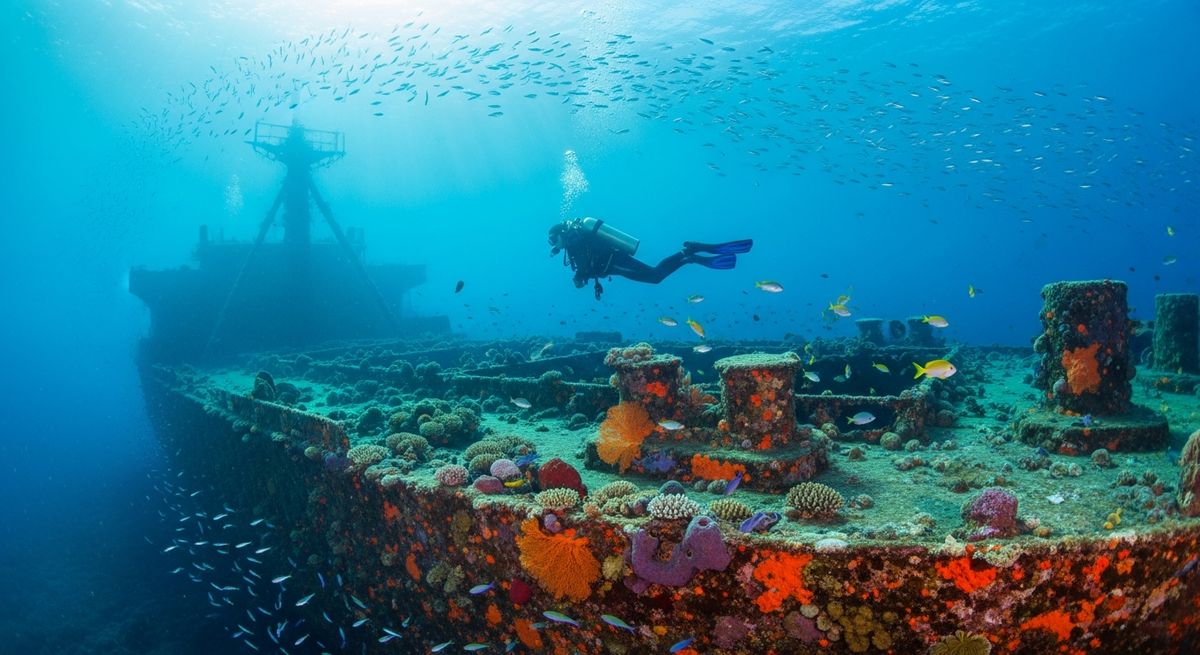
The HMS Maori, lying quietly in Comino, isn’t about dramatic drops or pristine visibility. It’s about history and the surprising resilience of Mediterranean marine life. She's a British Tribal-class destroyer, sunk in Valletta in 1942, then scuttled here a few years later. We love the way the forward section, surprisingly intact, sits on a sandy bottom at around 16 metres. You can swim into the remains of the torpedo bay, picturing the crew, then marvel at how a common octopus has made a home where they once stood. Our favourite time to visit is mid-morning, before the day boats get too busy. Look for the elliptical file-shells clinging to the metalwork, their red mantles a vibrant contrast to the barnacle-encrusted steel. We’ve often spotted seahorses here, tucked away amongst the structural remains, and the black gobies are always darting in and out of every crevice. Visibility can be a bit variable, but even on a slightly murkier day, the character of the wreck, draped in scarlet coral and home to porgy and wrasse, shines through. It’s a gentle dive, perfect for photographers or anyone who appreciates a wreck with a story.
Safety Notes
Wreck site - avoid penetration without wreck diving certification. Watch for sharp metal and entanglement hazards.
HMS Maori Wreck History
Year Sunk
1942
Vessel Type
warship
Cause
scuttled
Tonnage
1,891 tons
HMS Maori was a formidable British Tribal-class destroyer that saw significant action during World War II, including the hunt for the Bismarck. Her fate was sealed during the brutal Siege of Malta. On February 12, 1942, while anchored in the Grand Harbour of Valletta, she was struck by a bomb from a German aircraft. The resulting explosion and fire caused her to sink at her moorings, with her forward superstructure remaining visible above the water.
After the war, the wreck of the Maori was deemed a hazard to navigation in the busy harbour. In 1945, the decision was made to raise what was left of the vessel and scuttle it in a new location. The heavily damaged aft section was abandoned, but the forward half was towed to St. Elmo Bay and laid to rest in its current position. Today, the HMS Maori is one of Malta's most historic dives. Lying in relatively shallow water at a maximum depth of 14 meters, divers can explore the remains of the bow and forward gun placements. While time and tide have taken their toll, it remains a poignant memorial to the island's wartime history.
Nearest Dive Centres to HMS Maori
Dive shops near HMS Maori
MALTA BLUE DIVING
Aquamarina
Dive Systems
SCUBA MALTA
Cresta Diving Center
Dive Med
Reviews for HMS Maori
Conditions
Ocean conditions, forecast and tides for HMS Maori
HMS Maori Ocean Conditions
Monthly averages for HMS Maori, sourced from Open-Meteo marine data + Copernicus Marine (EU) - nearest station: Open-Meteo marine grid (35.92, 14.5) (0km away)
October Averages
Sea Temperature
24°C
75°F · Range: 22.1–26.4°C
Current Speed
2.24 cm/s
Direction: SE (116.6°)
Salinity
37.95 PSU
Based on 4 years of monitoring data · Data sources: Open-Meteo marine data + Copernicus Marine (EU)
Plan & book
Ways to dive Comino, from day trips to liveaboards.
Day trips & courses
via GetYourGuideGuided dives, courses and snorkel trips with instant booking.
Find dive trips in CominoPlaces to stay
via Booking.comHotels and dive resorts near Comino.
Search stays in CominoDive insurance
Most travel insurance excludes or limits scuba. Check what you need before you go.
Dive insurance explainedPartner links: we may earn a commission if you book, at no extra cost to you. How we make money
Where to Stay near HMS Maori
Prices from Booking.com. We may earn a commission at no extra cost to you.