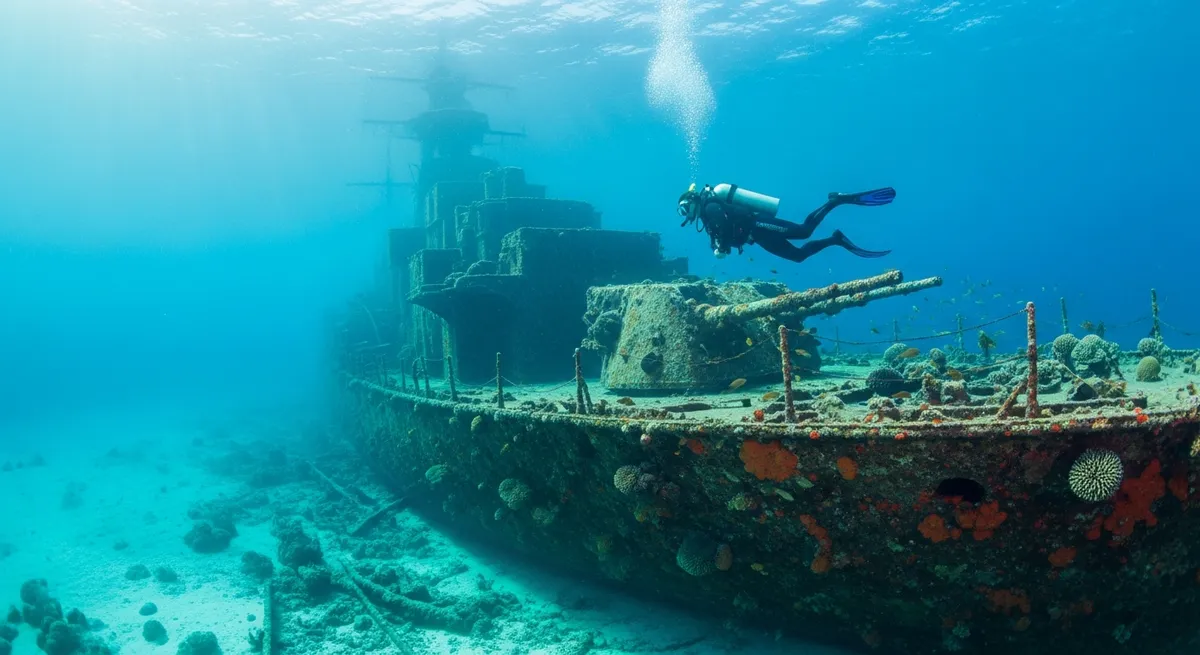
Diving in Malta Island
Why dive here
Malta Island offers some of Malta's richest diving, with 59+ marine species recorded in the area - including dolphins, octopuses, sea turtles and cuttlefish. Water ranges 16-28°C, warmest July, August, September.
Malta Island delivers a solid punch for Mediterranean diving, especially if you’re into wrecks and a bit of cave exploration. We’re particularly fond of the intentional sunken fleet; the HMS Maori is a favourite, shallow enough for most, with that classic war relic feel. Then you have the Rozi tugboat and the Um El Faroud oil tanker, both sitting upright and begging for multiple dives to really appreciate their scale. Shore diving at Cirkewwa is a huge plus, meaning no crowded boat trips if you don't fancy them. Visibility is generally good here, often 20 metres or more outside of winter storms. You’ll be seeing plenty of painted combers darting through the tapeweed, common cuttlefish doing their camouflage magic, and if you look close, those little butterfly blennies perched on the rocks. We often spot parrotfish grazing the algae. The water in late summer and early autumn is warm, making those longer dives comfortable. We'd suggest aiming for shoulder seasons, late spring or early autumn, to beat the biggest crowds but still get pleasant conditions. Currents are mostly manageable, though a few spots can get a push, so always check with your local centre.
Malta Island Dive Site Map
Dive sites and dive centres in Malta Island
Malta Island Dive Sites
31 dive sites in Malta Island
Ahrax Bay
Ahrax Bay offers a straightforward shore dive, ideal for those looking to get wet without much fuss. We've found the shallow entry gives way to a gently sloping seabed, mostly sand and scattered rocks. Keep an eye out for small octopuses tucked away and the occasional stingray buried in the sand. It’s a solid choice for a relaxed second dive or for divers getting comfortable with shore entries.
Anchor Bay (Dive Site)
Anchor Bay, also known as Popeye Village after the film set above, is a delightful little dive. It’s a sheltered spot, perfect for a relaxed second dive or when the wind picks up from the north. We love dropping in here, finning along the sandy bottom to the main cave. Inside, the light plays beautifully, reflecting off the walls and silhouetting schools of salema that dart past. Keep an eye out for slipper lobsters tucked into crevices, and we’ve even spotted slender seagrass beds hosting common cuttlefish. The main draw is that cave system, offering a gentle penetration for those comfortable, or just a beautiful cavern to explore from the entrance. Outside the cave, the rocky reef hosts ornate wrasse and blacktail bream, with patches of sunset cup coral adding splashes of colour. It’s not a deep dive, making it ideal for newer divers or those who prefer longer bottom times without the pressure of strong currents. Our favourite trick here is to look for tiny hooded shrimp hiding amongst the bushy coral.
Balluta Bay (Dive Site)
Balluta Bay might not be the dramatic wreck dive or the cavern exploration that Malta is often celebrated for, but we love it for its quiet, unassuming charm. It’s a genuine pleasure, a gentle shore dive right in the heart of St. Julian's. We think it’s perfect for a relaxed afternoon, maybe a check-out dive, or just stretching your gills without a big boat trip. Entry is straightforward, usually just a giant stride off the rocks or a wade from a small patch of sand. Once you're in, you're greeted by a gently sloping rocky reef, dotted with seagrass beds. Keep your eyes peeled for those smaller wonders. We’ve had some fantastic encounters here with common octopus, often tucked into crevices, their eyes watching you with curious intelligence. Look closely among the rocks for butterfly blennies and blennies, darting in and out of their little homes. We often see painted combers and wrasse weaving through the weeds, and if you’re patient, you might spot a sea horse clinging to a blade of seagrass, a truly special find. We'd suggest going early in the morning before the bay gets too busy, or later in the afternoon for a calmer experience. It's a surprisingly rich little ecosystem, proving you don't always need huge depths for rewarding diving.
BARGE 2
The Barge 2 wreck, sitting at 60 metres, isn't one for casual divers, but for those with the training, it’s a seriously rewarding deep dive. We love the feeling of descending into that blue, knowing you’re heading for something really substantial. It’s a genuine barge, not some flimsy fishing boat, and its size allows for proper exploration. You can spend a good chunk of your bottom time traversing its length, feeling the weight of the structure around you. What makes it standout, beyond the depth, is how well it's settled. The deck is home to scorpionfish, perfectly camouflaged, and we often spot decent-sized groupers hovering in the shadows underneath overhangs. The low light really makes your torch beam pop, highlighting the sponges and anemones that have started to colonise the metalwork. Our favourite part? Nosing around the stern, where you get a real sense of its scale. Just remember, this one demands good gas planning and solid buoyancy skills. We'd suggest going early in the morning for the calmest conditions before any surface chop picks up.
Cirkewwa - Outer Reef (Dive Site)
The Outer Reef at Cirkewwa is one of those places we often head to when we want a solid Mediterranean dive without too much fuss. Descending along the main reef wall, you'll find plenty of nooks and crannies to peer into, often revealing a dusky grouper or a painted comber darting for cover. Look closely for the sunset and Devonshire cup corals clinging to the overhangs, their polyps extended, catching what light they can. We've often spotted ornate wrasse flitting between the rocks, and if you’re patient, a Mediterranean slipper lobster might just peek out from its crevice. It’s a good spot for a relaxed dive, especially if you enjoy exploring reef structures and spotting smaller, shyer creatures.
Cirkewwa - Susie's Pool and Reef (Dive Site)
Susie’s Pool, tucked into the larger Cirkewwa complex, gives you a sheltered entry point, which is always nice when the northwesterlies pick up. It's a shallow, calm spot to kit up before you head out to the main reef. Expect to find a good spread of Mediterranean species here: painted combers darting through the slender seagrass, a few ornate wrasse nosing around the rocks, and, if you look closely, some scarlet coral and bushy coral clinging to the overhangs. The reef gently slopes, so it's a relaxed dive that doesn't push you too deep, making it a solid choice for a second dive or if you're shaking off some rust.
Dragonara cave
Dragonara Cave offers a straightforward cavern dive, making it a good option for those new to overhead environments. You’ll find some interesting light play filtering through the entrance, illuminating the rocky interior. It’s a relatively shallow dive, suitable for divers comfortable with basic cave navigation and looking for a relaxed exploration rather than dramatic coral.
Filflette (Dive Site)
Filflette, over on Malta Island, offers a decent shore dive for those looking to explore a bit of the Mediterranean without too much fuss. Entry is pretty straightforward, usually over some rock, and once you’re in, you’ll find a mix of rocky reef and sandy patches. We’ve spotted loggerhead turtles cruising through the tapeweed here before, which is always a bonus, and the usual damsel fish flutter about. It's not a deep dive, making it a good pick for newer divers or for a relaxed second tank when you’re not chasing big pelagics.
Ghar Lapsi - Left Reef (Dive Site)
Għar Lapsi’s Left Reef offers a gentle dive, making it a good spot for a relaxed afternoon. You’ll find healthy patches of Mediterranean tapeweed swaying, providing cover for painted combers and ornate wrasse. Look closely among the rocks for butterfly blennies peeking out. While you might not see the big pelagics here, it’s a pleasant dive for those wanting to explore the shallower reef and observe the smaller, common Mediterranean species. The entry can be a bit rocky, so take your time getting in.
HMS KINGSTON
The HMS Kingston in Malta is a strange one, and we love it for being exactly that. You’re not diving a fully intact destroyer; you’re diving the bow section, separated from the rest of the ship after it took a hammering in Grand Harbour during WWII. It was later moved and scuttled to act as a breakwater, now resting in about 5 metres of water. We’d suggest a calm day to really appreciate the details here, as the shallowness can make it feel a bit like a washing machine if there’s any swell. What you get is a fantastic playground for history buffs and photographers. The bow section is still substantial, with clear evidence of its destroyer past, even if it's been through a lot. Our favourite part is swimming through the mangled metal, seeing how the light plays on the rusted plates and how schools of juvenile fish have made these tight spaces their home. We’ve even spotted moray eels tucked into the more protected crevices. It’s an easy, rewarding dive, perfect for extending a surface interval or for divers who appreciate a wreck with a story, even if it’s a broken one.
HMSM STUBBORN
The HMSM Stubborn, a wartime S-class submarine, lies upright at 51 metres, a ghost from 1946. We love this wreck for its sheer presence. Dropping down, the bow comes into view first, a long, dark shape against the blue. It’s a good deep dive for experienced wreck enthusiasts. You can spend a whole no-deco dive just appreciating the scale of it. Swim along the deck, past the conning tower, and imagine the crew on watch. The torpedo tubes are still visible at the bow. Our favourite part is the way the light plays on the metal, especially if you catch it on a sunny morning. Groupers have made the darker internal spaces their home, lurking in the shadows. You’ll also spot plenty of scorpionfish camouflaged against the hull. The visibility is usually excellent, often 30 metres plus, making the Stubborn an incredibly atmospheric dive. Just remember it's a deep one, so proper planning and gas management are key.
HMS Stubborn
We love a good submarine wreck, and the HMS Stubborn certainly delivers. Lying on her port side in about 57 meters, this is definitely one for the experienced trimix crowd, but what a dive it is. Dropping down, the sheer scale of her reveals itself slowly. We’ve found the conning tower still feels remarkably intact, and the torpedo tubes are a real highlight – you can almost picture the crew. Schools of barracuda often circle the wreck, glinting in the shafts of light that penetrate the deep, and the resident groupers are surprisingly bold, eyeing you from shadowy nooks. It's not a shallow potter, so plan your gas carefully, but the reward is a quiet, contemplative exploration of a vessel that saw real history. We always recommend getting an early start; fewer boats mean you might just have her to yourself, which really adds to the atmosphere.
Show all 31 dive sites in Malta Island
- IMPERIAL EAGLE
- Is-Sikka l-Bajda
- Is-Sikka tal-Qawwi
- Jesus of Qawra
- JU-88
- L-Ahair Point (Dive Site)
- L-Aħrax (Dive Site)
- Manoel Reef
- Mini Blue Hole (Dive Site)
- Qawra North (Dive Site)
- Scorpion Cave (Dive Site)
- Sirens (Dive Site)
- St. Elmo - Left Reef (Dive Site)
- Stork Rock (Dive Site)
- The Canyon
- Tug 2 Reef (Dive Site)
- Wall Stone Beach (Dive Site)
- Zurrieq - Right Reef (Dive Site)
- Zurrieq - Valley (Dive Site)
Malta Island Dive Centres
15 dive shops and operators in Malta Island
Ocean Wildlife in Malta Island
59 species recorded in Malta Island
Malta Island Daylight & Sunrise/Sunset
Sunrise and sunset times for Malta Island, calculated from coordinates
Today - Sunday 11 October
Sunrise
06:06
Sunset
17:34
Daylight
11h 28m
Golden Hour
16:59
First light (dawn) at 05:40 · Last light (dusk) at 17:59
Monthly Averages
| Month | Sunrise | Sunset | Daylight |
|---|---|---|---|
| Jan | 07:13 | 17:11 | 9h 58m |
| Feb | 06:52 | 17:43 | 10h 51m |
| Mar | 06:16 | 18:09 | 11h 53m |
| Apr | 05:32 | 18:35 | 13h 3m |
| May | 04:59 | 19:00 | 14h 2m |
| JunLongest | 04:46 | 19:21 | 14h 35m |
| Jul | 04:57 | 19:20 | 14h 23m |
| Aug | 05:21 | 18:55 | 13h 35m |
| Sep | 05:45 | 18:13 | 12h 29m |
| OctNow | 06:08 | 17:30 | 11h 21m |
| Nov | 06:38 | 16:57 | 10h 19m |
| DecShortest | 07:05 | 16:50 | 9h 45m |
Times are approximate local times based on longitude. Actual times may vary slightly depending on the exact timezone observed in Malta Island.
Where to Stay near Malta Island
Prices from Booking.com. We may earn a commission at no extra cost to you.
Marine Protected Areas near Malta Island
81 protected areas near Malta Island - please respect local regulations when diving
Żona fil-Baħar fl-inħawi tal-Graben ta’ Medina
Żona fil-Baħar fl-inħawi tal-Graben ta’ Medina
Żona fil-Baħar fin-Nofsinhar
Żona fil-Baħar fin-Nofsinhar
Żona fil-Baħar fil-Lvant
Żona fil-Baħar fil-Lvant
Żona fil-Baħar madwar Għawdex
Żona fil-Baħar madwar Għawdex
Żona fil-Baħar fil-Punent
Żona fil-Baħar fil-Punent
Żona fil-Baħar fl-inħawi tal-Graben tat-Tramuntana ta’ Għawdex
Żona fil-Baħar fl-inħawi tal-Graben tat-Tramuntana ta’ Għawdex
Showing 12 largest of 81
Getting to Malta Island
Valletta
Catania
Palermo
Plan & book
Ways to dive Malta Island, from day trips to liveaboards.
Day trips & courses
via GetYourGuideGuided dives, courses and snorkel trips with instant booking.
Find dive trips in Malta IslandPlaces to stay
via Booking.comHotels and dive resorts near Malta Island.
Search stays in Malta IslandDive insurance
Most travel insurance excludes or limits scuba. Check what you need before you go.
Dive insurance explainedPartner links: we may earn a commission if you book, at no extra cost to you. How we make money