HAUKELI
Protected Area
Jærkysten
Why dive here
HAUKELI is a wreck dive in Stavanger & Rogaland, Norway. Water ranges 4-17°C, warmest July, August, September.
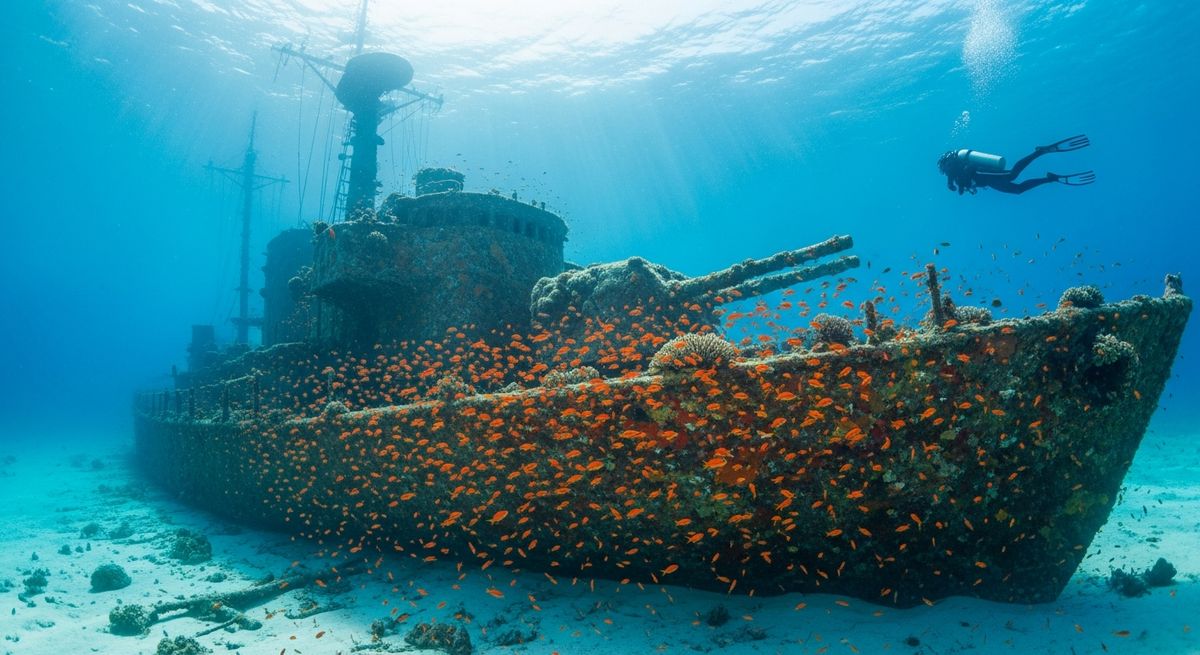
Haukeli is an absolute monster of a wreck, a proper beast that ran aground in '93 after some rough weather. It’s a huge motor vessel, nearly 80 meters long, and it's practically still in one piece, sprawling out just under the surface. You can actually see parts of the superstructure from shore, which is a bit eerie but also incredibly inviting. What makes Haukeli stand out for us is how accessible such a large wreck is. We’re talking about a wreck where the deepest parts are still only a meter or so, meaning you can spend ages just snorkelling over it, peering down into the flooded hold. We love getting up close, running our hands over the encrusted metal. The sheer scale is impressive, even in such shallow water. We’d suggest going at high tide for the best visibility, but honestly, it’s always a bit murky here, giving it a real atmospheric feel. You’ll spot crabs scuttling over the deck plates and probably a few curious pollock darting through the rusted framework. It’s not about vibrant corals; it's about the sheer presence of this hulking piece of history, slowly being reclaimed by the North Sea.
Typical HAUKELI Dive Profile
Illustrative profile based on site depth and type. Actual dive profiles vary - always follow your dive computer and training.
Safety Notes
Wreck site - avoid penetration without wreck diving certification. Watch for sharp metal and entanglement hazards.
Cold water this month (avg 14°C). Drysuit or thick wetsuit (7mm+) recommended.
Nearest Dive Centres to HAUKELI
Dive shops near HAUKELI
View all dive centres in Stavanger & RogalandReviews for HAUKELI
Conditions
Ocean conditions, forecast and tides for HAUKELI
HAUKELI Ocean Conditions
Monthly averages for HAUKELI, sourced from Open-Meteo marine data - nearest station: Open-Meteo marine grid (58.21, 8.06) (34km away)
October Averages
Sea Temperature
14°C
56°F · Range: 10.4–15.7°C
Based on 4 years of monitoring data · Data sources: Open-Meteo marine data
Plan & book
Ways to dive Stavanger & Rogaland, from day trips to liveaboards.
Day trips & courses
via GetYourGuideGuided dives, courses and snorkel trips with instant booking.
Find dive trips in Stavanger & RogalandPlaces to stay
via Booking.comHotels and dive resorts near Stavanger & Rogaland.
Search stays in Stavanger & RogalandDive insurance
Most travel insurance excludes or limits scuba. Check what you need before you go.
Dive insurance explainedPartner links: we may earn a commission if you book, at no extra cost to you. How we make money
Where to Stay near HAUKELI
Prices from Booking.com. We may earn a commission at no extra cost to you.